

Pair French Bedside Chests
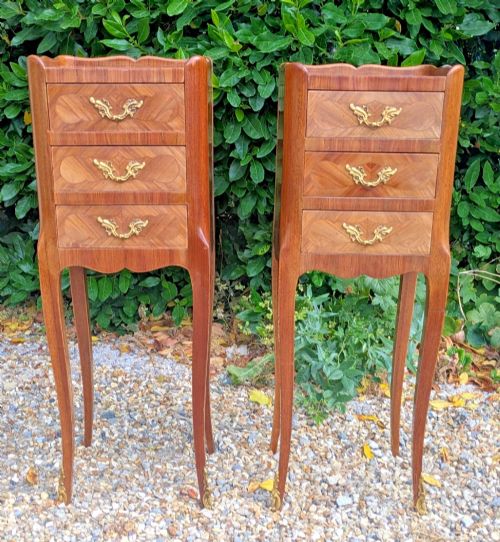
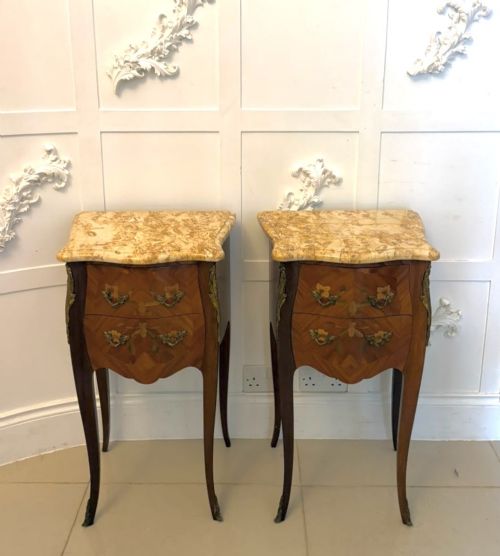
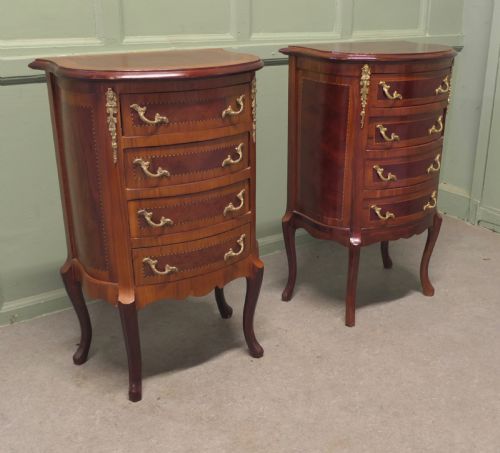
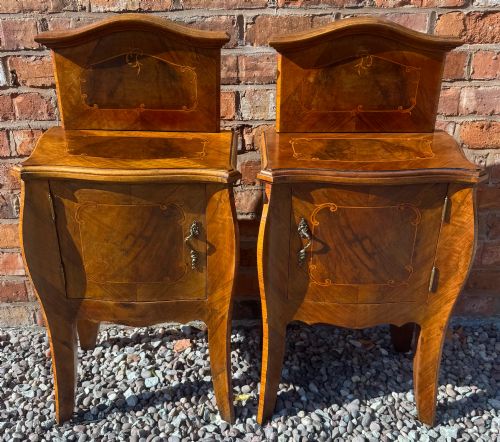
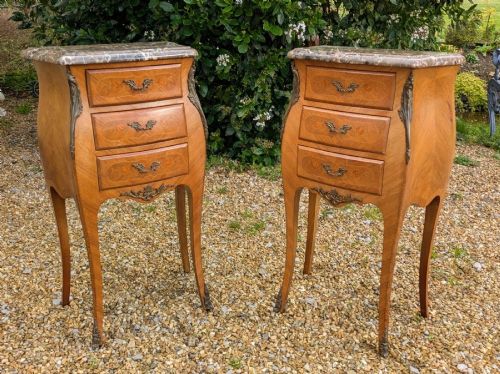
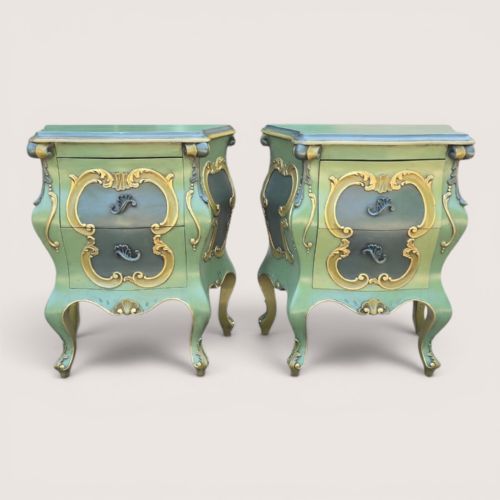
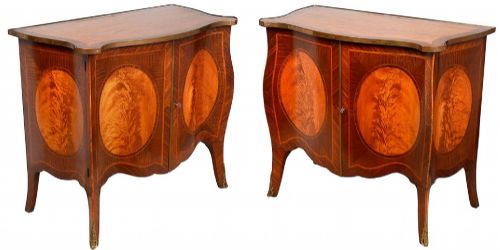
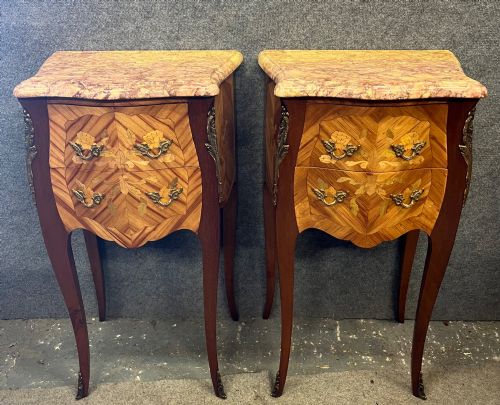
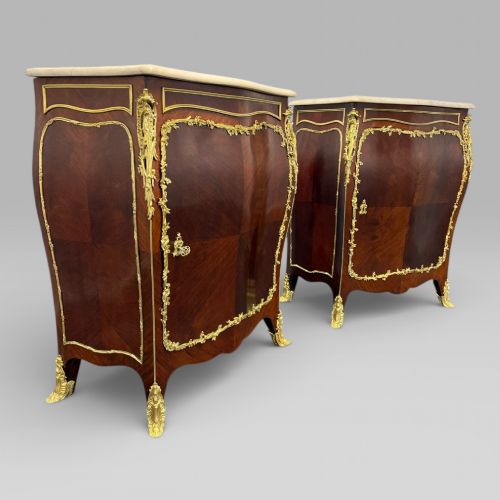
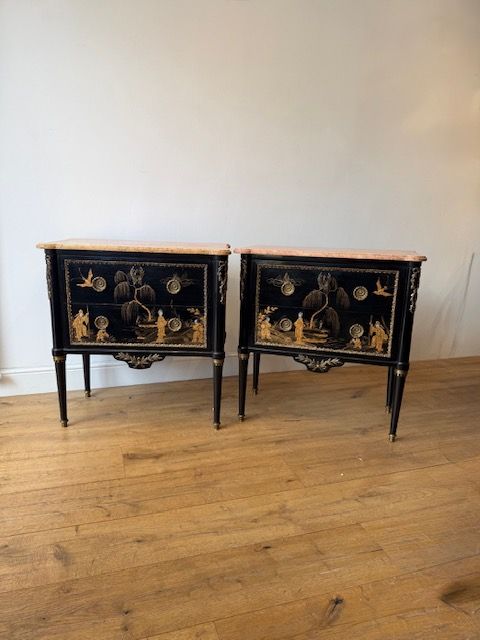
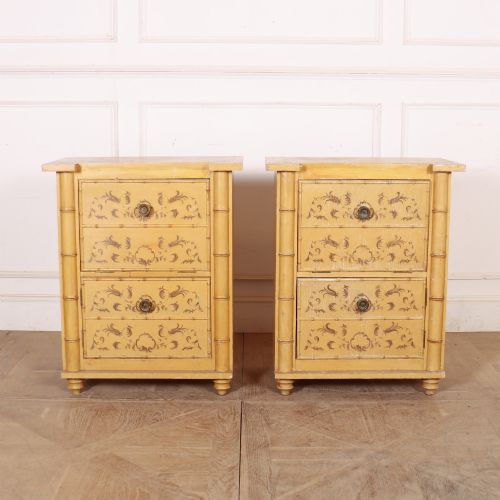
These pair french bedside chests offer matching storage for the bedroom, combining decorative wood veneers and stone tops within classical European designs.
Pair French Bedside Chests
A search for pair french bedside chests reveals coordinated sets of small storage furniture designed to sit beside a bed. The pieces shown here predominantly span the nineteenth and early twentieth centuries, reflecting revivalist tastes and provincial workshops.
Most examples function as miniature commodes or bedside cabinets featuring small drawers and cupboards. They serve practical domestic roles while introducing decorative timber patterns and classical silhouettes to bedroom interiors.
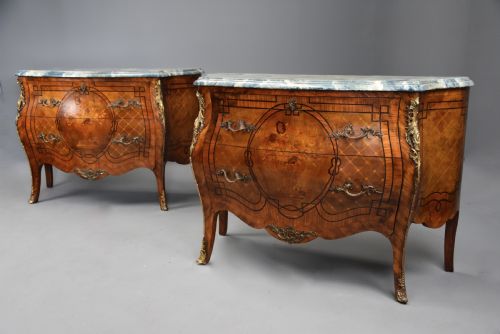
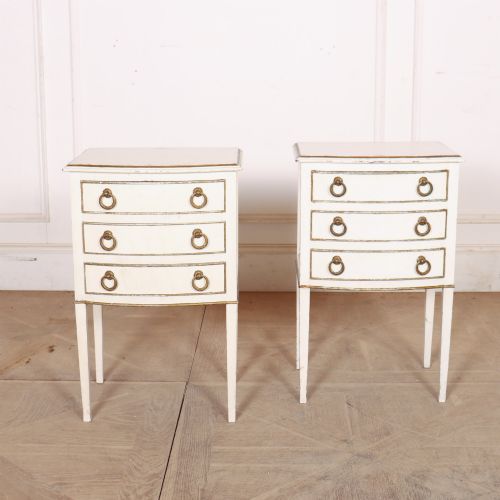
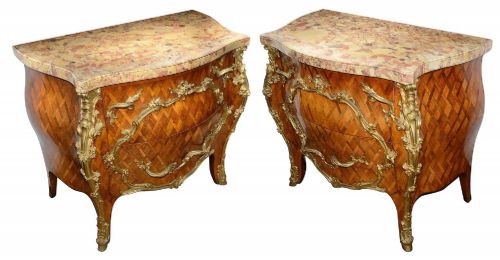
The selection ranges from simple painted carcases to elaborate bombe shapes with intricate parquetry. Buyers encounter various interpretations of Louis styles alongside provincial oak and walnut iterations.
Materials and construction methods
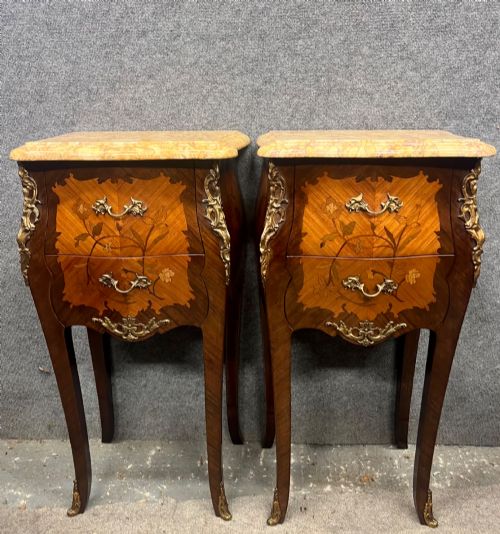
Cabinet makers utilised dense native and exotic timbers such as walnut, mahogany, and kingwood as foundations for decorative veneers. Marquetry and parquetry patterns demonstrate precise geometric and floral inlay techniques across drawer fronts and sides.
Slab marble tops, frequently veined in white or grey, provide durable and decorative working surfaces above the wooden carcases. Cast bronze and brass mounts accentuate structural corners, handles, and apron flourishes.
Joinery techniques combine traditional carcase construction with curved serpentine or bombe shaping. Surface finishes rely on French polish or painted pigments to highlight the grain and decorative detailing.
Several miniature commodes hide unexpected marble surfaces beneath lift-up lids originally designed for nighttime washing.
Factors determining quality
The precision of the veneer work and the complexity of the wood selection establish baseline execution standards. Fine examples display continuous grain alignment and meticulous marquetry without visible gaps in the inlay.
The weight and thickness of the fitted marble slab, alongside the crispness of the cast ormolu mounts, separate standard production from superior workshops. Original hardware and matching timber patination contribute significantly to overall integrity.
E. Kahn·Sormani
The Pair French Bedside Chests Glossary
- Bombe
- A bulging, convex shape characteristic of advanced cabinet making during revival periods. This curved profile requires skilled shaping of both wood and veneer.
- Marquetry
- Decorative patterns formed by fitting contrasting veneer pieces into a wooden background. Artisans use floral or pictorial motifs to ornament drawer faces.
- Ormolu
- Gilt bronze mounts applied to furniture corners and handles for decorative effect. These cast metal elements provide metallic contrast against dark timber.
- Parquetry
- Geometric wood inlay forming repeating patterns such as cubes or chequers. This technique showcases the natural colour variations of different timbers.
- Petit commode
- A small chest of drawers or cabinet built in a grand style. These diminutive pieces mirror the proportions of larger salon furniture.
Pair French Bedside Chests: Frequently Asked Questions
What is a petit commode?
A petit commode is a small decorative chest of drawers built to refined proportions. These pieces often feature fine veneers and metal mounts.
They function as bedside storage or accent tables within domestic bedrooms and sitting rooms.
How do I identify Louis XV style?
Louis XV style furniture is characterised by flowing curves and asymmetric floral motifs. You will notice cabriole legs and serpentine fronts on many examples.
This aesthetic prioritises graceful movement over rigid symmetry in its overall silhouette.
Are marble tops original?
Marble tops on period bedside cabinets are typically original to the design and serve as protective surfaces. They are shaped to follow the specific contours of the wooden carcase beneath.
Different types of marble, from white carrara to dark veined varieties, correspond to the period and region of manufacture.
How do I care for wood veneers?
Wood veneers require stable indoor humidity away from direct heat sources to prevent lifting or cracking. Gentle dusting with a dry cloth maintains the polished surface.
Avoid liquid cleaners and harsh chemicals which can damage the traditional French polish finish.