


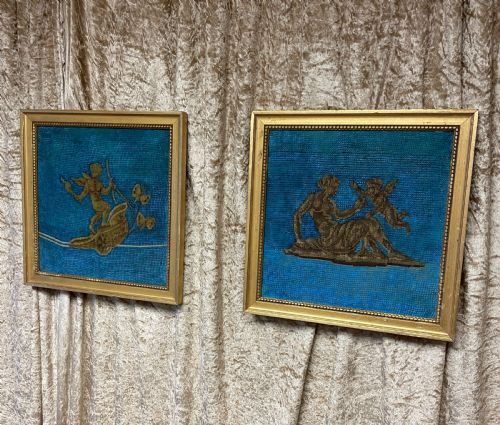


Pair Framed Textiles
Pair framed textiles bring together historic needlework and period surrounds, offering matched wall display through silk, wool, and tapestry.
Pair Framed Textiles
These pair framed textiles encompass balanced arrangements of needlework, embroidery, and tapestry framed for wall display. You encounter works spanning the seventeenth century through to the Victorian era, set within glass and timber surrounds.
How They Were Made
Makers utilised silk, wool, and fabric threads stitched onto fine grounds to create pictorial embroideries, tapestries, and samplers. These textiles often incorporate intricate needlework techniques, from delicate silkwork to robust tapestry weaving.
Surrounds were fashioned from wood, giltwood, and gold leaf, frequently glazed with glass to protect the fragile fabric panels within. Frames range from simple moulded timber to elaborate water-gilded and mezzanine formats tailored to the period.
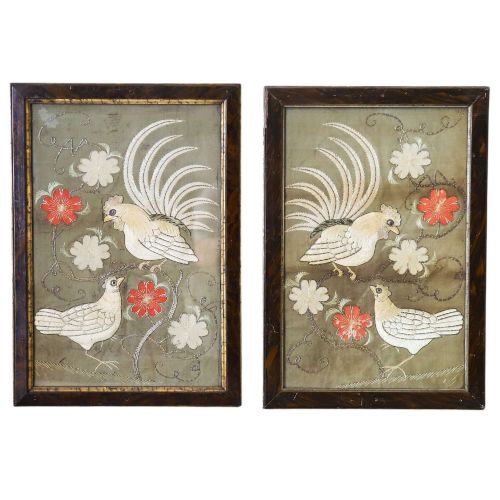
Cockerels, hens, and mandarin ducks peer out from nineteenth-century silkwork, guarding their frames with avian vigilance.
What Varies in Quality
Quality rests upon the fineness of the needlework execution and the preservation of the textile fibres against fading or wear. Superior pieces display intricate detail in subjects like birds, figures, and floral arrangements.
The pairing extends to the frames, where original water gilding, glass, and harmonious timber surrounds elevate the overall integrity of the matched set. Uniformity in size, condition, and framing marks the finer examples.
Stevens of Coventry·Richard Ansdell·John Crossley
The Pair Framed Textiles Glossary
- Silkwork
- Embroidery executed primarily using silk threads on a linen or silk ground. It often depicts pictorial scenes with a subtle sheen.
- Sampler
- A piece of needlework produced as a demonstration or test of skill, frequently featuring alphabets, motifs, and dates.
- Tapestry
- A form of textile art woven on a vertical loom, using coloured threads to form figurative or ornamental designs.
- Giltwood
- Wood that has been treated with a thin layer of gold leaf or gesso and gold paint, common on period frames.
- Mezzotint frame
- A specific style of moulding often associated with prints, utilised here to house needlework pictures.
Pair Framed Textiles: Frequently Asked Questions
What are pair framed textiles?
These pieces consist of two matched works of textile art, such as embroideries, samplers, or tapestries, presented within coordinated frames.
They are selected as decorative pairs intended for balanced wall hanging in period interiors.
How should I hang them?
Hang them out of direct sunlight to protect the delicate silk and wool threads from fading over time.
Keep them away from damp walls and maintain stable room temperatures to preserve both the fabric and the wooden frames.
How do I identify the period?
Examine the materials, stitching style, and the construction of the frame to determine the likely era of manufacture.
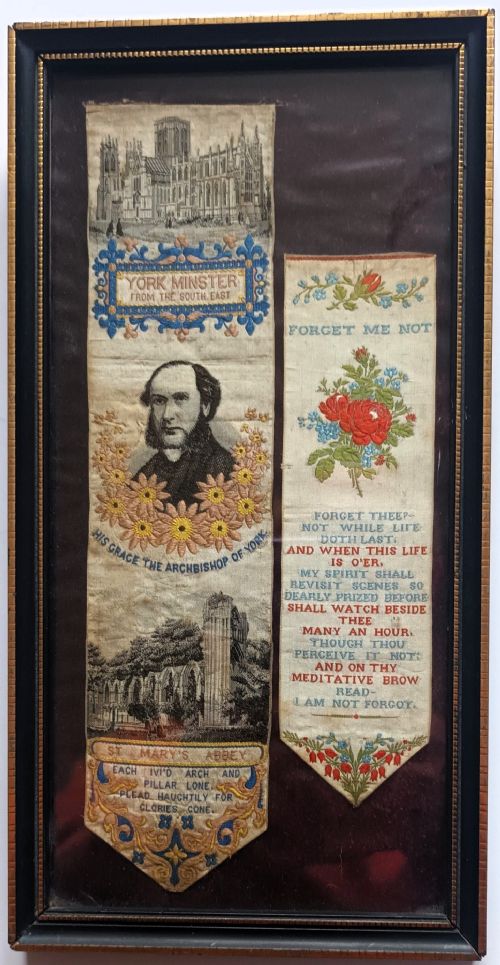
Seventeenth-century tapestries differ markedly in weave and subject from Victorian silkwork pictures or mid-nineteenth-century bookmarkers.
Are the frames original?
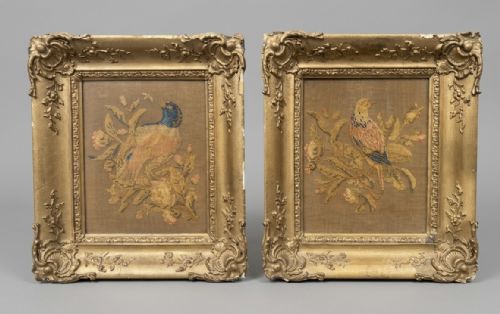
Many pieces retain their period frames, ranging from water-gilded oval surrounds to faux tortoiseshell or giltwood mouldings.
Matching frames indicate that the pair has a long association, though framing styles naturally vary across seventeenth, eighteenth, and nineteenth-century examples.