


Silk Floral Needlework
Silk floral needlework brings together centuries of hand-stitched botanicals, from English country house framed pictures to vibrant Central Asian suzanis.
Silk Floral Needlework
When searching for silk floral needlework, buyers encounter a diverse selection spanning the eighteenth century through to the early twentieth century. These pieces encompass English needlework pictures, Georgian samplers, French embroideries, and substantial Central Asian textiles.
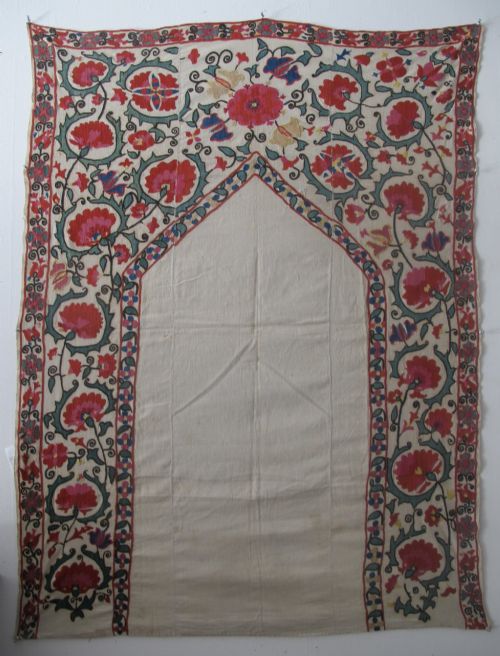
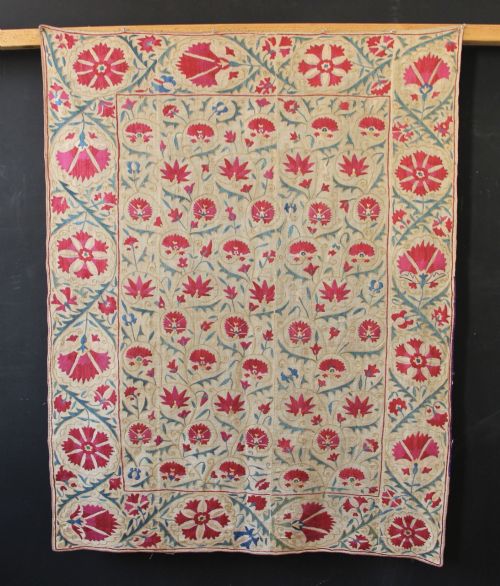
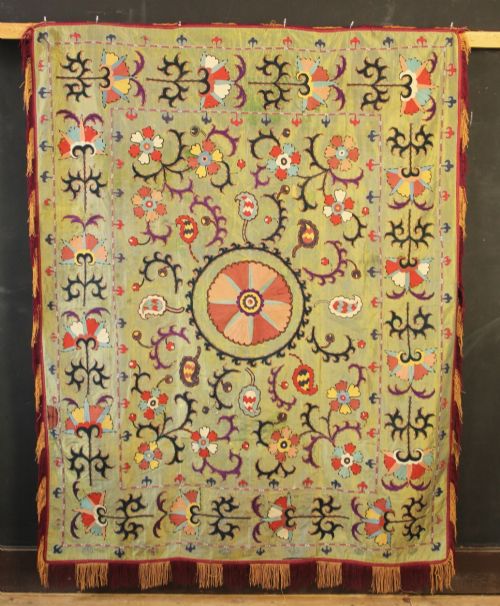
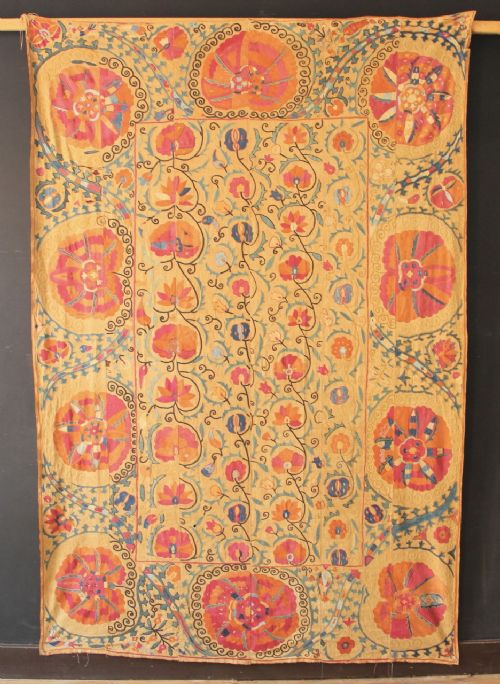
The most common examples on this page are Central Asian suzanis from regions such as Bokhara, Samarkand, and Uzbekistan. These large wall hangings and panels feature bold floral motifs worked by hand in silk threads on cotton or linen foundations.
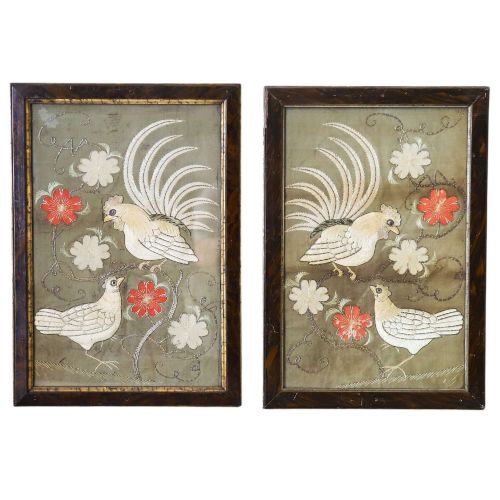
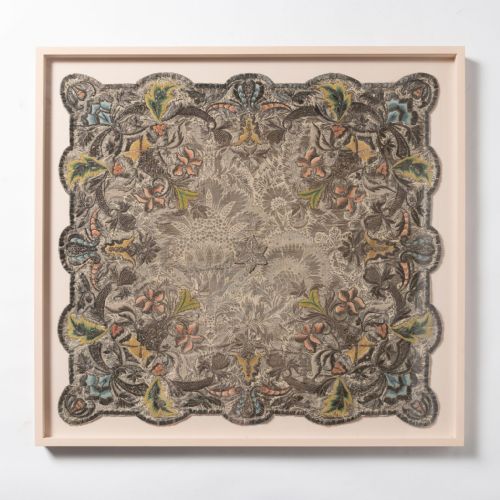
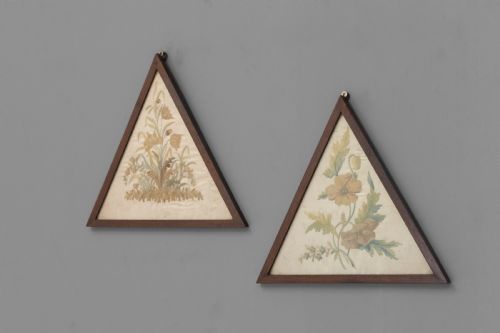
Alongside Central Asian textiles, the selection includes European framed panels and needlework pictures created in eighteenth-century and Baroque tastes. English and French works often depict garden birds, cockerels, and traditional botanical scenes housed in period frames.
Materials and construction
The primary materials recorded in these listings are silk thread combined with cotton, linen, wool, and felt grounds. Persian Rasht embroideries utilise silk and felt applique work on red felt grounds, whilst other regions rely on fine cotton or linen foundations.
Makers employed various hand-embroidery techniques to build dense floral patterns, medallions, and architectural designs. Supporting structures frequently involve wood and glass for framed textile art, alongside traditional mounting methods for large wall hangings.
Cockerels and mandarin ducks occasionally join the floral displays, keeping guard over the embroidered garden.
Variations in quality
Quality in silk floral needlework rests on the fineness of the stitchwork, the complexity of the design, and the preservation of the silk threads. Pieces executed with dense, intricate needlework display superior technical skill compared to simpler variants.
The integrity of the original ground fabric and the vibrancy of the remaining silk contribute significantly to a piece's standing. Origin also plays a role, with established workshops in Central Asia and fine European needlework centres producing highly sought-after examples.
The Silk Floral Needlework Glossary
- Suzani
- A type of embroidered tribal textile from Central Asia, traditionally made in Uzbekistan. These large panels typically feature bold floral designs on cotton or linen grounds.
- Nim suzani
- A smaller variant of the traditional suzani, often measuring around half the length of a full-size hanging. These compact panels remain popular for domestic display.
- Rasht embroidery
- A traditional Persian textile style utilising fine silk thread and felt applique work, often set against a red felt ground with floral medallions.
- Sampler
- A piece of needlework produced by a maker to demonstrate proficiency in various stitches and patterns. Georgian examples often include names and dates.
- Applique
- A needlework technique where pieces of fabric are sewn onto a larger foundation ground to build up a design. This method appears frequently in Persian Rasht panels.
Silk Floral Needlework: Frequently Asked Questions
How were suzanis used originally?
Central Asian suzanis were traditionally created as part of a bride's dowry by family members. They functioned as wall hangings, bed covers, or decorative wraps in nomadic and urban homes.
Over time, these textiles transitioned into decorative wall art for Western interiors while retaining their vibrant botanical iconography.
How should I hang a textile panel?
Large textile panels and suzanis require even support across their entire width to prevent distortion of the fabric. Conservation framing behind glass suits smaller needlework pictures and framed panels.
For oversized wall hangings, professional mounting using a velcro sleeve or a hidden fabric casing distributes the weight safely along the top edge.
How do I care for antique silk embroidery?
Antique silk needlework benefits from placement away from direct sunlight to prevent the fading of natural dyes. Gentle protection behind glass shields delicate threads from dust and atmospheric moisture.
Regular inspection by a textile conservator helps maintain the stability of older cotton and linen grounds.
What distinguishes Persian Rasht work?
Persian Rasht embroidery relies on detailed silk and felt applique work rather than standard surface embroidery alone. These pieces frequently incorporate red felt grounds paired with intricate floral medallions.
Their distinct regional technique separates them from the needle-painted floral compositions found in European works.
How can I tell the period of a needlework picture?
Dating relies on stylistic clues, framing materials, and the structural composition of the textile ground. Eighteenth-century English needlework pictures often reflect Baroque tastes or botanical studies typical of the period.
Later Victorian and Edwardian examples introduce different framing choices and regional variations in stitch density.