

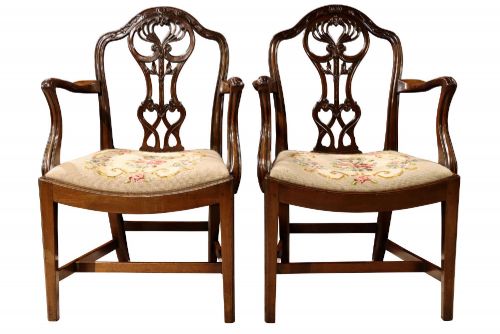


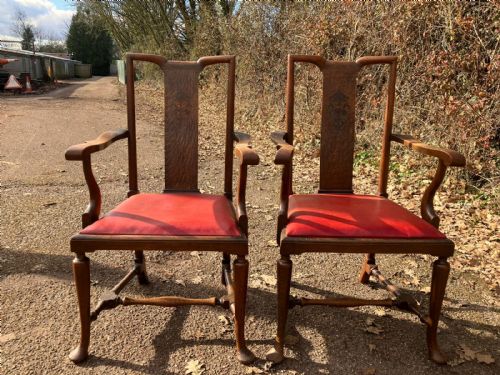

Pair Edwardian Elbow Chairs
Pair Edwardian elbow chairs bring distinctive period form and comfort to a room, offering matched seating with arm supports.
Pair Edwardian Elbow Chairs
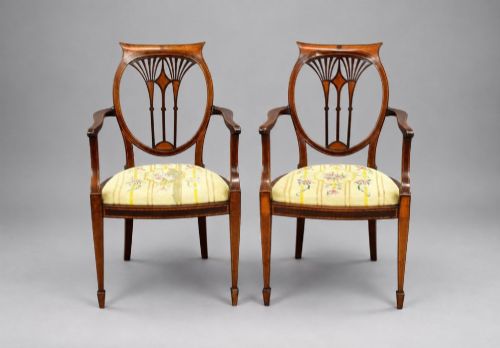
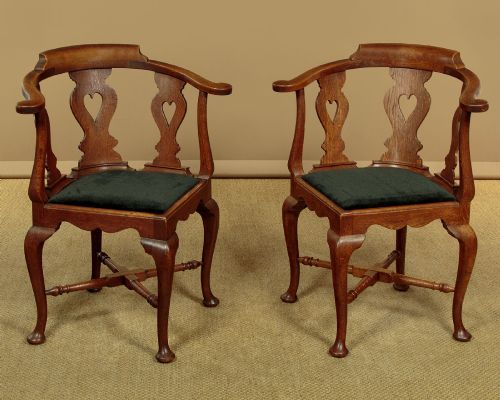
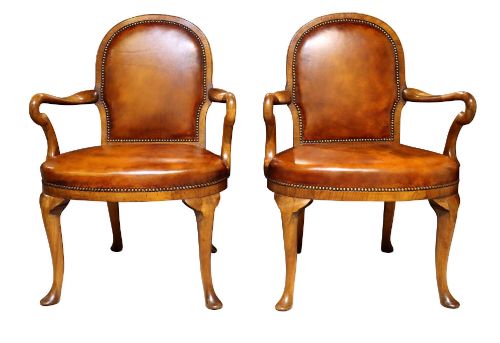
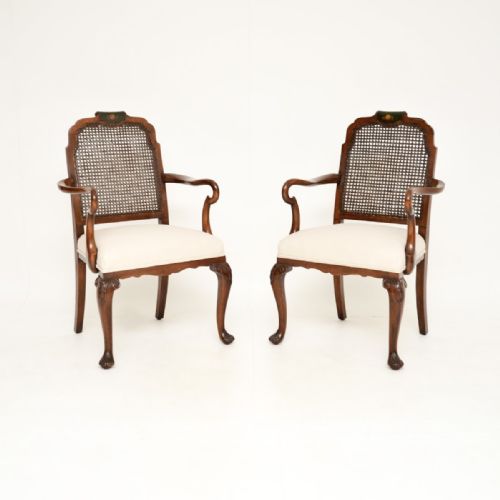
Pair Edwardian elbow chairs comprise matched seating designed with armrests, originating predominantly from the early 20th century, 1900, and 1890 periods. These pieces serve primarily as carvers, desk chairs, salon seating, and corner armchairs, fulfilling functional roles around dining tables and writing desks. Buyers encounter diverse stylistic interpretations ranging from straightforward oak utility to elaborate revival designs.
The selection on this page demonstrates significant stylistic variety spanning Sheraton, Chippendale Revival, Hepplewhite, Arts & Crafts, Art Nouveau, and Jacobean Revival aesthetics. Mahogany, oak, walnut, and satinwood form the primary structural timbers, frequently paired with inlaid details, carved elements, or lacquered finishes. Upholstery options include leather, tapestry, cane, and diverse woven fabrics that define the seating surface.
How They Were Made
Cabinetmakers constructed pair Edwardian elbow chairs using solid hardwoods such as mahogany, oak, walnut, and satinwood. Joinery methods relied on traditional frame construction, often reinforced with stretchers to support upright use. Timber surfaces received polished finishes, fine carved detailing, or contrasting wood inlays.
Seating integration involved multiple specialised techniques depending on the model specification. Craftspeople incorporated drop-in upholstered pads, leather skins fixed with tacks, woven cane panels, and tapestry textiles. Structural framing accommodated open arm designs, high backs, and specialised corner configurations.
Listings feature Edwardian, 1900, 1890, 1920, and 19th Century periods alongside styles such as Chippendale Revival, Arts & Crafts, and Sheraton.
What Varies in Quality
Quality differences in pair Edwardian elbow chairs rest upon the selection of timber and the execution of decorative details. Dense hardwoods like mahogany and figured walnut alongside precise marquetry inlay separate standard utility seating from finer salon pieces. Carved ornamentation demonstrates the hand of a skilled maker through depth and precision.
Structural integrity and material authenticity dictate the upper tier of the range. Original components such as cane panels, leather upholstery, and matched timber grains maintain the integrity of the pair. The sophistication of the revival style, whether Chippendale or Arts & Crafts, reflects the ambition of the original workshop.
Shapland & Petter
The Pair Edwardian Elbow Chairs Glossary
- Elbow chair
- An armchair designed with low rests for the arms, often utilised at the ends of dining tables or beside desks.
- Carver armchair
- A sturdy wooden chair featuring armrests, traditionally placed at the head of a dining table.
- Cane
- Woven rattan material used to form open, breathable panels for chair seats and backs.
- Inlay
- Decorative wood or shell inserted into the timber surface to create contrasting patterns and motifs.
- Arts & Crafts
- A design movement emphasising honest construction, simplified form, and visible craftsmanship using natural materials.
Pair Edwardian Elbow Chairs: Frequently Asked Questions
What is an elbow chair?
An elbow chair is an armchair with lower arm supports, designed to fit comfortably beneath a desk or dining table surface.
These pieces provide additional support compared to standard side chairs while maintaining a compact footprint.
How do I identify Edwardian seating?
Edwardian seating typically dates from the early twentieth century and the preceding decade, reflecting transitional tastes.
Makers combined lighter structural proportions with influences drawn from earlier Georgian revival styles and contemporary arts movements.
Where were these chairs used?
These chairs served multiple domestic functions including salon seating, desk chairs, and carvers positioned at dining tables.
Matched pairs allowed for balanced placement in formal rooms or flanking a fireplace.
What woods are common?
Mahogany, oak, walnut, and satinwood form the primary structural timbers utilised across these pieces.
Craftspeople often selected specific woods to match prevailing interior decoration and revival aesthetics.