



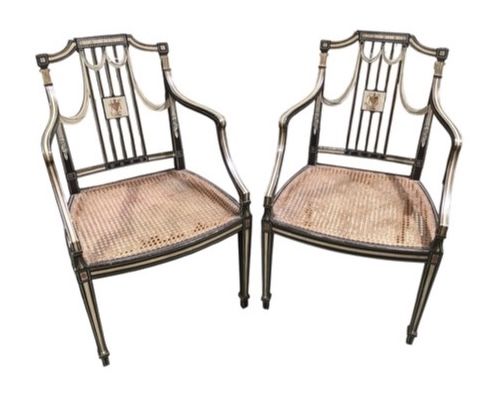


Pair Edwardian Carvers
Pair Edwardian carvers bring matched seating and generous proportions to a dining table or parlour, combining period craft with practical comfort.
Pair Edwardian Carvers
A pair Edwardian carvers refers to matched pairs of armchairs, elbow chairs, and salon seats produced around the turn of the twentieth century. These armchairs served as principal seats at the head of a dining table or as decorative additions to drawing rooms and reception spaces.
The versions most commonly encountered on this page date from the Edwardian period and the early twentieth century, though examples span from the nineteenth century into the 1930s. Woods such as mahogany, oak, and walnut predominate, often styled after earlier revivals including Chippendale, Sheraton, and the Arts and Crafts movement.
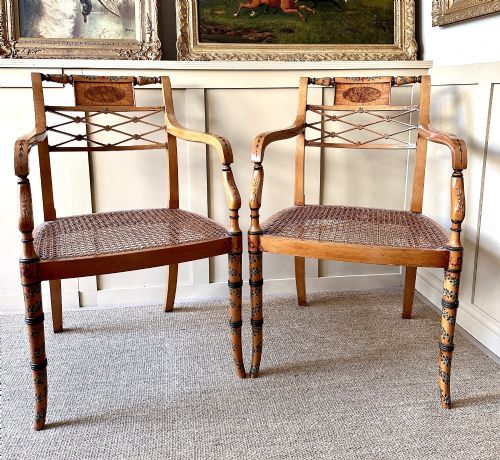
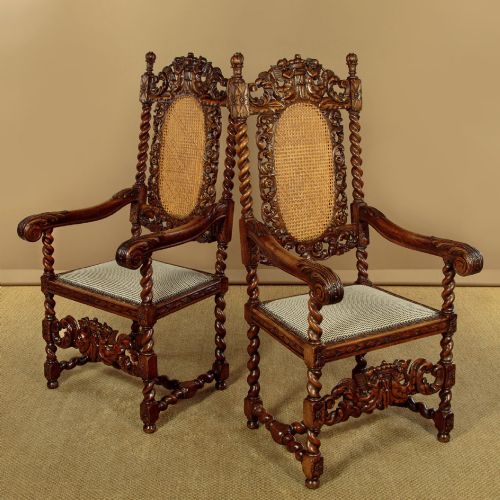
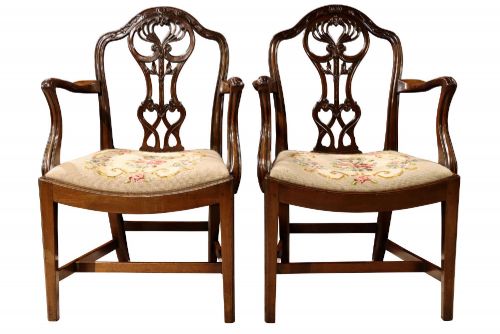
Forms range from sturdy oak hall chairs with carved details to delicate inlaid satinwood and mahogany salon armchairs with upholstered seats. Buyers select these pairs to establish symmetry and historical character in a dining room or study.
Construction and Materials
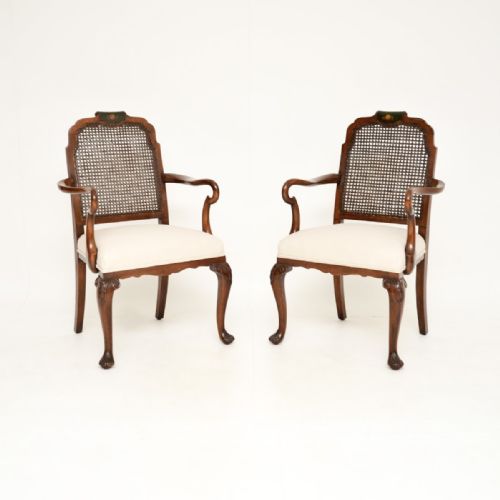
Cabinetmakers constructed these frames using solid hardwoods like mahogany, walnut, and oak, frequently employing contrasting string inlay or satinwood details to decorate the surfaces. Caning, leather, tapestry, and various woven fabrics provide the seating materials across different models.
Joinery methods combined traditional mortise and tenon framing with turned supports, barley twists, and carved splats depending on the stylistic revival. Lacquering and fine polishing finished the wood structures, while drop-in or upholstered pads completed the seats.
Pair Edwardian Carvers Retail Price Guide 2026
Typical asking prices for pair edwardian carvers among the pieces listed under this phrase on Sellingantiques today, from the lower quarter to the upper quarter. They describe what is for sale here now, not the wider market.
Listings feature oak, mahogany, and walnut frames alongside alternative materials like cane, brass, and fabric.
Judging Quality
The refinement of the carving and the choice of primary timber distinguish exceptional pairs from standard utility seating. Finely figured mahogany, rich walnut, and crisp hand-carving indicate workshops that invested greater labour in the frames.
Shapland & Petter
The Pair Edwardian Carvers Glossary
- Carver chair
- An armchair designed with open elbows, traditionally placed at the ends of a dining table to distinguish the head seats from side chairs.
- Elbow chair
- An alternative term for an armchair, featuring supportive arm rests that frame the seated user.
- String inlay
- A narrow line of contrasting wood veneer embedded flush into the primary timber surface to create decorative borders.
- Drop-in seat
- A removable upholstered frame that fits neatly into a recessed seat rail within the chair construction.
- Barley twist
- A decorative turning technique resembling a spiralling rope, frequently utilised on the legs and uprights of oak furniture.
Pair Edwardian Carvers: Frequently Asked Questions
What is a carver chair?
A carver chair is an armchair traditionally positioned at the head of a dining table. These seats feature supportive arm rests to distinguish them from standard dining chairs.
Pairs of these chairs offer balanced symmetry when placed at opposite ends of a table or paired together in a salon.
How do I date Edwardian carvers?
Edwardian carvers date from the reign of King Edward VII between 1901 and 1910, though pieces from the broader period span from the late nineteenth century to the 1920s. Stylistic cues, construction methods, and registration marks help narrow the timeline.
Revival styles from earlier centuries often blend with the lighter proportions typical of the Edwardian era.
Where should I place these armchairs?
These armchairs suit dining rooms as head-of-table seating or function as occasional chairs in hallways, bedrooms, and drawing rooms. Their matched appearance brings formal balance to interior spaces.
Lighter salon versions work well in sitting rooms, while sturdier oak and walnut designs anchor studies and halls.
How do I care for antique wood and cane?
Maintain antique wood surfaces by dusting with a dry cloth and occasionally applying appropriate beeswax to nourish the grain. Keep caned panels lightly conditioned to prevent the natural fibres from drying out and snapping.
Positioning the chairs away from direct heat sources and strong sunlight preserves both the polish and the upholstery fabrics.