




Pair Doulton Lambeth Vases
These pair doulton lambeth vases bring the tangible weight of British art pottery into your home through distinctive salt-glazed stoneware and floral enamel.
Pair Doulton Lambeth Vases
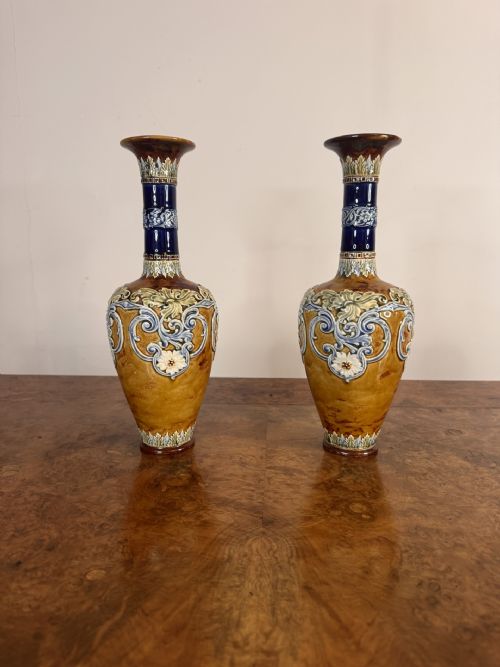
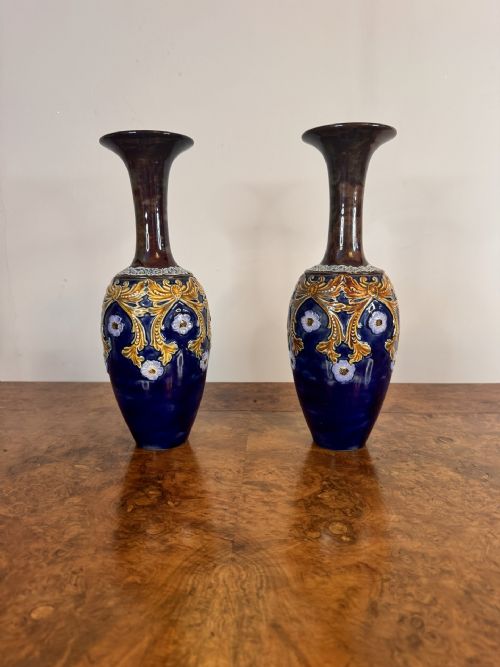
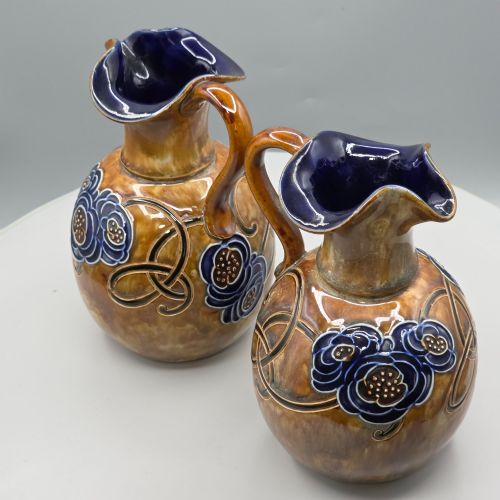
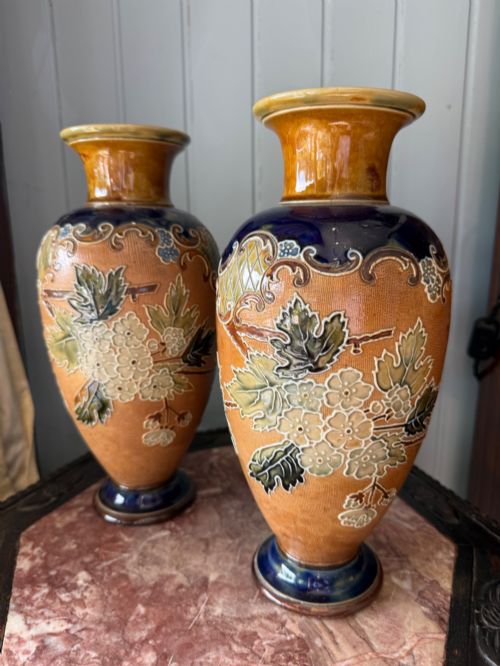
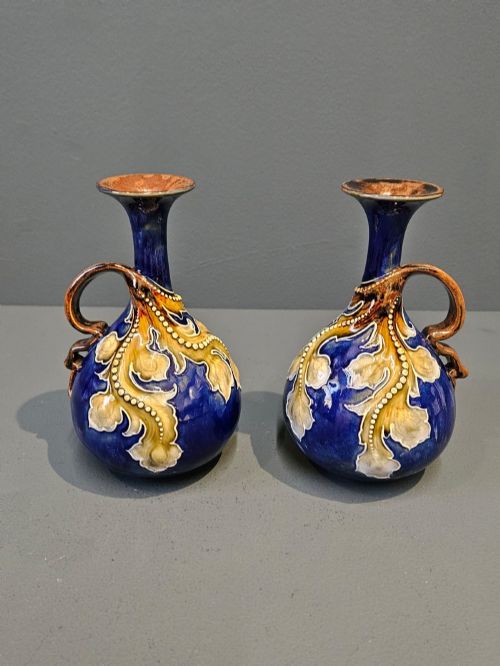
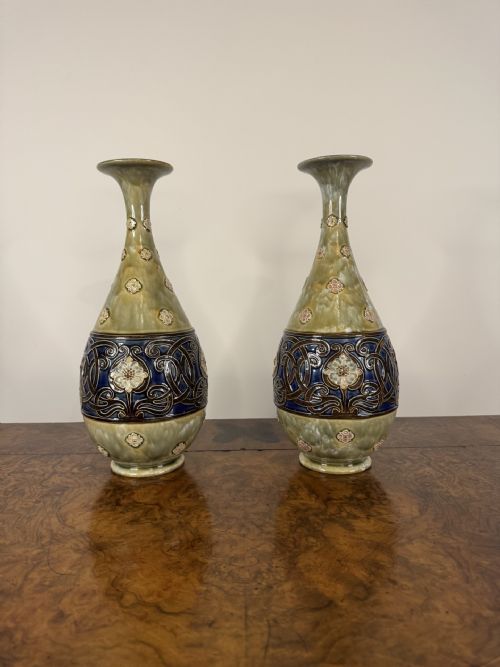
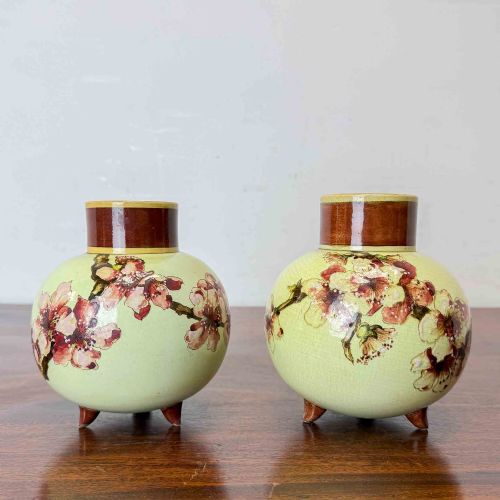
A pair doulton lambeth vases brings together matched vessels produced by the famous London pottery during the late nineteenth and early twentieth centuries. These pieces emerge from periods spanning the Victorian era through the Edwardian years, capturing shifts in design from heavy Victorian ornamentation to flowing Art Nouveau forms. You are most likely to encounter salt-glazed stoneware and glazed pottery vessels featuring distinct floral patterns, autumnal motifs, or delicate cherry blossom designs.
The forms vary from traditional baluster shapes and heavy jugs to slender bottle-shaped vases designed for decorative display. The maker's output during these decades combined utility with artistic ambition, utilising skilled studio decorators to paint individual motifs by hand. Finding them paired together offers a matched symmetry that single vessels cannot achieve on a mantelpiece or sideboard.
How they were made
The foundational body of these works relies on durable stoneware and ceramic earthenware, thrown on a potter's wheel or shaped in moulds before firing. Artisans applied glaze and enamel to create tactile surfaces, often incorporating salt glazing during the kiln firing process to produce a characteristic pitted texture. Slaters Patent techniques also appear, utilising lace impressions embedded into the clay body to provide patterned backgrounds for hand-painted floral decoration.
Individual artists within the Lambeth studios added hand-painted details, using coloured slips and enamel pigments over the fired ceramic body. Each piece reflects workshop methods where throwers and decorators worked in tandem, resulting in vases that balance mass production standards with individual artistic touches.
Pair Doulton Lambeth Vases Retail Price Guide 2026
Typical asking prices for pair doulton lambeth vases among the pieces listed under this phrase on Sellingantiques today, from the lower quarter to the upper quarter. They describe what is for sale here now, not the wider market.
Listings feature periods spanning from the Victorian era through 1920, with materials including glazed stoneware, earthenware, and enamel.
What varies in quality
The distinction between standard production items and exceptional pieces rests upon the complexity of the hand-painted decoration and the depth of the glaze. Vases bearing the signature or monogram of renowned studio artists command greater attention due to the individuality of their painted botanical or abstract motifs. The crispness of the moulded relief work and the successful interaction of salt glaze textures further separate superior examples from ordinary utilitarian output.
Proportion and form also dictate the visual strength of a pair, with unusual shapes and well-balanced baluster profiles representing the higher tiers of the pottery's output. The preservation of delicate enamel floral decor without heavy rubbing or loss indicates careful handling over the decades since their manufacture.
Louisa Wakely·Emily Edwards·Ethel Beard·Alberta L. Green·Eliza Simmance·J. P. Hewitt
The Pair Doulton Lambeth Vases Glossary
- Stoneware
- A dense, vitreous ceramic pottery fired at high temperatures until impervious to liquids. This material forms the durable body of most Lambeth studio pieces.
- Slaters Patent
- A decorative technique patented by Doulton involving pressed lace or woven fabrics applied directly onto wet clay to create textured patterns. These textured areas were often finished with coloured enamels and gilt.
- Faience
- Earthenware pottery decorated with opaque coloured glazes before a final kiln firing. This technique allowed artists to paint detailed pictorial scenes directly onto the ceramic surface.
- Art Nouveau
- An international design style characterised by organic, flowing lines, plant motifs, and asymmetrical forms. It strongly influenced the decorative schemes applied to pottery around the turn of the twentieth century.
Pair Doulton Lambeth Vases: Frequently Asked Questions
How should I display my vases?
Position them symmetrically on a sturdy mantelpiece or sideboard where natural light can catch the salt-glazed textures and enamel details. Keep them away from heavy foot traffic areas to prevent accidental knocks against their ceramic bodies.
Ensure they rest on stable surfaces without relying on wall brackets or precarious edges. Their substantial weight requires level placement to avoid tipping.
Can I use them for fresh flowers?
Most of these historic stoneware pieces are waterproof, but antique ceramics are best kept dry to protect fragile interior glazes and historic surfaces from moisture damage. Using them for dry arrangements or simply displaying them empty preserves the interior integrity.
If you do place water inside, check the base beforehand for any hairline drying cracks that might seep moisture onto polished wooden furniture.
How do I clean glazed stoneware?
Dust the surface gently with a dry, soft-bristled brush to clear away particles settled within the textured salt glaze or impressed lace patterns. Avoid harsh chemical cleaners or abrasive scouring pads that can strip the delicate enamel floral decor.
For stubborn dust, a barely damp cloth followed immediately by a dry towel will maintain the polished sheen without risking moisture penetration into the ceramic fabric.
What defines the Victorian era pieces?
Victorian examples tend to feature heavier forms, darker foundational clay tones, and denser ornamentation reflecting nineteenth-century design tastes. Their decorative motifs often lean towards traditional floral arrangements and structured geometric borders.
Later Victorian work begins to introduce the experimental techniques and lighter colour palettes that eventually blossomed into full Art Nouveau styling by the turn of the century.
How do I spot artist signatures?
Inspect the underside of the base or the lower perimeter of the body where studio artists typically inscribed their personal monograms into the damp clay. These incised marks often appear alongside the standard impressed Doulton factory stamps.
Matching monograms across both items confirm that the same hand decorated the matched set before it left the London pottery.