

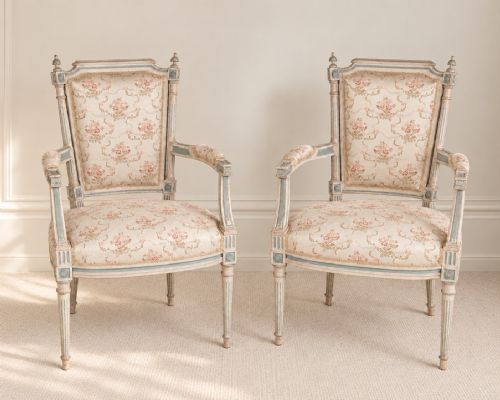
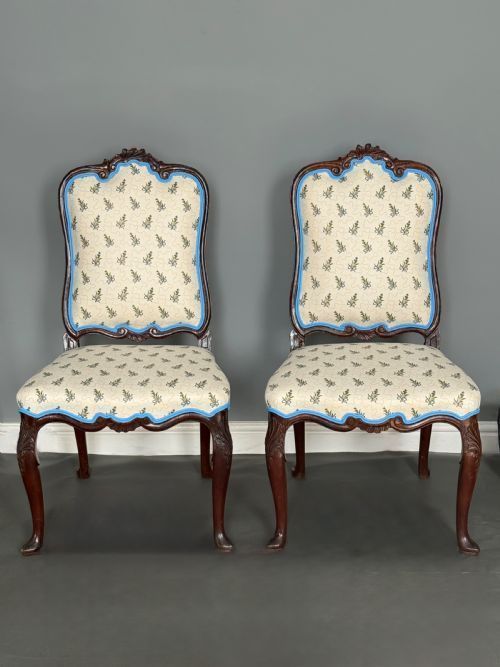
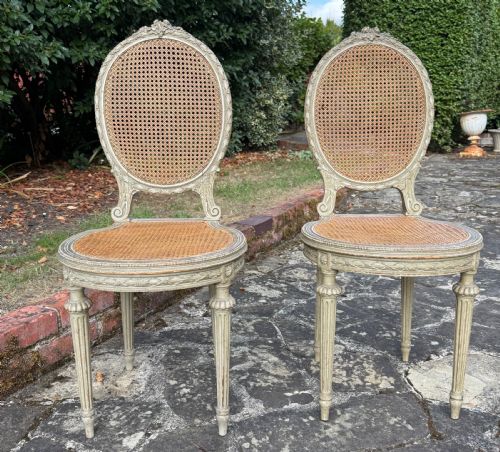
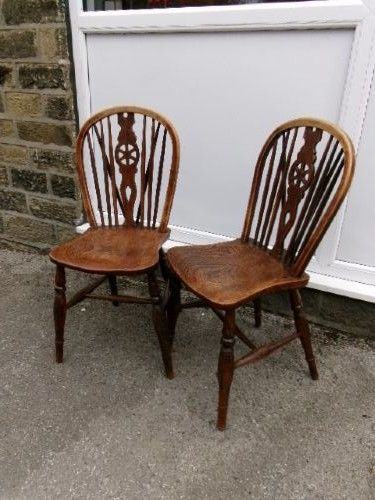
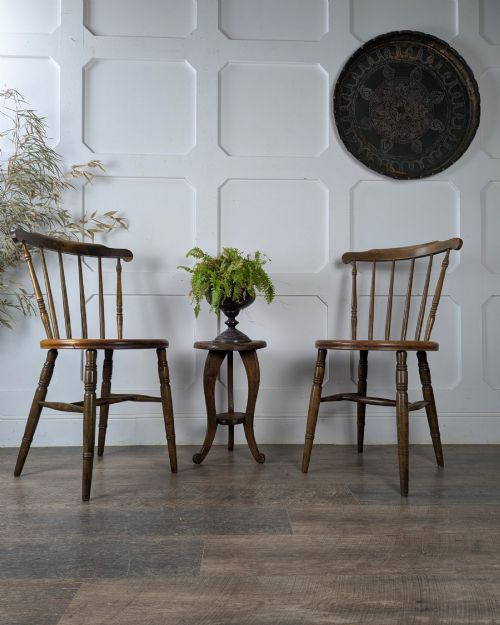
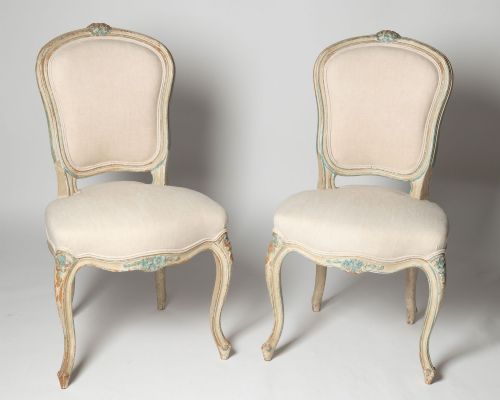
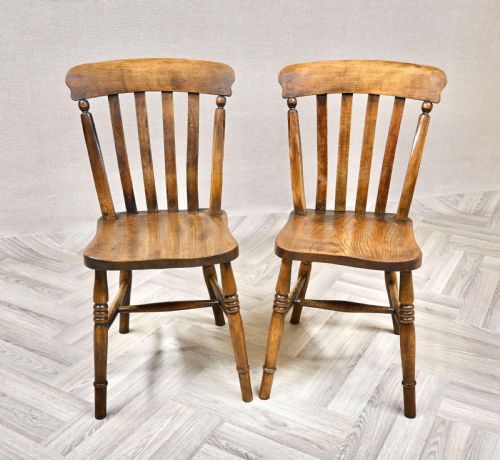
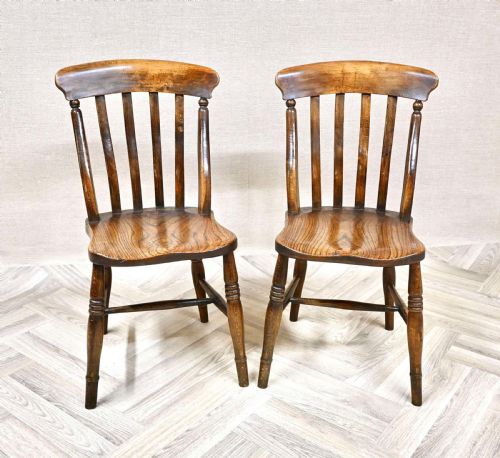
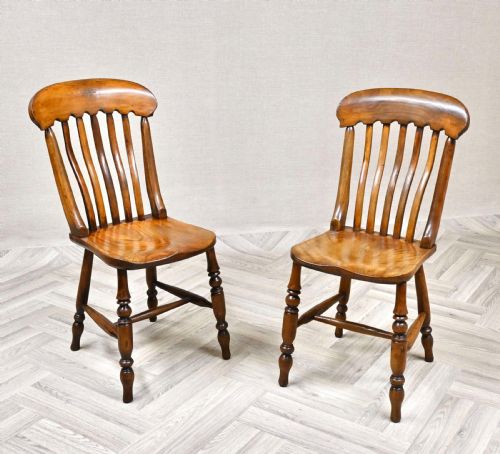
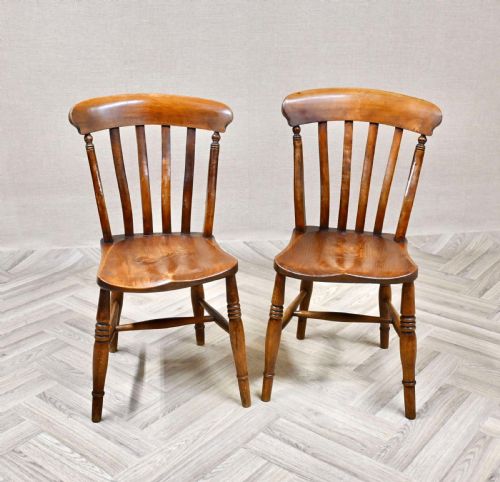
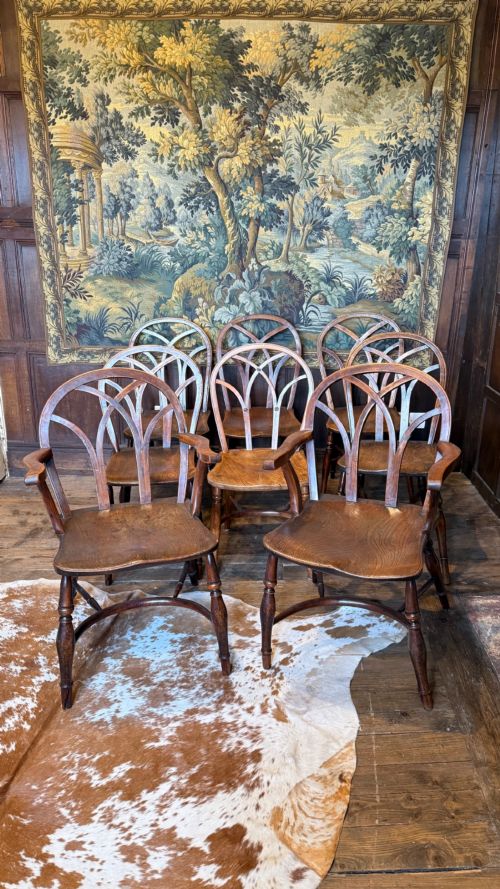
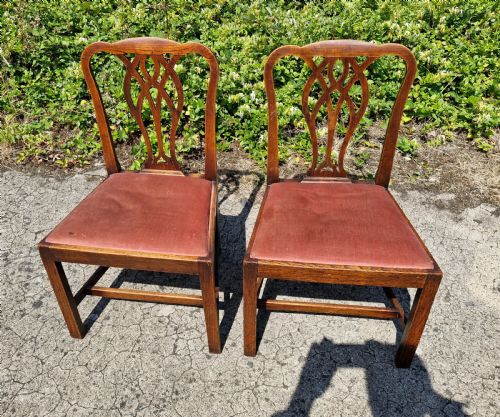


Pair Country Side Chairs
When you want pair country side chairs, you are looking for matched seating carrying centuries of domestic utility.
Pair Country Side Chairs
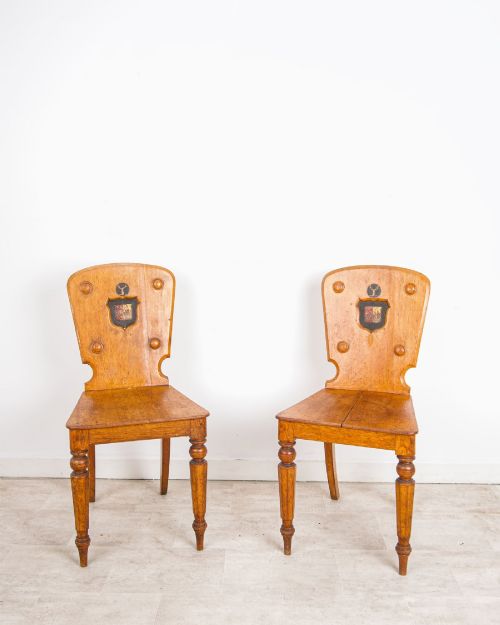
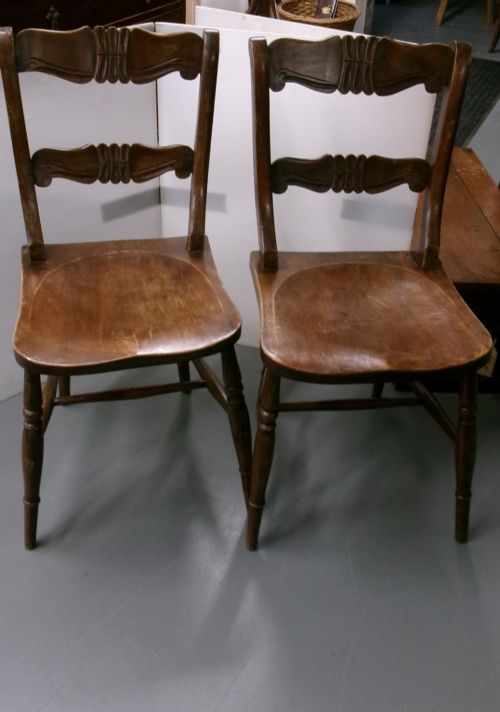
Elm, oak and beech dominate the construction, frequently paired with rush, cane or timber seats. Regional variations such as Lancashire chairs, Windsor designs and rustic farmhouse variants populate the inventory.
Makers ranged from rural bodgers and provincial joiners to larger vernacular workshops producing sturdy seating for everyday households. Surviving examples demonstrate how ordinary domestic furniture accommodated the physical demands of historical homes.
How they were made
Makers utilised solid native timbers such as elm for resilient seats, beech for turned spindles and oak for structural framing. These woods were chosen for local availability and mechanical strength.
Traditional joinery methods such as mortise and tenon joints, steam bending and Windsor stick construction secured the components together without reliance on modern adhesives. Surfaces were often left bare, waxed or finished with scumble paint and original painted schemes.
Seating areas frequently incorporated woven rush, split cane or solid timber planks fixed directly to the underframe. Hand tools left subtle marks on the timber surfaces, distinguishing vernacular production from factory output.
Pair Country Side Chairs Retail Price Guide 2026
Typical asking prices for pair country side chairs among the pieces listed under this phrase on Sellingantiques today, from the lower quarter to the upper quarter. They describe what is for sale here now, not the wider market.
Listings feature eighteenth and nineteenth century periods alongside materials such as elm, beech, oak, rush and paint.
What varies in quality
The integrity of the original timber frame determines the structural merit of each chair. Examples retaining their initial surface finish and unblemished joinery demonstrate higher fidelity to their period of origin.
Proportion and turning execution separate standard utility seating from finer vernacular work. Subtle differences in spindle shaping, arm curvature and timber selection reflect the skill of the original maker.
The Pair Country Side Chairs Glossary
- Windsor chair
- A wooden chair featuring a solid saddle-sculpted seat into which the legs and back spindles are directly inserted. This construction method provides exceptional rigidity through mechanical wedging.
- Rush seat
- A seating surface woven from dried marsh rushes twisted into cords. It offers a resilient, flexible platform for domestic seating.
- Scumble paint
- A decorative paint technique applied to imitate finer grained woods or to create mottled patterns on utilitarian furniture. It protected the underlying timber while adding visual character.
- Elm
- A durable, tough timber frequently utilised for chair seats due to its interlocking grain which resists splitting under stress. It forms the foundation of many traditional vernacular chairs.
Pair Country Side Chairs: Frequently Asked Questions
What defines pair country side chairs?
These pieces are matched sets of vernacular seating created for everyday domestic use in kitchens, halls and dining spaces. They rely on regional traditions rather than formal court styles.
They reflect the materials available to local makers, typically featuring solid timber seats and sturdy turned supports designed for daily service.
How were country chairs used originally?
Families utilised these chairs around farmhouse dining tables, in hallways for receiving guests, and beside hearths for warmth and comfort. Their robust construction handled heavy daily wear.
Because they were made in pairs or larger sets, they provided uniform seating for household members and visitors in rural and provincial homes.
How do I care for antique country chairs?
Maintain the timber by applying traditional beeswax periodically to nourish the dry wood and protect the original surface finish. Avoid placing them near direct heat sources or rapid temperature shifts.
Keep rush or cane seats clean with a soft brush and avoid excessive moisture which can weaken natural fibres over time.
How can I tell different regional styles apart?
Regional styles reveal themselves through distinct construction details, such as the bowed backs of Windsor chairs or the characteristic slats of Lancashire ladderback designs. Local timber choices also point to specific geographical origins.
Examining the turning patterns on legs and spindles helps identify whether a chair originated in an English provincial workshop or a continental European folk tradition.