

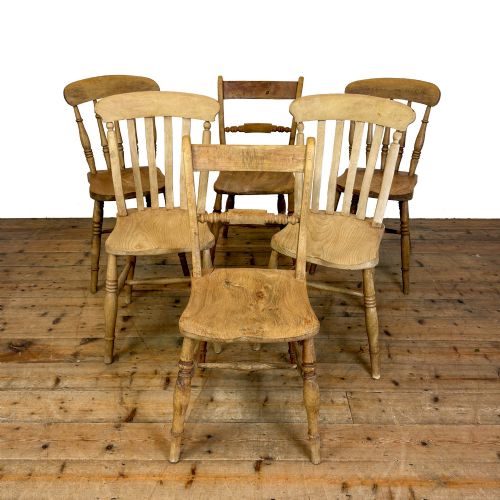
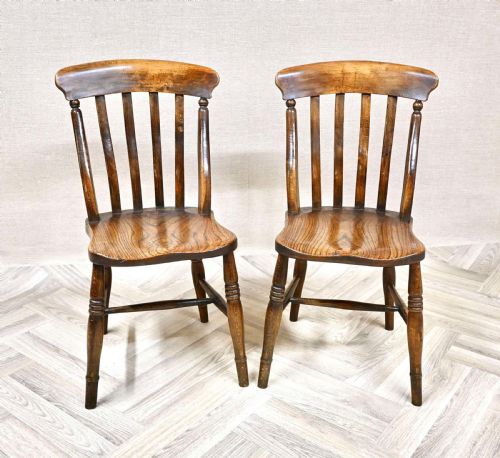
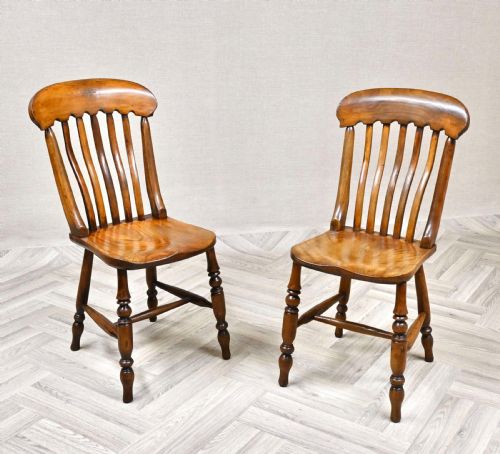
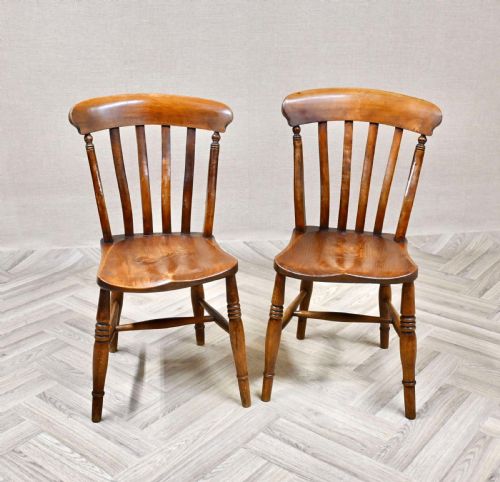


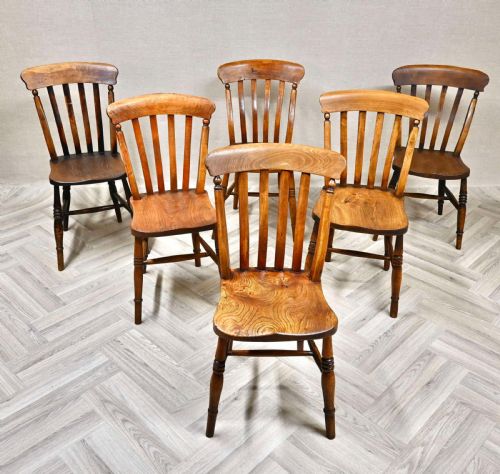

Slat Back Country Chair
A slat back country chair brings honest timber grain, vernacular comfort and sturdy domestic utility straight into the modern room.
Slat Back Country Chair
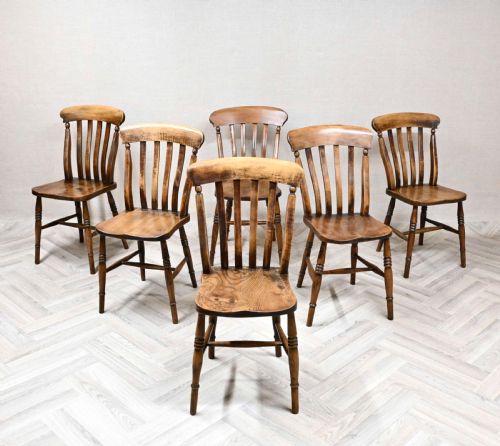
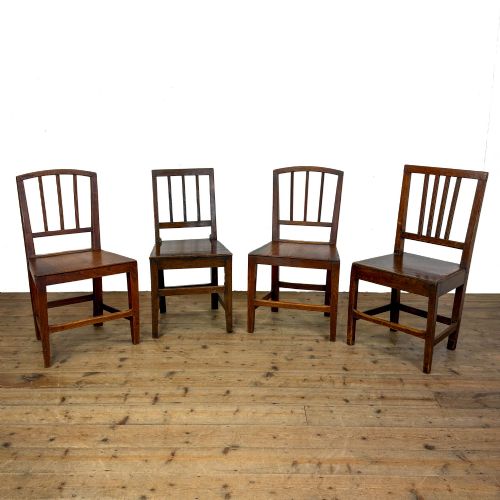
A slat back country chair comprises robust vernacular seating built from native timbers like elm, beech, oak and ash for daily domestic service. When searching for a slat back country chair, buyers encounter pieces originating primarily from the eighteenth and nineteenth centuries, spanning Victorian, Georgian and rustic farmhouse styles. These domestic seats appear as single items, pairs or larger sets suitable for kitchens and dining spaces.
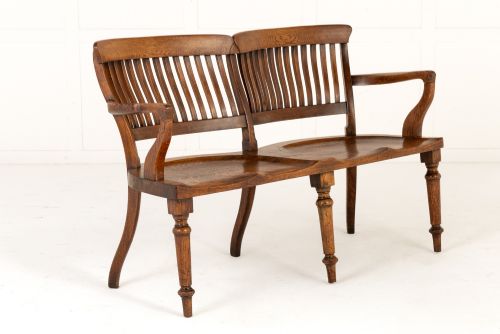
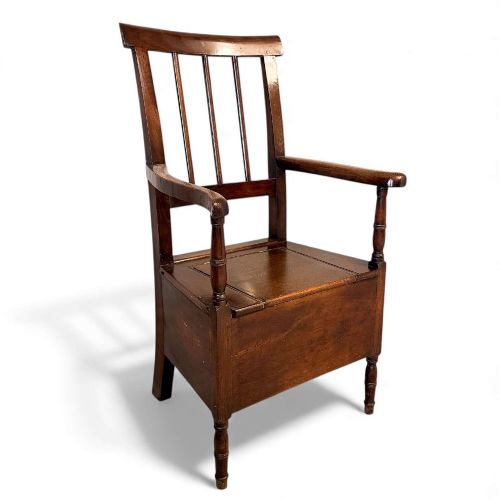
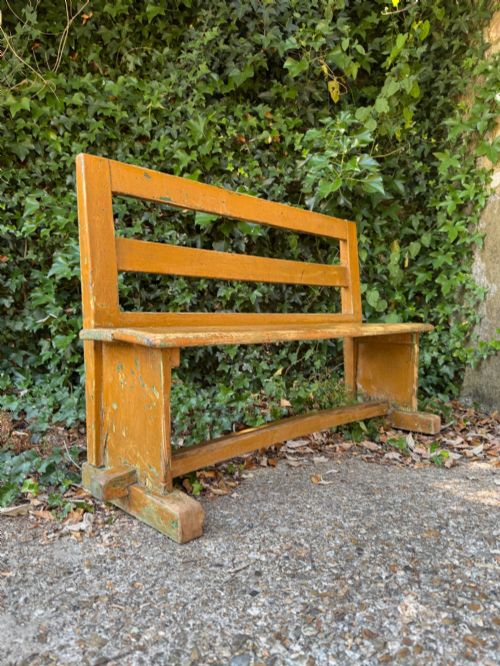
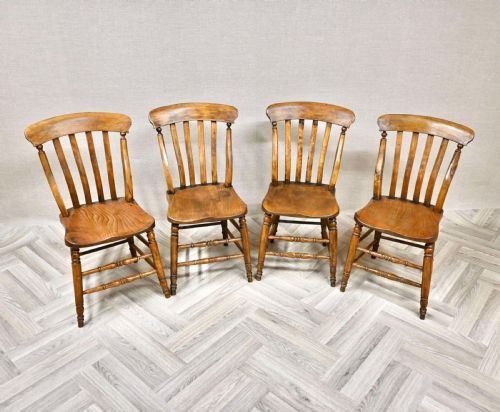
The category encompasses diverse vernacular forms including Windsor lath backs, ladderbacks, armchair variants, benches and children's chairs. Surviving examples demonstrate regional British and European traditions, ranging from Thames Valley and High Wycombe workshops to Scottish vernacular and Welsh country pieces. Each variant relies on simplified construction tailored to local materials and practical household needs.
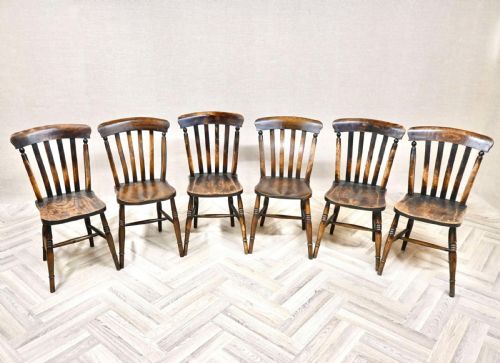
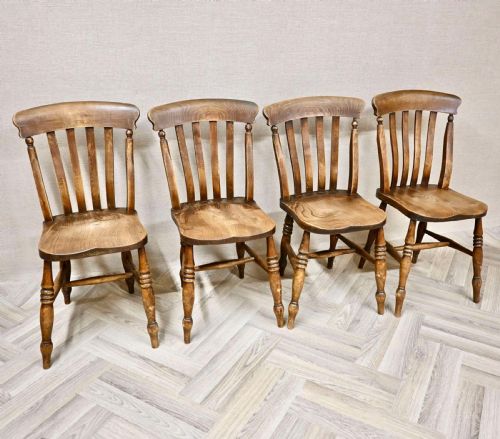
Many survivors display utilitarian adaptations over generations, including rush seating, solid timber plank seats and replacement stretchers. Harlequin sets grouped together later in life frequently appear alongside uniform sets of four, six or eight chairs. The enduring appeal lies in this functional diversity, connecting contemporary interiors directly to historic rural craft.
Factors That Distinguish Examples
Quality in a slat back country chair rests upon the harmony of proportions, the integrity of the original timber and the degree of wear on the seating surface. Superior examples retain deep, natural patination across untouched hardwood planks and properly tensioned uprights without excessive timber replacement.
Finer pieces exhibit sophisticated regional turning on legs and stretchers, combined with well-sculpted saddle seats that provide ergonomic comfort. Lesser examples may show clumsy historic repairs, loose joints from dry shrinkage or mismatched components gathered together over subsequent centuries.
Slat Back Country Chair Retail Price Guide 2026
Typical asking prices for slat back country chair among the pieces listed under this phrase on Sellingantiques today, from the lower quarter to the upper quarter. They describe what is for sale here now, not the wider market.
Grandfather armchairs often acquired extra layers of dark wax in farmhouse inglenooks, absorbing generations of smoke and warmth.
Heals
The Slat Back Country Chair Glossary
- Vernacular
- Unpretentious domestic objects made by regional artisans for local use rather than following strict metropolitan design rules. These pieces prioritise practical function and available local materials over academic style.
- Lath back
- A chair back constructed from flat horizontal or vertical timber slats rather than turned spindles. This configuration provides sturdy back support while using readily available sawn boards.
- Saddle seat
- A solid timber seat carved into a hollowed contour resembling a saddle for improved sitting comfort. Makers shaped these thick elm or pine planks using adzes and scorps.
- Harlequin set
- A collection of dining or kitchen chairs that share similar general styles, periods or materials but were not originally manufactured together as a matching group. Such sets evolved in homes over many years.
- Rush seat
- A woven seating surface created from dried marsh rushes twisted into cords and wrapped around the chair rails. This traditional technique yields a resilient, flexible platform for daily seating.
Slat Back Country Chair: Frequently Asked Questions
How do I date an old country chair?
Dating relies upon examining tool marks, construction methods, timber species and wear patterns visible across the frame and seat. Eighteenth-century pieces often display hand-split components and pegged joinery, whereas nineteenth-century examples frequently incorporate factory-turned spindles.
Secondary clues include the presence of rush seating, historic finish layers and regional fastening techniques. Comparing specific back profiles and arm shapes against known stylistic periods helps narrow down the decade of production.
Can I use these chairs every day?
These domestic seats were originally built for heavy daily service in farmhouses and kitchens, making them exceptionally sturdy for modern living. Solid timber construction and robust joinery allow them to withstand regular household use without difficulty.
Buyers should occasionally check leg stretchers and joint stability, as dry indoor heating can cause historic timber to loosen slightly. Simple preventative care ensures these historical items remain fully functional dining or fireside seating.
What is a Windsor chair?
A Windsor chair is a distinct form where individual spindles, back slats and legs are fitted directly into a thick, solid carved wooden seat rather than an independent frame. This ingenious construction method provides remarkable structural strength through triangulation.
Variants often feature arched lath backs, bow backs or comb pieces braced by turned arm supports. The style flourished across British rural workshops, particularly in the Thames Valley and High Wycombe regions.
Are harlequin sets matched?
Harlequin sets consist of individual chairs that share similar materials, periods or country styles but were gathered together over time rather than bought as an original factory set. Such groupings display subtle variations in turning, seat dimensions and slat profiles.
This mismatched character reflects historical domestic practice where households naturally accumulated seating from local makers as needed. Collectors prize these assembled sets for their authentic appearance in traditional dining spaces.