



Pair Country House Armchairs
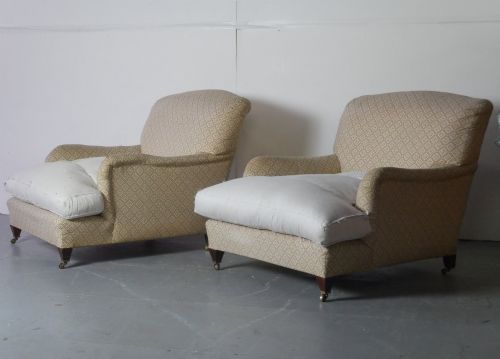
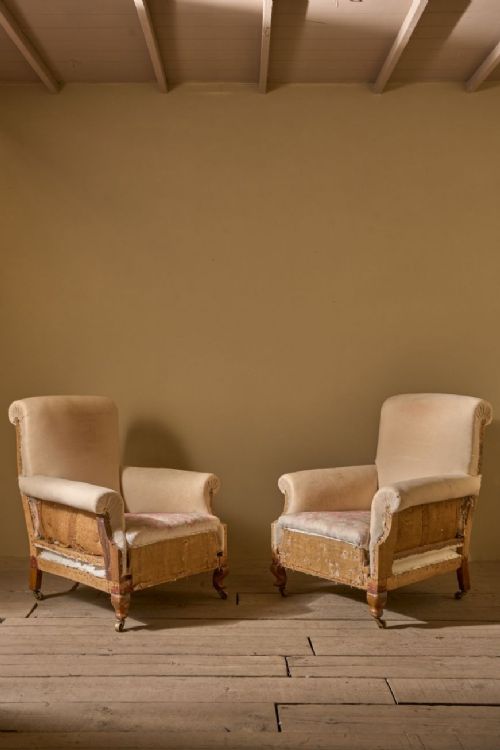
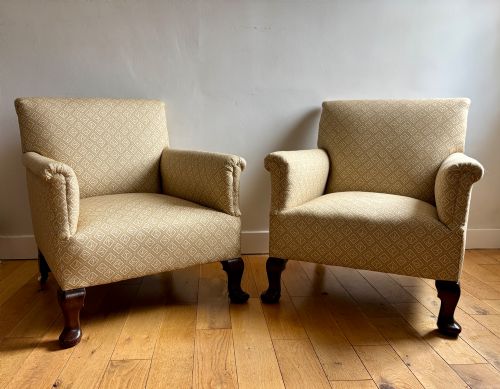
These pair country house armchairs bring deep comfort and lived-in charm to a drawing room, scaled for real sitting rather than formal posture.
Pair Country House Armchairs
When you search for pair country house armchairs, you encounter seating designed for long hours of reading and conversation in large domestic interiors. These pieces emerge predominantly from the nineteenth and early twentieth centuries, spanning Victorian, Edwardian, and later periods up to nineteen thirty.
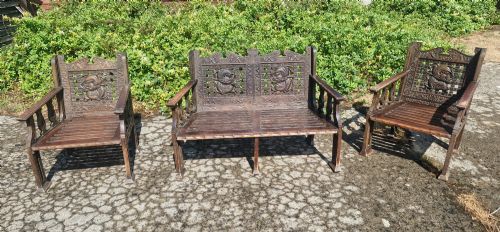
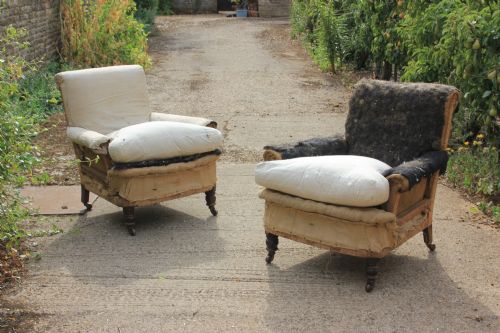
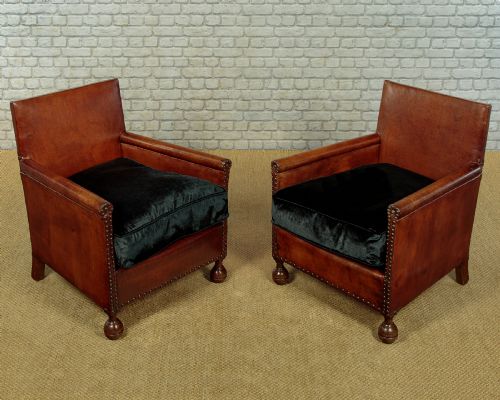
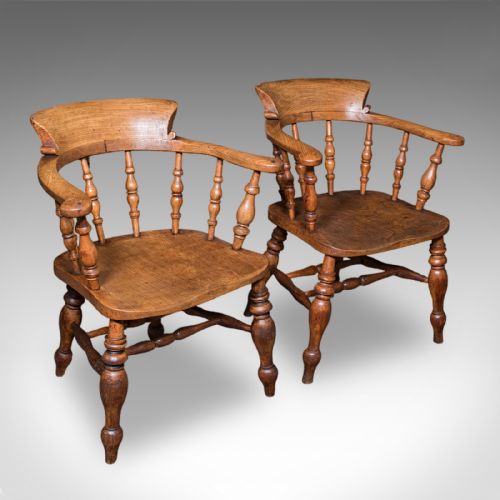
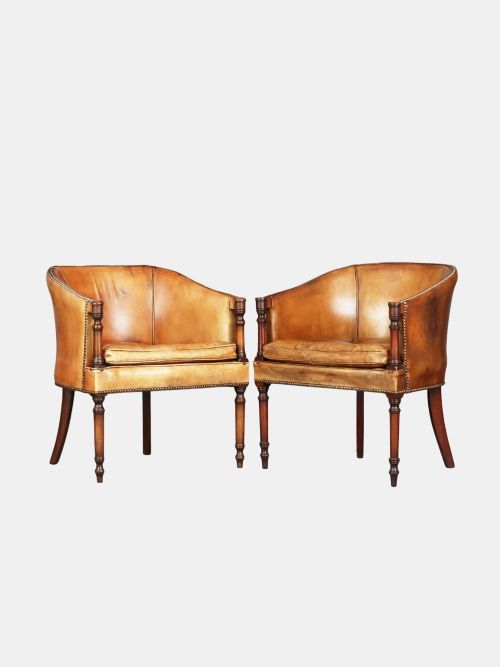
The forms vary from deep-seated upholstered models and scroll backs to spindlebacks and library chairs, often found in pairs that anchored opposite sides of a fireplace. Materials range from exposed timbers such as oak, elm, walnut, and mahogany to heavy leather and fabric coverings including ticking and floral upholstery.
Most examples originate from English workshops and makers, though occasional pieces reflect broader stylistic influences or regional country traditions. The selection balances substantial upholstered comfort with traditional wooden carver and captain's chair frameworks.
Materials and Construction
Frames rely on sturdy native and imported hardwoods, bringing together oak, elm, walnut, mahogany, and ash to support daily wear. Timber components are jointed solidly, sometimes complemented by carved details or turned spindlework.
Upholstery methods prioritise deep cushioning and durability, utilising leather, fabric, and ticking over robust internal springing. Brass accents and detailed leatherwork finish many of the library and club styles.
Listings feature periods spanning the early nineteenth century through to nineteen thirty, incorporating Victorian, Edwardian, and nineteen twenties examples.
Distinctions in Quality
The standard of a pair country house armchairs rests primarily on the integrity of the frame and the quality of the materials used in its construction. Heavier timbers and superior upholstery stuffing separate substantial library and club chairs from simpler vernacular seating.
Maker attribution also marks the scale, with documented pieces by established firms commanding particular attention for their refined proportions and specialist craftsmanship. Harmony between the two chairs in a pair and the preservation of original leather or fabric surfaces further define the better examples.
Whytock & Reid·Howard and Sons·Gillows
The Pair Country House Armchairs Glossary
- Carver chair
- An armchair designed with solid wooden arms, typically intended for the head of a table or as an occasional seat. These often use elm or ash frames.
- Bergere
- An upholstered chair featuring an enclosed wooden or cane-work frame, where the sides and back incorporate woven cane panels. This style appears across Edwardian and Victorian examples.
- Scroll back
- A chair design where the top rail or arms curve outward in a scroll formation. This profile gives a distinct silhouette to many nineteenth-century country house models.
- Spindleback
- A style of seating where a series of slender vertical wooden rods forms the backrest. It is frequently seen in regional country chairs made from elm and ash.
- Ticking
- A tightly woven, durable cotton or linen fabric traditionally used for mattress covers and dust-resistant upholstery. It appears on relaxed country house seating.
Pair Country House Armchairs: Frequently Asked Questions
How do I date a pair of armchairs?
Dating relies on examining the timber species, upholstery construction, and overall stylistic markers such as scroll backs or turned legs. Nineteenth-century pieces often display heavier mahogany or walnut frames, while Edwardian and later examples introduce lighter woods and specific ticking fabrics.
Comparing the form and joinery against documented periods helps establish a reliable timeline. Details like brass castors or leather patination further indicate the era of manufacture.
Were these chairs used only in libraries?
While leather library chairs and club chairs suited study spaces and reading rooms, similar armchairs filled drawing rooms, conservatories, and halls. Their diverse forms served various domestic contexts across large country estates.
Pairs often sat flanking a hearth or arranged in seating suites for social gatherings. Their robust construction accommodated heavy daily use throughout the house.
What is the difference between a club chair and a library chair?
Library chairs and club chairs both emphasise deep seating and leather upholstery, but club chairs typically feature a lower, more rounded profile designed for relaxed lounging. Library chairs often maintain a slightly firmer structure suited to reading at a desk or table.
Both types utilise high-quality leather and substantial internal padding. Their presence in country houses reflects a Victorian and Edwardian taste for comfort.
How should I care for leather upholstery?
Leather surfaces benefit from regular dusting and occasional treatment with appropriate conditioners to prevent drying and cracking. Keeping chairs away from direct heat sources preserves the natural hide.
Allowing the leather to retain its natural patination maintains the character developed over decades of use. Gentle cleaning protects the original finish of nineteenth and early twentieth-century examples.