
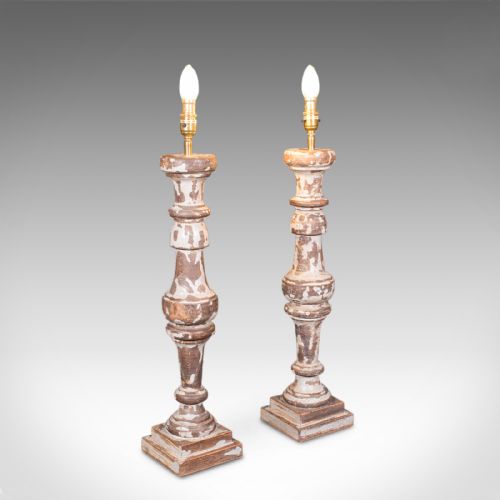

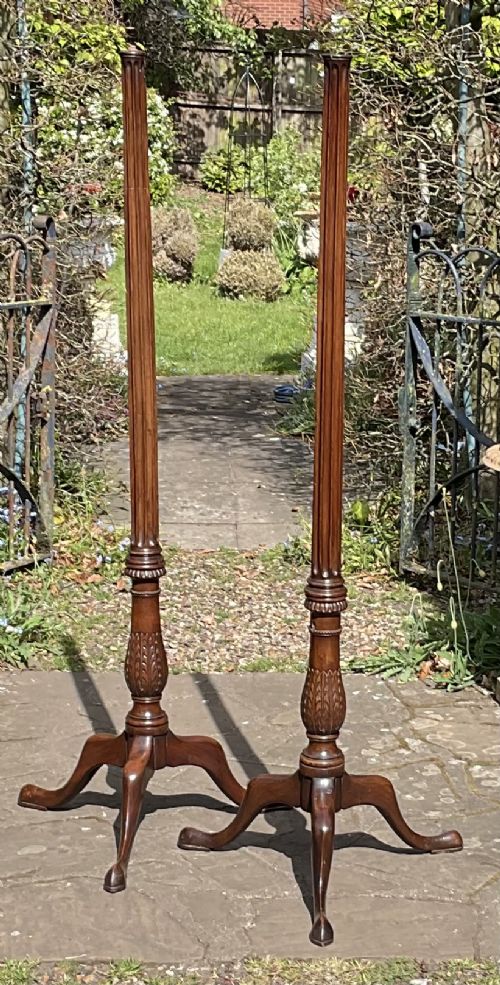

Pair Column Lamps
Pair column lamps bring architectural symmetry and warm illumination to interiors, drawing on classical forms that span multiple historic periods.
Pair Column Lamps
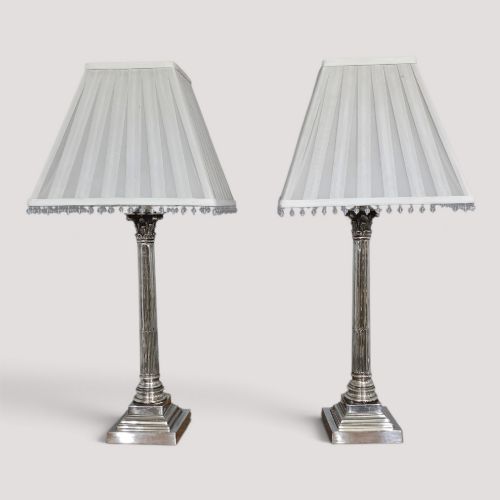
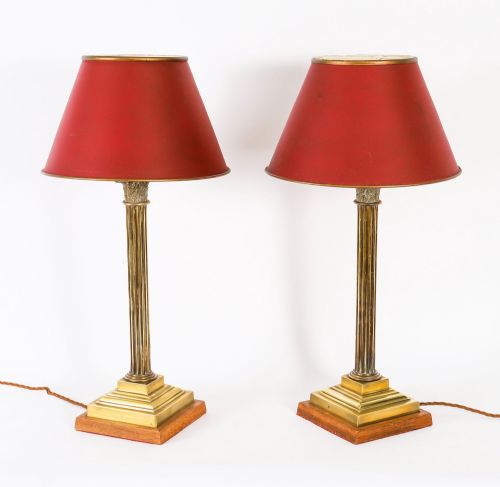
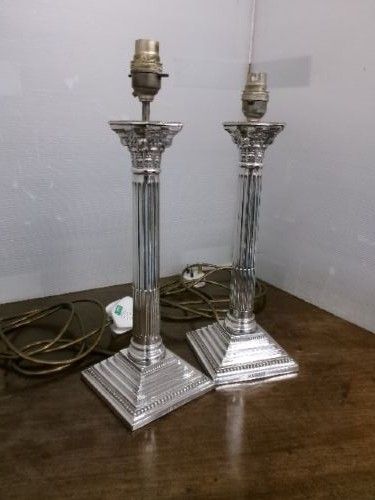
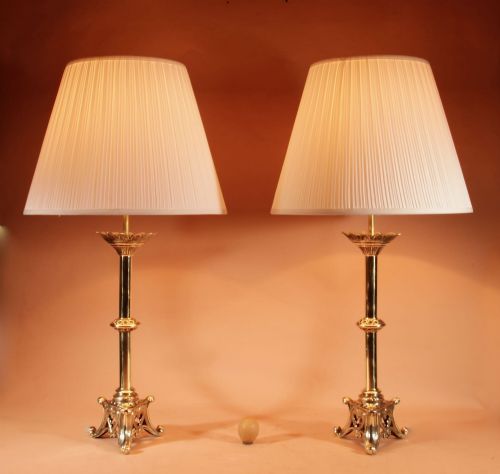
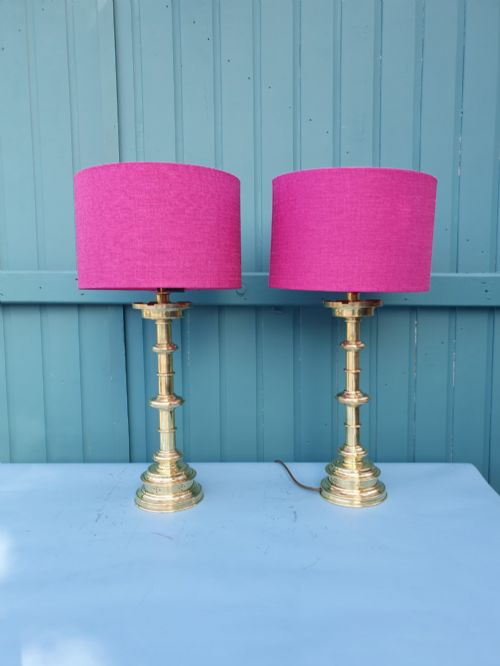
The selections available range from sturdy nineteenth-century brass standards to slender early twentieth-century examples rendered in silver plate, marble, and patinated bronze. Many originated as candlesticks or oil lamps before undergoing conversion for electrical use during later decades.
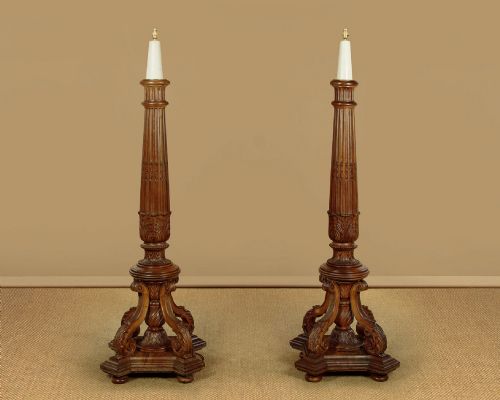
Neoclassical and Victorian iterations dominate the selection, bringing formal decorative presence alongside functional illumination. Shorter table versions sit alongside taller standard lamps designed to stand directly upon the floor.
How they were made
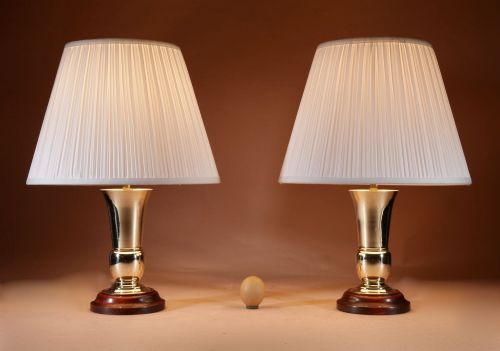
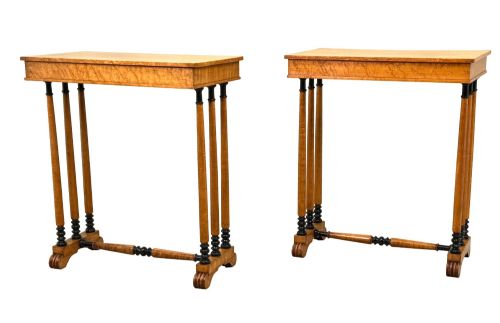
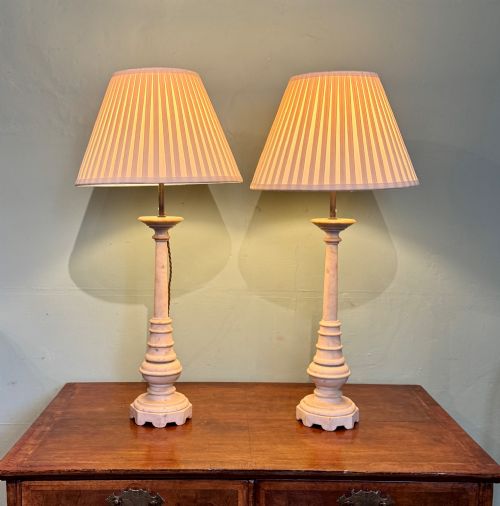
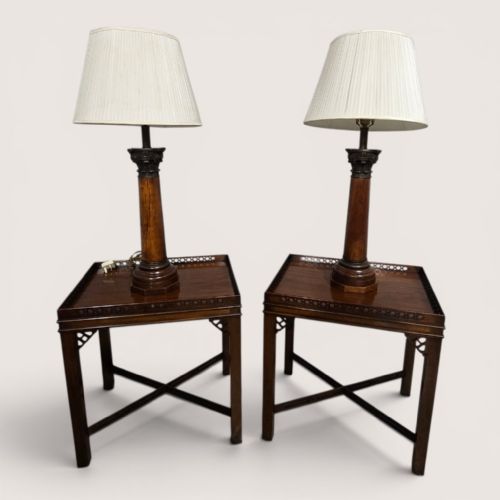
Metal-working techniques define a large portion of the inventory, utilising cast brass, silver plating, and ormolu applied over bronze cores. Workshops employed precise lathe turning for wooden components like oak, mahogany, and birdseye maple, alongside carved marble and alabaster shafts.
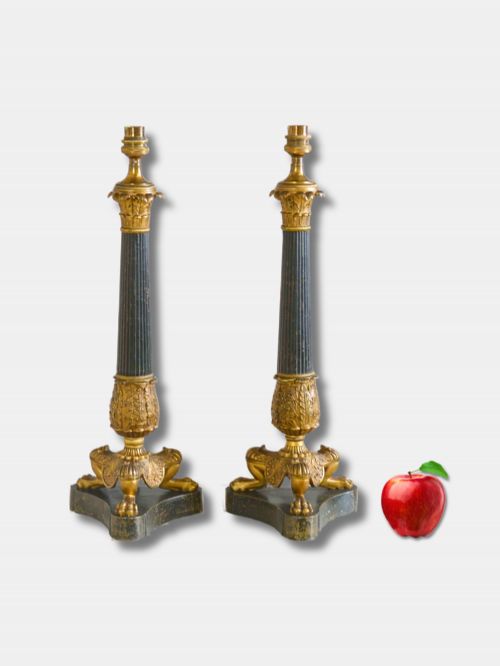
Decorative detailing on classical columns often includes acanthus leaf capitals, fluted or reeded shafts, and stepped square bases. Many designs incorporate applied mounts, gilt highlights, and period wiring adaptations fitted during twentieth-century conversions.
Listings feature brass, marble, and silver-plated materials spanning the Victorian, Edwardian, and Regency periods.
What varies in quality
The calibre of a pair depends heavily on the crispness of the casting work and the depth of the chasing on metal capitals and bases. Superior examples maintain exact symmetry between both columns, preserving original gilding, patination, and proportional balance without heavy wear.
Materials dictate upper tiers of execution, where solid bronze, heavy gauge silver plate, and finely figured marbles outperform lighter hollow brass or painted pine bases. Integrity of construction at the join between the column shaft and the heavy base separates standard domestic pieces from monumental commissions.
Hinks and Sons
The Pair Column Lamps Glossary
- Corinthian
- A classical order of architecture characterised by ornate capitals decorated with acanthus leaves and scrolls. This motif appears frequently on the upper sections of metal and wooden column lamps.
- Ormolu
- Finely ground high-carat gold applied in a mercury amalgam to bronze or other metals. This technique creates a rich decorative surface seen on French and English neoclassical lighting.
- Torchere
- A tall stand or candlestick designed to hold a light source, often taking the form of an elaborate column. These pieces function as independent floor-standing lighting elements.
- Tole-peinte
- Painted sheet metal used for decorative items and lamp bases, originating in France. This technique allows for colourful surface patterns and muted metallic finishes.
- Alabaster
- A fine-grained, translucent stone carved into smooth architectural columns and lamp bodies. When illuminated, the material diffuses a soft, even glow through its natural veining.
Pair Column Lamps: Frequently Asked Questions
Are these lamps converted from old candlesticks?
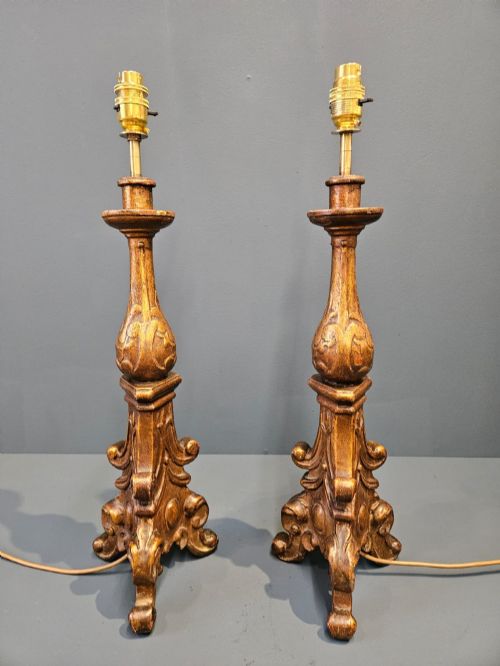
Many column lamps started life as oil lamps or heavy church candlesticks before receiving electrical fittings in the twentieth century. This conversion process preserves the antique metalwork or turned timber while updating the core functionality for modern domestic use.
Evidence of conversion often appears around the burner mechanism or base where wiring channels have been safely integrated into the historic structure.
How do I identify a neoclassical column lamp?
Neoclassical pieces draw direct inspiration from ancient Greek and Roman architecture, featuring straight fluted shafts, stepped square bases, and classical orders at the top. These designs prioritize strict symmetry, geometric proportion, and restrained ornamentation.
Materials like bronze, brass, and white marble frequently support this architectural aesthetic across nineteenth-century examples.
What is the difference between table and standard lamps?
Table lamps stand at a lower height intended for placement on sideboards, desks, or occasional tables to provide localized illumination. Standard lamps, conversely, are tall floor-standing fixtures designed to rise directly from ground level.
Both categories utilise column shafts, but standard versions incorporate heavier weighted bases to ensure stability at greater heights.
How should I clean antique brass and ormolu?
Historic metal surfaces benefit from gentle dusting with a soft, dry cloth rather than aggressive chemical polishing. Removing the aged patination strips away the surface character accumulated over centuries of existence.
Preserving the original bronze or brass tone maintains the visual integrity and historical value of the piece.