
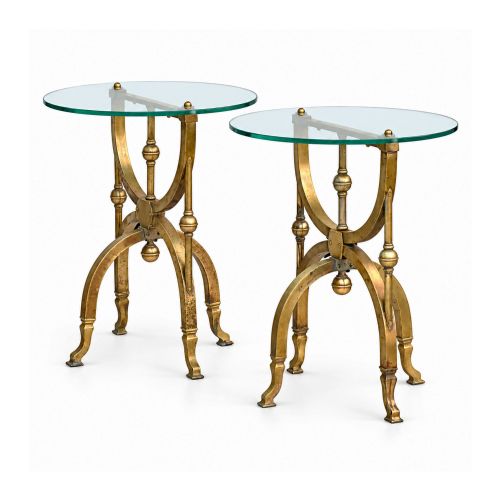
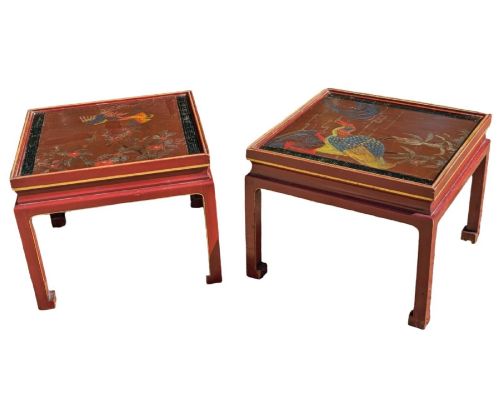
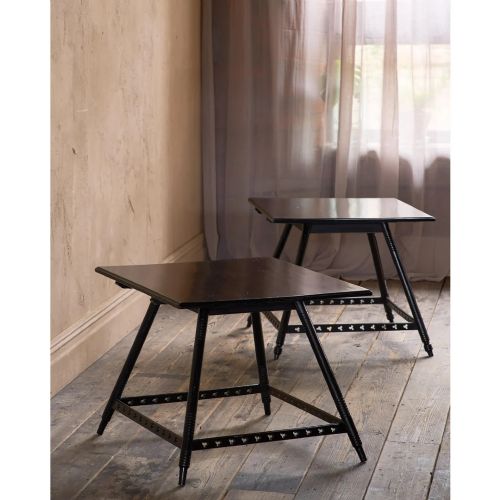

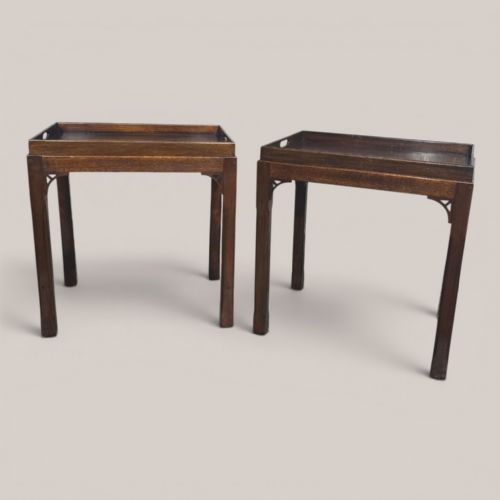
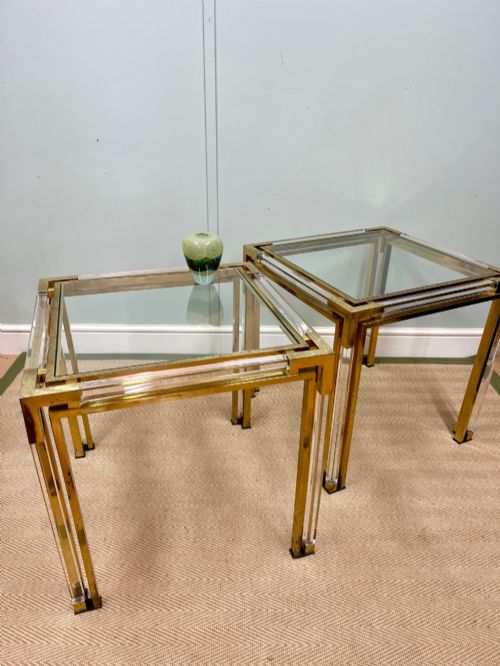


Pair Coffee Tables
Pair coffee tables offer symmetry and balance to a seating arrangement, uniting various timbers, metals, and marbles across centuries of design.
Pair Coffee Tables
When you search for pair coffee tables, you encounter matching duos drawn from diverse historical periods, ranging from nineteenth-century examples to later twentieth-century creations. The selection frequently includes pieces originally constructed as side tables, occasional tables, or lamp stands that now function perfectly as companion coffee tables.
The forms span simple low tables and tray tops to intricately inlaid surfaces and tier structures. Mahogany, walnut, and ebonised wood appear regularly alongside brass, marble, and glass.
Victorian and Edwardian iterations sit beside earlier nineteenth-century designs and later twentieth-century interpretations. Buyers often find matched sets alongside pieces that share form and material closely enough to serve together.
How they were made
Cabinetmakers utilised solid timbers such as mahogany, walnut, and hardwood alongside decorative veneers including satinwood, tulipwood, and burr walnut. Inlay work frequently incorporates marquetry to create intricate surface patterns across the top.
Metal and stone elements appear in tandem with wood, utilising brass for framing, handles, and gallery rails, and marble for inset table tops. Ebonised finishes and lacquer techniques provide distinct dark surfaces or glossy ornamental coatings.
Construction methods range from traditional joinery in nineteenth-century workshops to tiered frames and campaign styles designed for portability or display.
Camel tables designed for nomadic life found their way into Victorian drawing rooms as low conversation pieces.
What varies in quality
The refinement of the timber and the precision of the veneer work largely distinguish the standard of construction. Marquetry-inlaid satinwood and finely figured flame mahogany represent a higher level of craftsmanship compared to simpler utilitarian builds.
The integration of secondary materials such as cast brass mounts, inset marble slabs, and hand-tooled leather tops determines the overall visual weight and finish. Original matched pairs demonstrate a greater consistency in proportion and ageing than later assembled pairings.
Liberty and Co·Edwards and Roberts·G Plan
The Pair Coffee Tables Glossary
- Marquetry
- Decorative veneer work forming pictures or geometric patterns by fitting together small pieces of wood, shell, or ivory. This technique frequently appears on satinwood and walnut table tops from the nineteenth century.
- Ebonised
- Wood treated with a dark stain or finish to imitate the appearance of ebony. This process was particularly common on nineteenth-century frames and tables.
- Satinwood
- A durable, lustrous timber with a yellowish sheen used extensively for fine cabinetmaking and decorative inlay. It provides a bright, reflective surface when polished.
- Campaign table
- Portable furniture designed to fold or dismantle for military travel, typically fitted with brass corners and recessed handles. These pieces combine robust hardwood construction with practical mobility.
- Occasional table
- A small, versatile table intended for light, intermittent use in a principal room. They appear in numerous forms including lamp stands, side tables, and low coffee variants.
Pair Coffee Tables: Frequently Asked Questions
How do I use pair coffee tables?
Placing two matching or complementary tables side by side creates an extended surface area in front of a large sofa. They can also be separated to serve different seating areas while maintaining a cohesive look.
Their shared materials and heights provide visual balance across the room without overwhelming the central floor space.
Were these tables originally coffee tables?
Many tables listed as coffee tables began life as occasional tables, side tables, or plant stands in the nineteenth and early twentieth centuries. Lower proportions and changing interior habits over time led to their current classification and use.
Original heights vary, reflecting their diverse past functions as lamp stands, display surfaces, or smoking tables.
How do I tell Victorian from Edwardian tables?
Victorian pieces often feature darker timbers, heavier carving, and dense ornamentation such as rosewood inlay or ebonised finishes. Edwardian examples frequently show lighter satinwood, mahogany, and more restrained decorative schemes.
Construction details and the specific styles popular during each reign help clarify the date of manufacture.
Can I mix different woods in a room?
Pair coffee tables in mahogany, walnut, or satinwood can anchor a room containing other timber tones if the overall style has a unifying element. Matching pairs provide internal consistency even when placed near contrasting furniture.
Similar leg styles or shared metal accents like brass help bridge different wood tones successfully.