




Sheraton Revival Coffee Table
These Sheraton revival coffee table pieces bring Georgian elegance into Edwardian and late Victorian rooms through delicate marquetry and fine timbers.
Sheraton Revival Coffee Table
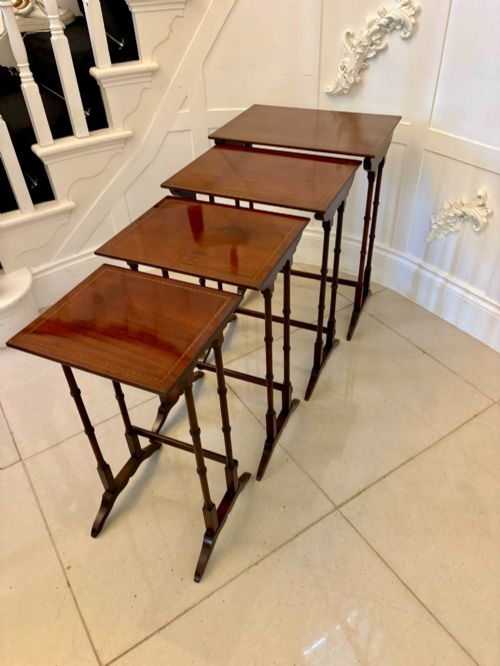
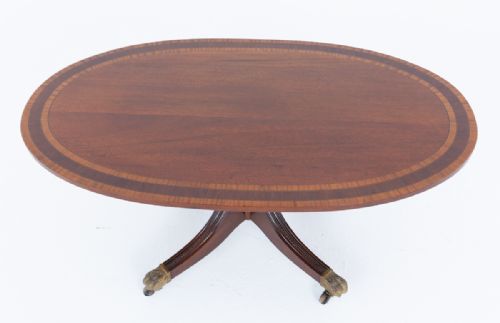
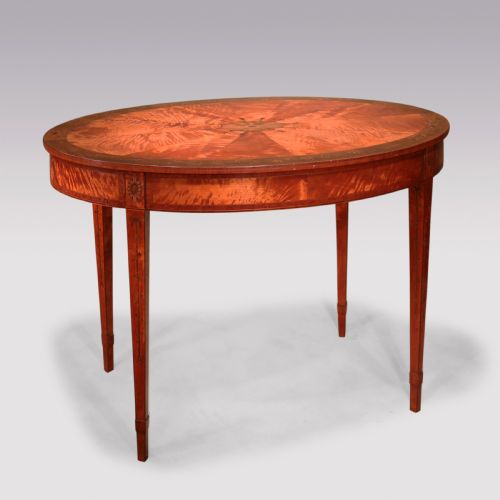
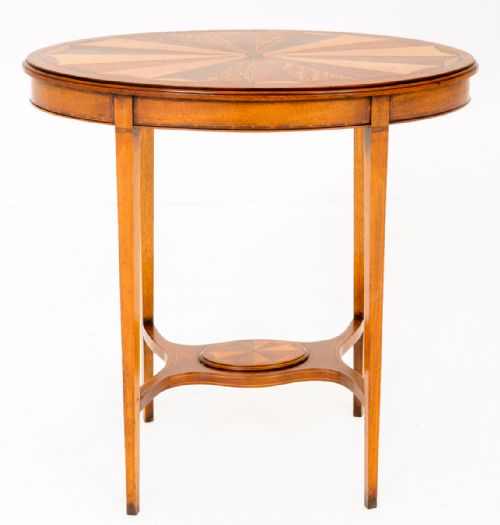
A sheraton revival coffee table combines later Victorian, Edwardian, and early twentieth-century manufacturing with eighteenth-century neoclassical design motifs. Buyers searching for this phrase encounter various low table forms, including oval occasional tables, two-tier tables, lamp tables, and nests of tables designed to slide together.
The pieces appearing on this page span the late nineteenth century through to the 1920s, heavily drawing on Edwardian cabinet-making traditions. Oval and rectangular formats dominate the selection, often taking the form of quartetto nests or occasional tables suited to drawing rooms.
Makers of this era interpreted Thomas Sheraton's pattern books with lighter proportions and specific decorative flourishes. While some items function as traditional coffee tables, others began life as occasional tables, centre tables, or lamp tables adapted over time for modern living.
How they were made
Cabinet-makers relied on solid mahogany and satinwood as primary timbers, frequently pairing them with contrasting exotic woods for decorative effect. Workshops utilised boxwood and ebony stringing to outline table tops and legs, creating crisp linear definition.
Marquetry and satinwood inlay formed the decorative centrepiece of these tables, depicting classical urns, swags, and ribbon motifs. Skilled artisans hand-fitted these complex veneers into the primary wood surface before French polishing the completed top to a high sheen.
Some nests of four tables require a strict numerical dance to stack correctly without scratching the prized satinwood veneer.
What varies in quality
The standard of timber selection and veneer work dictates the standing of each piece within the range. Superior examples feature dense, highly figured satinwood and finely cut mahogany with precise, tight joints across every frame.
Detailing in the marquetry and inlay work separates standard production from exceptional craftsmanship. Top-tier pieces display intricate, hand-cut botanical or neoclassical motifs with minimal filler, whereas simpler items rely on stamped or basic banded borders.
Edwards and Roberts
The Sheraton Revival Coffee Table Glossary
- Quartetto nest
- A set of four graduating tables designed to fit neatly beneath one another. These sets appear frequently in Edwardian interiors as versatile space-saving furniture.
- Satinwood
- A pale, lustrous timber native to India and Ceylon, prized for its golden sheen. Cabinet-makers used it extensively for veneering tabletops during the Sheraton revival period.
- Stringing
- A narrow strip of contrasting wood inlaid into a channel on a furniture surface. Boxwood and ebony stringing provides sharp geometric borders around table edges.
- Marquetry
- The art of applying small pieces of veneer to a structure to form decorative patterns or pictures. Craftsmen cut various tinted woods together to create classical urns and floral designs.
- Occasional table
- A small, light table intended for intermittent use rather than a singular fixed purpose. These versatile items functioned as lamp, tea, or side tables in period homes.
Sheraton Revival Coffee Table: Frequently Asked Questions
What is a Sheraton revival coffee table?
It is a late nineteenth or early twentieth-century piece inspired by the neoclassical designs of eighteenth-century designer Thomas Sheraton. These tables typically feature lighter proportions, satinwood or mahogany timbers, and delicate inlay work.
Such furniture bridges the gap between historical Georgian aesthetics and the domestic requirements of Edwardian homes. They function today as decorative centrepieces in sitting rooms.
How do I care for satinwood furniture?
Satinwood requires gentle treatment to preserve its pale, reflective surface and delicate veneer. Keep these tables away from direct sunlight and excessive heat sources to prevent the wood from fading or drying out.
Dust regularly with a soft, dry cloth and avoid commercial polishes containing silicone. Occasional waxing with a quality beeswax helps maintain the traditional French polished finish.
Are nest of tables practical for daily use?
Nests of tables offer exceptional versatility for modern living spaces where floor area is at a premium. The graduating smaller tables pull out easily when serving drinks or entertaining guests.
When not in use, they stack compactly under the largest table to save space. Care should be taken when sliding the tables to avoid scratching the delicate boxwood stringing.
How do I distinguish Edwardian revival from original Georgian furniture?
Edwardian revival pieces generally date from the late nineteenth century to the 1920s, utilising machine-assisted preparation alongside traditional hand assembly. The secondary woods and interior construction methods reflect industrial era woodworking standards rather than eighteenth-century techniques.
Examination of the timber shrinkage, screw types, and finish under the tabletop usually reveals the later manufacturing date. The presence of Edwardian hardware and specific inlay styles confirms the revival period.