


Pair Chinese Pedestals
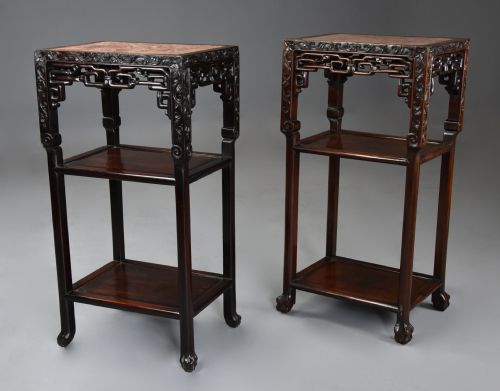
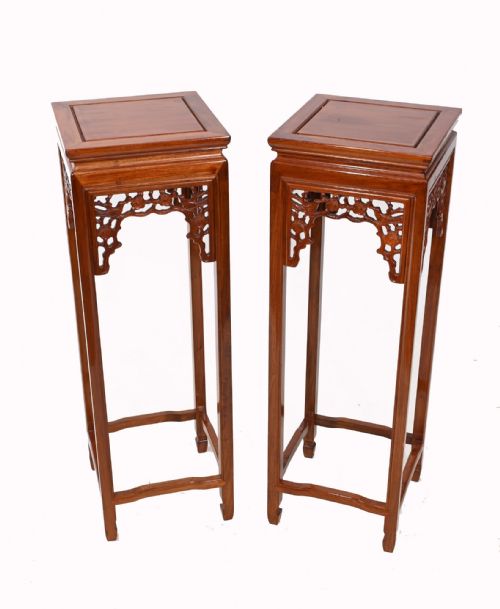
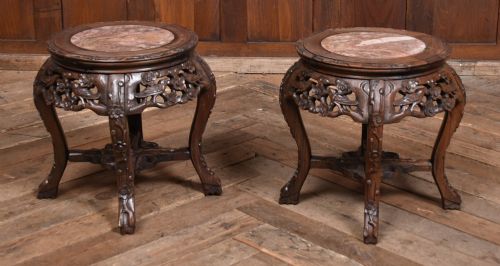
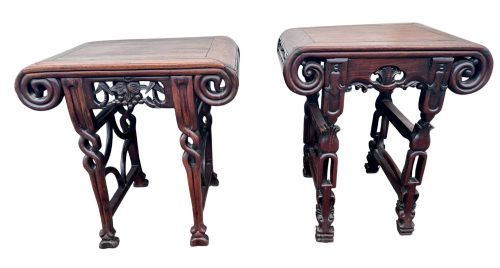
These pair chinese pedestals are carved hardwood and marble supports that elevate plants, urns and vases with balanced symmetry.
Pair Chinese Pedestals
When you examine pair chinese pedestals, you find matched supports designed primarily as plant stands, urn stands, and occasional tables. The pieces emerge most frequently from nineteenth-century workshops, carrying forms suited to oriental interiors and export markets.
Makers shaped these items as tall pedestals, low stools, and two-tier tables. They function to display decorative objects at varying heights within a room.
The selection ranges from carved huali hardwood to lacquered timber and marble-top designs. Each pair maintains a coordinated appearance intended for symmetrical placement.
How they were made
Artisans built pair chinese pedestals using dense timbers such as hardwood, rosewood, padouk, and hongmu. These sturdy woods supported intricate hand-carving and heavy inset marble tops.
Surface decoration frequently involved black lacquer, hand-painted details, and inlaid mother-of-pearl. Some examples incorporate brass elements or cloisonné enamel finishes to enrich the visual texture.
Listings feature hard timbers including rosewood, padouk, and huali alongside inset marble tops and lacquer finishes.
What varies in quality
The distinction between standard examples and superior pairs rests in the depth and crispness of the wood carving. Fine pieces display meticulous hand-detailing across the apron and legs without mechanical shortcuts.
The choice of top material also defines the tier of the piece, particularly where smooth rouge marble is fitted precisely into the hardwood frame. Dense rosewood and huali timber indicate higher original manufacture than basic painted wood.
The Pair Chinese Pedestals Glossary
- Huali
- A fragrant and durable hardwood utilised in traditional Chinese furniture construction. It accepts deep carving and develops a rich patina over time.
- Hongmu
- A dense red-brown hardwood category favoured for export furniture. Pieces made from this material offer substantial weight and structural rigidity.
- Cloisonne
- A decorative metalwork technique using wire compartments filled with enamel paste. It appears on related export vases and tazzas.
- Jardiniere
- A large ornamental pot or stand for holding plants and flowers. These items often match the dimensions of tall display pedestals.
- Tazza
- A shallow bowl or plate raised on a stem and foot. Nineteenth-century examples demonstrate enamel and ceramic techniques.
Pair Chinese Pedestals: Frequently Asked Questions
How were pair chinese pedestals used?
These pieces functioned primarily to support heavy porcelain vases, decorative urns, and potted plants in nineteenth-century interiors. Their paired design allowed for balanced placement on either side of a doorway or fireplace.
They also served as occasional tables or side tables for holding lamps and small decorative objects. The elevated platform protected delicate items from floor-level activity.
What woods appear in these pieces?
Makers constructed these supports using dense Asian hardwoods including rosewood, padouk, and huali. These durable timbers provided the necessary strength for intricate openwork carving.
Secondary woods and lacquered timber also appear alongside painted surfaces and mother-of-pearl inlay. The selection of heavy timber ensured stability for tall plant stands.
How do I identify Qing Dynasty stands?
Qing Dynasty and late nineteenth-century pieces display traditional joinery and deep, hand-carved motifs reflecting Chinese aesthetic traditions. The inclusion of inset rouge marble tops and huali wood points to this specific period.
Examinations of the underside often reveal traditional construction methods without modern metal screws. Stylistic markers include carved aprons and structured plant stand forms.
How do I style these in a room?
Display the pair symmetrically to frame a focal point such as a window, sideboard, or large ceramic vessel. Their height brings visual interest and varied levels to interior spaces.
Ensure the items support items proportionate to their top surface, whether a lamp, bronze, or trailing plant. The natural wood tones and marble inserts integrate easily with antique and modern furnishings.