


Pair Chevet Tables
Pair chevet tables are matching bedside companions designed to hold evening essentials within reach, bringing symmetry and practical surface space to a bedroom scheme.
Pair Chevet Tables
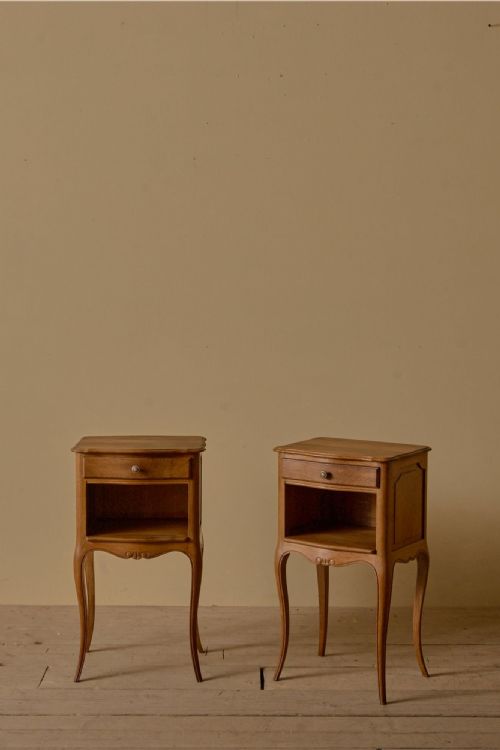
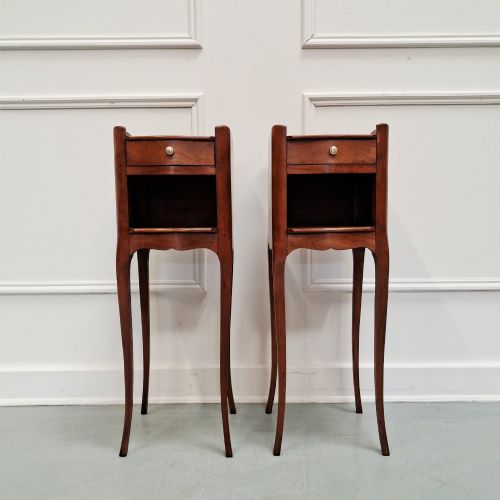
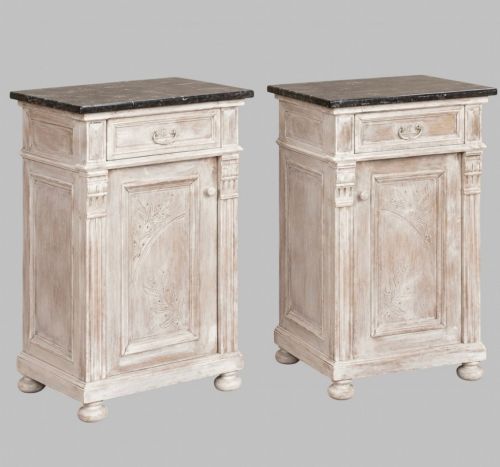
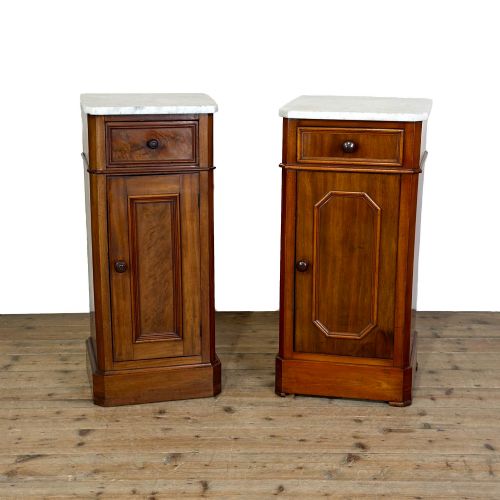
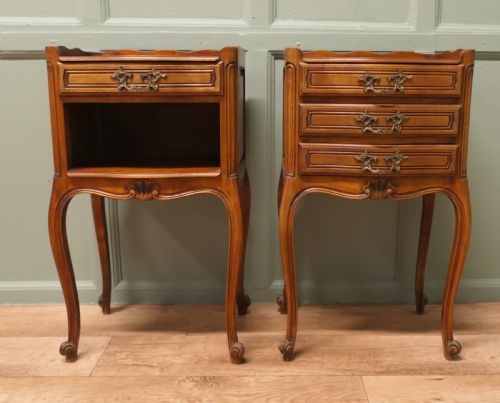
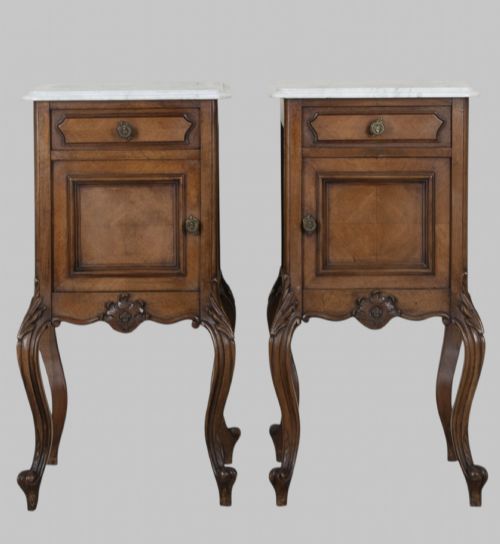
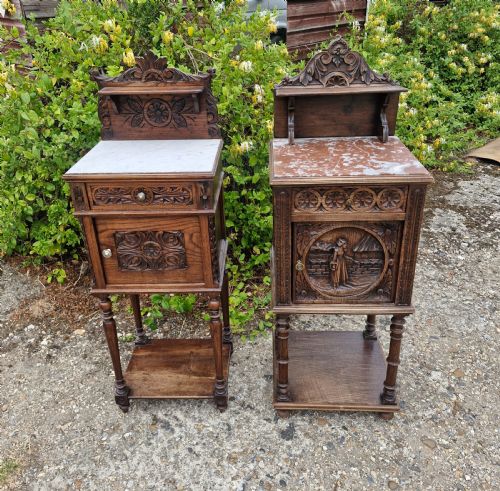
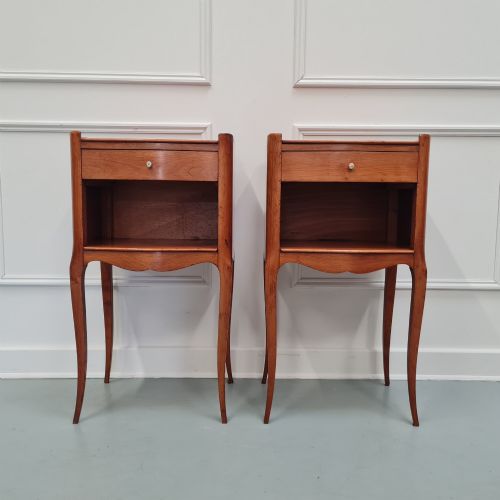
When searching for pair chevet tables, buyers encounter matching bedside furniture originating primarily from French and Victorian traditions spanning the nineteenth and early twentieth centuries. These pieces function as small cabinets, lockers, or lamp chests designed to stand on either side of a bed.
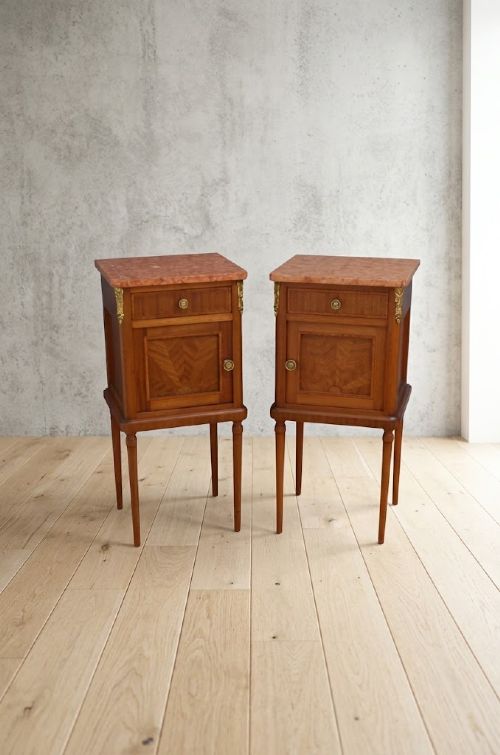
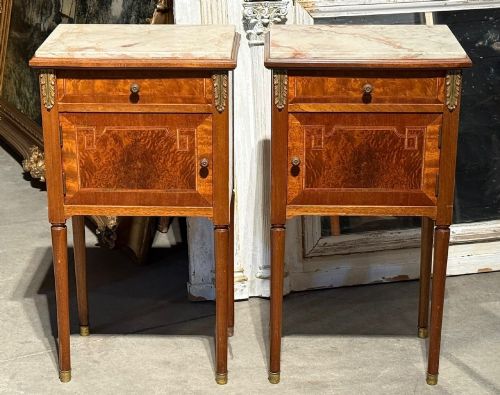
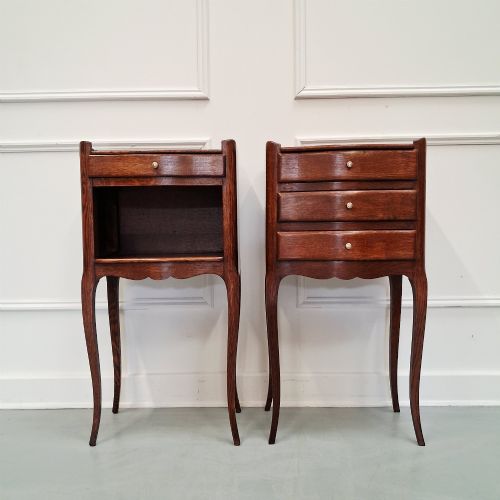
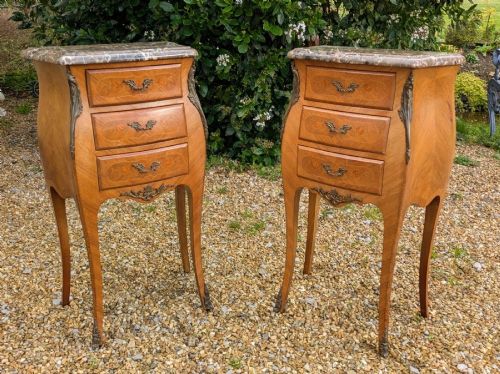
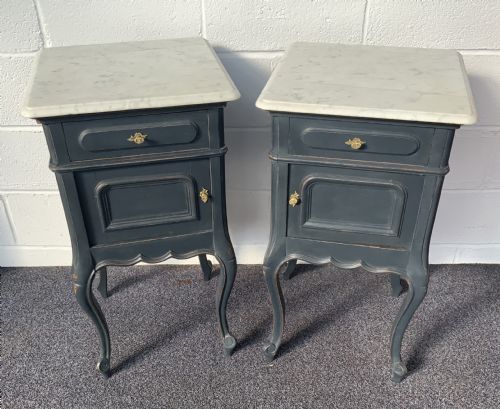
The selection ranges from robust oak and cherry wood provincial forms to elaborate marquetry pieces executed in kingwood and walnut. Most examples reflect continental stylistic influences, particularly Louis XV and Louis XVI revivals, featuring marble tops and enclosed storage spaces.
The surviving examples bridge decorative arts and daily utility, offering compact proportions suited to period and modern interiors alike. Cabinets often incorporate small drawers and cupboard doors designed to conceal bedside items while maintaining a decorative silhouette.
Materials and construction
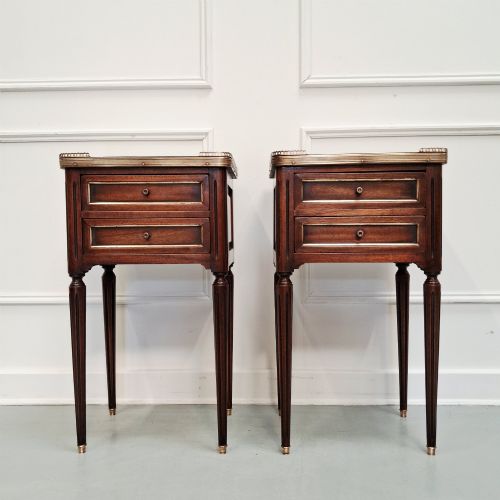
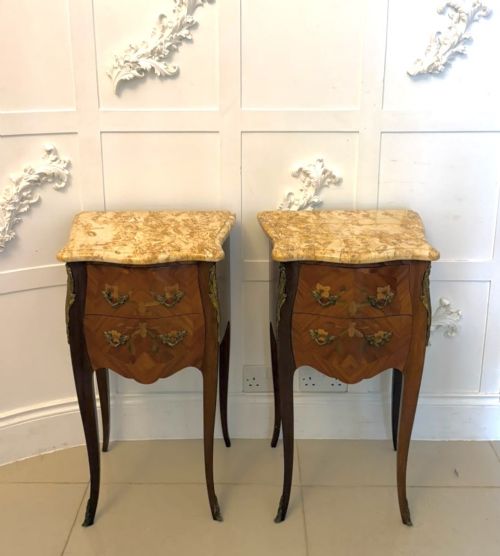
Cabinet makers utilised a foundation of hardwoods such as mahogany, walnut, oak, and cherry, often applying decorative veneers including kingwood, satinwood, and rosewood. Marquetry and parquetry patterns add geometric or floral ornamentation across drawer fronts and sides.
Many upper surfaces incorporate fitted marble slabs, including Belgian Sainte-Anne varieties, providing a durable and cool plateau for lamps and water jugs. Mounts and handles cast in brass or ormolu complete the decorative scheme on revival pieces.
Pair Chevet Tables Retail Price Guide 2026
Typical asking prices for pair chevet tables among the pieces listed under this phrase on Sellingantiques today, from the lower quarter to the upper quarter. They describe what is for sale here now, not the wider market.
Several pairs hide their nighttime utility behind intricate floral marquetry that mimics a miniature artist canvas.
Assessing quality and craftsmanship
Distinction in these pieces rests upon the precision of the marquetry inlay and the choice of primary timber. Superior examples display intricate floral patterns rendered in contrasting woods, whereas simpler versions rely solely on polished grain.
The integration of materials such as heavy marble tops and cast ormolu mounts separates standard utility furniture from finer salon pieces. Joinery execution and the crispness of carved wooden details further define the upper tier of the range.
The Pair Chevet Tables Glossary
- Chevet
- A French term for a bedside table or small cabinet. These units typically provide enclosed storage alongside a surface for lighting.
- Marquetry
- Decorative veneer work arranged in pictorial or floral patterns across a wooden surface. Craftsmen cut thin slices of various coloured woods to create intricate designs.
- Parquetry
- Geometric wood inlay forming repetitive patterns such as cubes or chevrons. This technique decorates the top or sides of cabinets.
- Ormolu
- Gilt bronze mounted onto furniture as decorative feet, handles, or corner accents. The technique involves applying gold to a bronze base.
- Sainte-Anne marble
- A specific dark grey or mottled Belgian limestone frequently utilised for tabletop surfaces. It offers durability and a polished finish.
Pair Chevet Tables: Frequently Asked Questions
What is a chevet?
A chevet is the French term for a bedside table or cabinet.
These pieces typically include a small cupboard or drawer to keep nighttime items neatly out of sight.
Are marble tops original?
Marble tops are a characteristic feature of continental bedside tables from the Victorian and Edwardian eras.
They provided a durable, water-resistant surface before the widespread use of modern manufactured finishes.
How do I style them?
Pair chevet tables work best positioned symmetrically on either side of a bed.
Their compact proportions also allow them to function as small lamp tables in a sitting room or hallway.
What woods were used?
Cabinet makers constructed these tables from a variety of timbers including walnut, oak, mahogany, and cherry.
Finer decorative examples incorporate exotic veneers such as kingwood and satinwood arranged in marquetry patterns.