

Pair Chests of Drawers
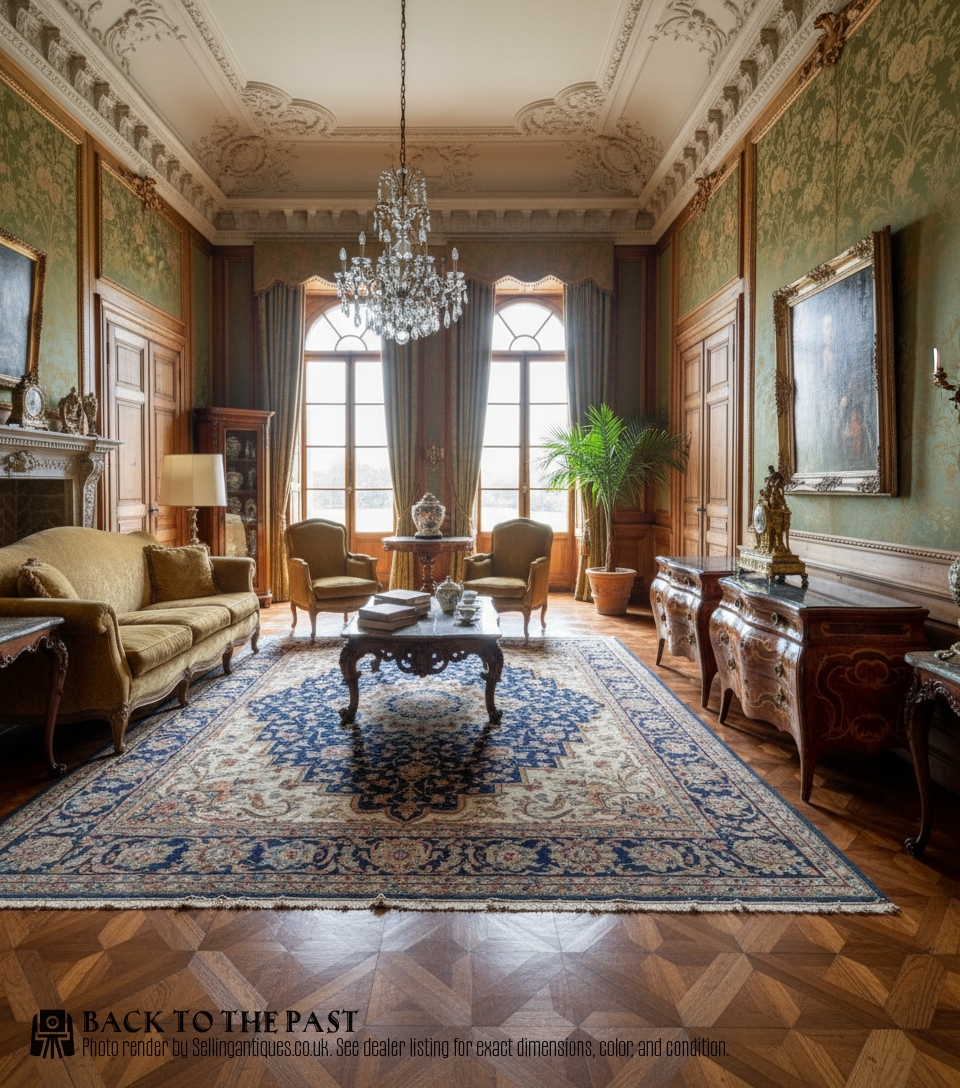
When furnishing a symmetrical interior, pair chests of drawers provide matched storage and surface space beside a bed or in a corner.
Pair Chests of Drawers
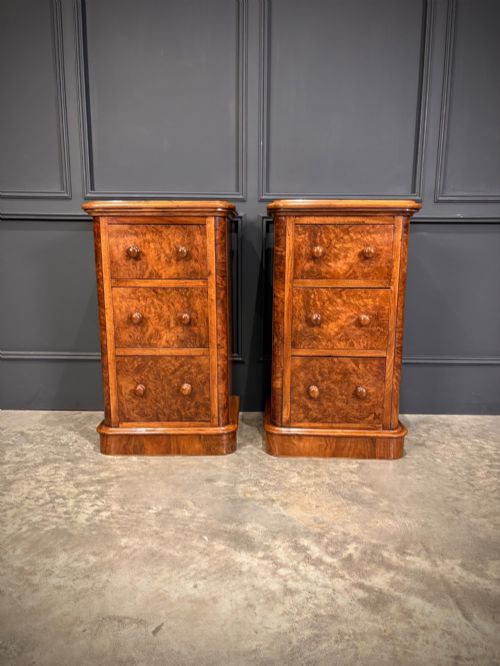
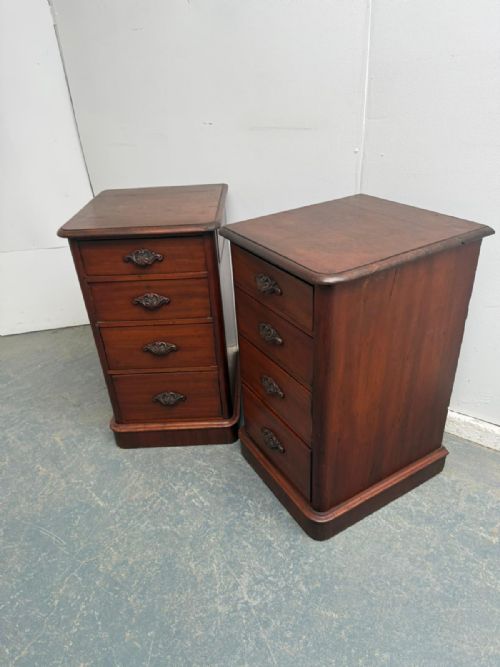
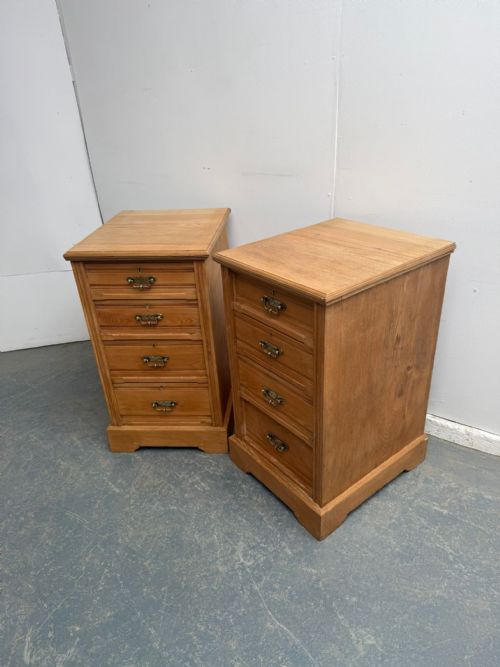
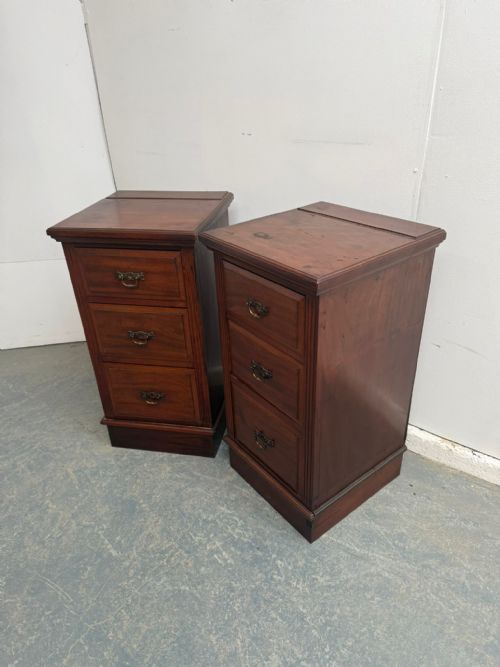
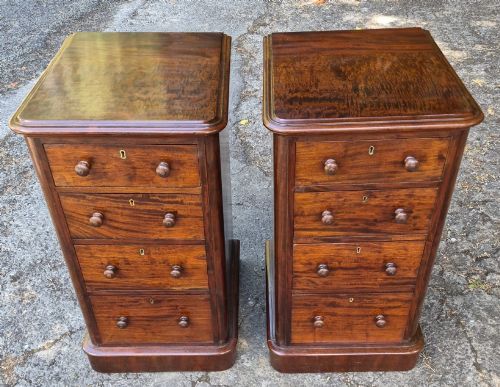
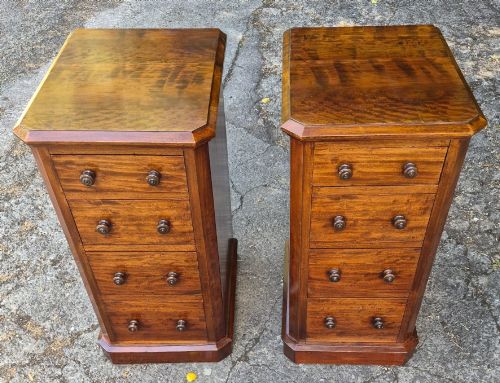
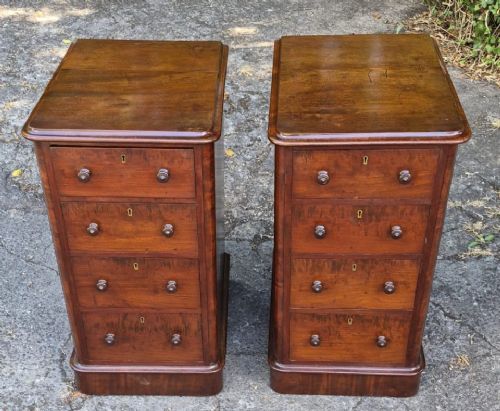
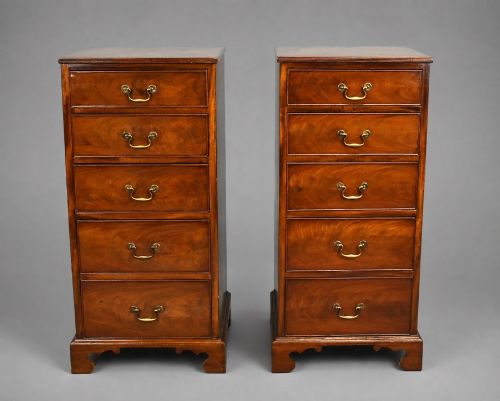
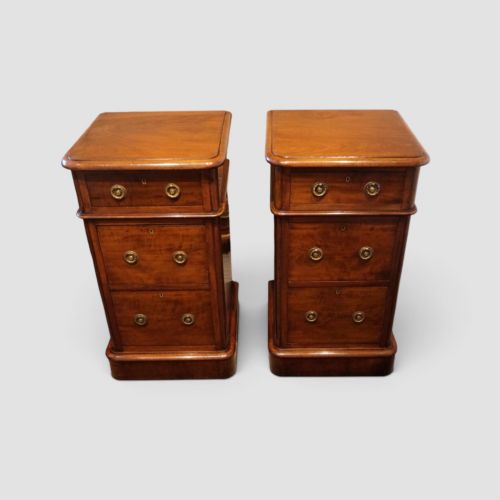
A buyer seeking pair chests of drawers evaluates matching sets of small storage furniture typically positioned as bedside tables or compact lamp chests. These pieces originate from various periods including the Victorian era, the Edwardian period, and the 1920s or 1930s revival movements.
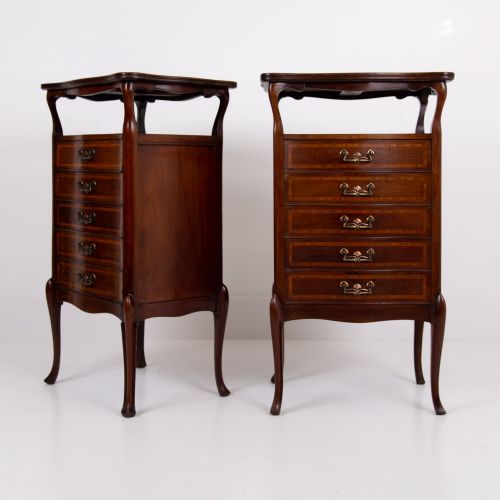
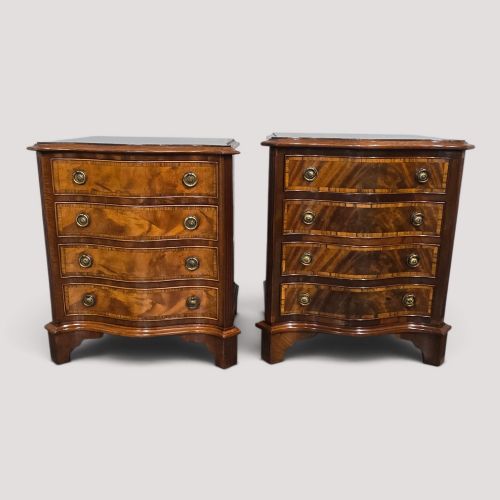
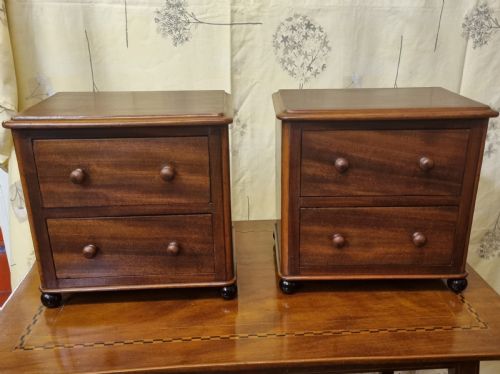
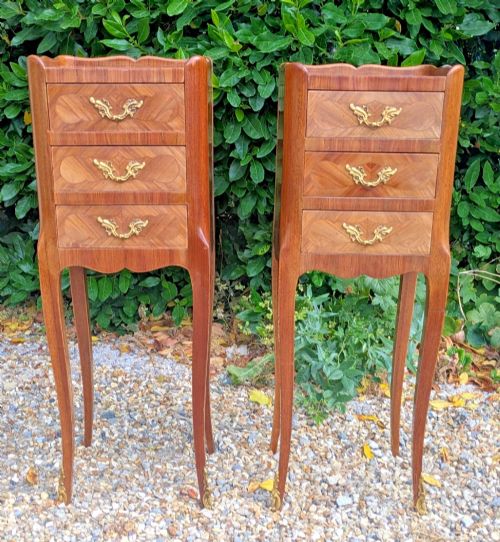
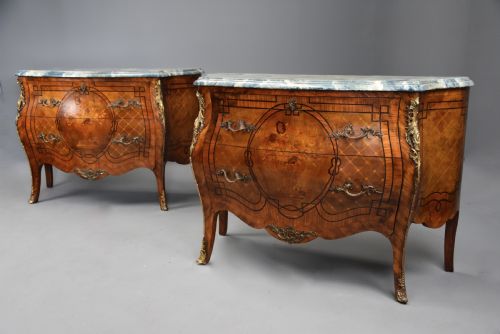
The dominant forms encountered on this page are bedside chests, compact commodes, and small nightstands featuring two, three, or four drawers. Many examples hail from English workshops in mahogany or walnut, alongside French Louis XV and Art Deco variations featuring marquetry inlay or marble tops.
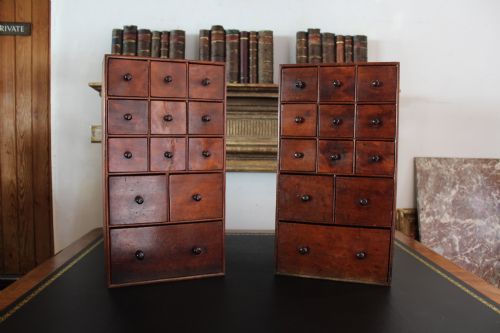
Beyond standard bedroom pieces, the selection occasionally yields specialist forms such as apothecary cabinets, Wellington chests, and campaign chests configured as matching pairs. Proportions remain neat throughout these variants, designed to fit symmetrical domestic layouts without dominating the room.
Materials and construction methods
Cabinet makers utilised dense hardwoods such as mahogany, walnut, and rosewood for structural carcases and drawer frames. Decorative surfaces frequently incorporate burr walnut veneers, kingwood, or intricate marquetry inlay patterns.
Drawer construction relies on traditional joinery methods, housing multiple small drawers within compact proportions. French commodes frequently incorporate shaped marble tops, while other regional variants employ brass hardware, painted finishes, or lacquer work.
Periods represented range from the late eighteenth century through Victorian, Edwardian, and Art Deco eras.
Distinguishing quality factors
The standard of timber selection largely defines the upper tier of these pieces, particularly where figured burr walnut, matched mahogany grains, or detailed marquetry are employed. Finer examples maintain crisp carving, tight veneer joints, and original brass fittings.
Proportion and execution separate standard workshop output from exceptional commissions. Refined edge moulding, smooth drawer operation, and balanced symmetry across both items elevate the pair.
Warings Liverpool
The Pair Chests of Drawers Glossary
- Commode
- A low cabinet containing drawers or doors, originating in French furniture design and commonly fitted with a marble top.
- Wellington chest
- A tall, narrow chest of drawers secured by a hinged locking side pilaster bar, originating in the Victorian period.
- Marquetry
- Decorative veneer work forming intricate patterns or pictures using various coloured woods laid onto the carcase.
- Bow front
- A convex, curved front profile applied to a chest of drawers to soften the rectangular geometry.
- Serpentine
- A furniture front characterised by a double-curved contour, featuring a convex centre flanked by concave ends.
Pair Chests of Drawers: Frequently Asked Questions
What rooms suit pair chests of drawers?
These balanced cabinets serve primarily as matching bedside tables supporting lamps and nighttime essentials. Their compact footprints also allow placement flanking a fireplace or in narrow hallways.
Matching sets create visual symmetry in traditional and modern bedroom layouts alike. The multiple drawer configurations provide concealed storage for smaller domestic items.
How do I distinguish French commodes from English chests?
French examples frequently exhibit curved bombe contours, kingwood veneers, and shaped marble tops dating from the early twentieth century revival eras. English versions lean towards rectilinear mahogany or walnut proportions with straightforward drawer arrangements.
Continental pieces often emphasise decorative marquetry and gilt-bronze mounts. English equivalents prioritize timber grain and structural sobriety.
Are these pieces modified from larger furniture?
Certain listings record items as adapted or created from period elements to form matching pairs. Checking the internal construction and drawer linings reveals whether a set originated together.
Alterations remain common among antique companion pieces designed to meet modern spatial requirements. Examining the timber patination helps confirm the age of the pairing.
How do I care for polished wood surfaces?
Maintenance requires gentle dusting with a dry, soft cloth to protect vulnerable walnut and mahogany veneers. Wax finishes benefit from periodic application of traditional beeswax to preserve the sheen.
Direct sunlight and fluctuating room temperatures should be avoided to prevent timber splitting. Marble tops on French commodes require neutral cleaning agents to prevent staining.