



Italian Walnut Bedside Tables
Italian walnut bedside tables bring warmth and centuries of regional craftsmanship beside a bed, offering practical storage with distinct continental flair.
Italian Walnut Bedside Tables
Italian walnut bedside tables combine utility with continental design traditions, appearing across multiple eras from the eighteenth century to the twentieth century. These pieces function as small storage cabinets, commodes, or nightstands positioned next to a bed.
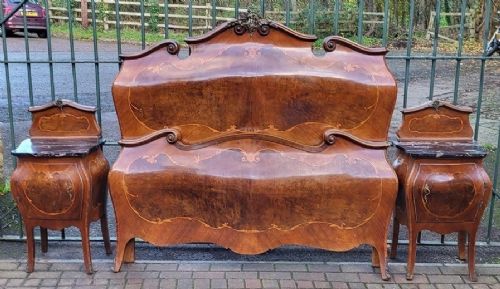
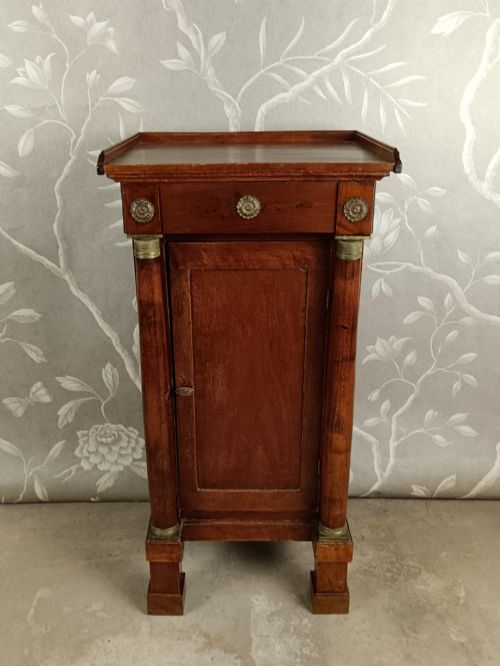
The evidence shows forms ranging from eighteenth century neoclassical marquetry and serpentine chests to nineteenth century empire cabinets and twentieth century art deco drum shapes. Buyers frequently encounter matched pairs, often featuring marble tops or shaped fronts.
Regional variations span styles such as Italian rococo, baroque, and French chateau influences adapted by Italian makers. The predominant material is walnut, frequently utilised alongside burr walnut veneers, fruitwood, and brass hardware.
Materials and construction
Makers utilised solid walnut and decorative burr walnut veneers applied over secondary timbers to create rich grain patterns across the surfaces. Marquetry inlay work appears on eighteenth century examples, integrating contrasting woods into geometric or pictorial motifs.
Marble tops feature on specific nineteenth century and early twentieth century iterations, providing durable and decorative upper surfaces. Brass mounts, handles, and feet accent the woodwork across neoclassical and empire styles.
Italian Walnut Bedside Tables Retail Price Guide 2026
Typical asking prices for italian walnut bedside tables among the pieces listed under this phrase on Sellingantiques today, from the lower quarter to the upper quarter. They describe what is for sale here now, not the wider market.
Listings feature walnut, burr walnut veneer, marble, and brass across pieces spanning the eighteenth century to nineteen thirty.
Distinctions in quality
The calibre of a piece rests upon the selection of the timber, particularly where figured burr walnut or intricate marquetry is deployed across the surfaces. Superior examples display precise cabinetmaking in the joinery of serpentine and bombe forms, ensuring drawers and doors operate smoothly within curved frames.
Proportion and the integration of decorative elements such as marble slabs and brass mounts distinguish finer commissions from simpler workshop production. Consistency in matched pairs further elevates a piece, reflecting careful initial selection of timber and balanced execution by the maker.
The Italian Walnut Bedside Tables Glossary
- Marquetry
- Decorative veneer work arranged in intricate patterns or pictures using various woods. This technique requires exceptional skill to fit different coloured timbers together seamlessly.
- Serpentine
- A furniture front or top curving inward centrally and outward at the ends. It creates a fluid, organic silhouette typical of rococo and eighteenth century design.
- Bombe
- A swollen or bulging convex shape found on the sides and fronts of commodes and cabinets. This baroque profile demands advanced woodworking to bend timber or shape thick veneers.
- Commodino
- A small Italian bedside chest or cabinet with drawers or a cupboard door. The term frequently applies to eighteenth and nineteenth century Italian examples.
- Burr walnut
- Wood cut from a walnut tree growth or burl, yielding swirling, highly figured grain patterns. It is typically sliced into thin veneers for decorative surfaces.
Italian Walnut Bedside Tables: Frequently Asked Questions
What periods do these tables come from?
The pieces span from the early eighteenth century through the nineteenth century and into the twentieth century. Examples include neoclassical, empire, and art deco designs.
Dates are determined by stylistic markers, construction methods, and materials recorded in the evidence. Eighteenth century pieces often feature marquetry, whereas twentieth century items show streamlined drum shapes.
Are pairs common for these tables?
Many listings present matching pairs of bedside cabinets and chests. These sets were built together to flank a bed symmetrically.
Pairs often feature mirrored wood grain patterns and matching hardware, maintaining visual balance in a bedroom interior.
What materials are used besides walnut?
While walnut and burr walnut veneer form the primary body, secondary materials appear frequently. Marble slabs serve as durable table tops on nineteenth century examples.
Brass is utilised for mounts and hardware, while fruitwood and ebonised wood provide contrasting tones for inlaid details and marquetry.
How do commodes differ from standard bedside tables?
Commodes and commodinos function as small storage chests featuring drawers or enclosed cupboards beneath a surface top. They offer more substantial enclosed storage than open bedside stands.
These forms often incorporate shaped fronts, such as serpentine or bombe profiles, requiring advanced cabinetmaking techniques.