



Bombe Commodes Pair
A matched pair of bombe commodes brings sweeping curves and grand presence to a room, offering distinct storage with symmetrical flair.
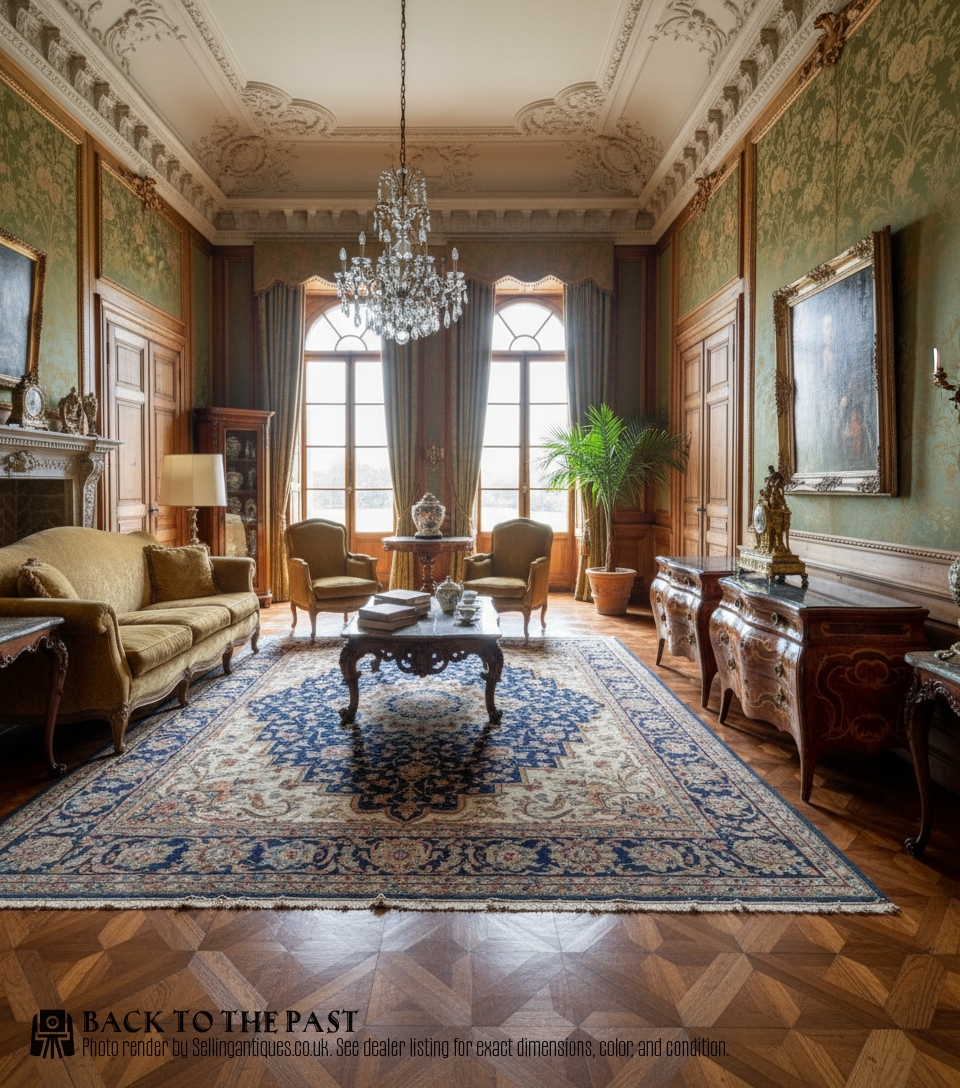
Bombe Commodes Pair
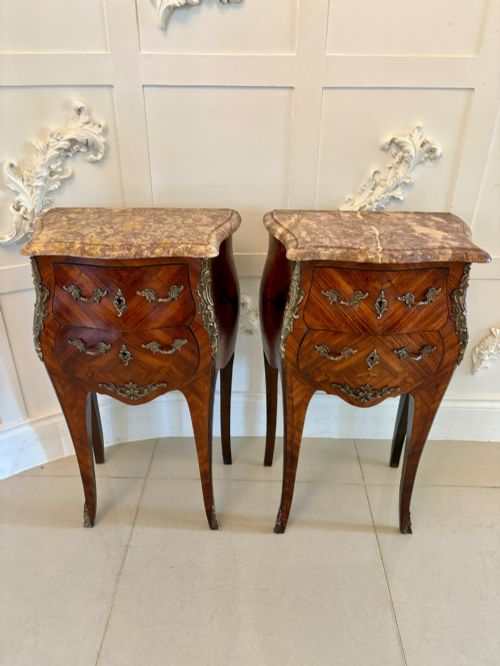
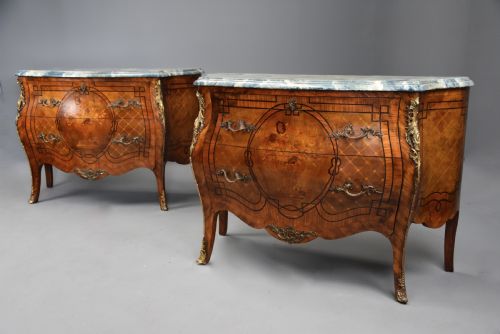
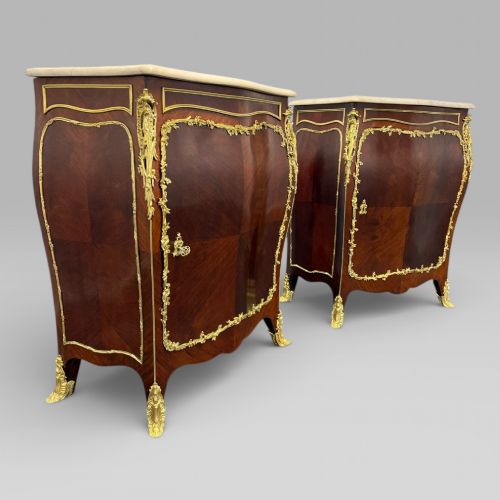
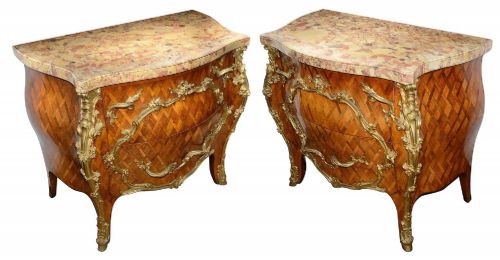
A bombe commodes pair presents double the sculptural presence, featuring the characteristic outward-swelling front and sides that define this dramatic furniture form. These pieces emerge predominantly in French Rococo Revival and Louis XV styles, alongside Italian variants originating from the nineteenth and early twentieth centuries.
Buyers encounter variations ranging from grand full-sized chests of drawers to intimate bedside tables and side cabinets. The forms draw heavily on eighteenth-century aesthetics, utilising rich veneers and serpentine silhouettes to create an imposing visual balance when placed together.
Materials and construction
Cabinetmakers constructed these pieces using dense foundational timbers overlaid with decorative veneers such as kingwood, walnut, and burr walnut, frequently arranged in intricate parquetry or marquetry patterns. The characteristic swelling profile required skilled manipulation of wood over shaped frames to achieve the signature curved contours.
Mounts in ormolu, gilt bronze, and brass accent the corners, handles, and apron, while polished marble tops provide a durable and luxurious surface. Specialised techniques like Vernis Martin lacquer also appear, adding painted decorative depth to the polished wooden exteriors.
Bombe Commodes Pair Retail Price Guide 2026
Typical asking prices for bombe commodes pair among the pieces listed under this phrase on Sellingantiques today, from the lower quarter to the upper quarter. They describe what is for sale here now, not the wider market.
Some commodes hide secret structural drawers behind elaborate gilt bronze friezes, perfect for storing clandestine love letters.
Assessing quality
The sophistication of the timber work and the crispness of the gilt bronze or ormolu mounts separate standard production from exceptional examples. Superior execution shows in the seamless continuity of grain across curved drawer fronts and the precision with which decorative brass work follows the complex serpentine lines.
Balance within the pair matters immensely, as true counterparts share identical proportions, matching timber figuring, and synchronized mount placement. The weight of the marble top and the internal construction of the oak or softwood carcase further denote the maker's commitment to durability.
E. Kahn
The Bombe Commodes Pair Glossary
- Bombe
- A French term describing furniture with an outward-swelling or bulging front and sides. This undulating profile requires advanced cabinetmaking skill to shape timber successfully.
- Ormolu
- Finely chased and gilt bronze mounts applied to the corners, feet, and handles of fine furniture. The technique provides bright metallic contrast against dark wood veneers.
- Parquetry
- Geometric patterns formed by fitting small pieces of contrasting veneer together. It creates repeating motifs across drawer fronts and tops.
- Vernis Martin
- A type of simulated Japanese lacquer developed in France, known for its lustrous translucent finish and painted scenes. It appears on select decorative cabinets.
- Marquetry
- The art of forming decorative designs on wood by applying thin slices of various timbers and materials to a structure. It yields pictorial or floral motifs across the surface.
Bombe Commodes Pair: Frequently Asked Questions
How were bombe commodes used historically?
These decorative pieces served primarily in principal rooms and bedrooms to hold linens, garments, and personal valuables while displaying the owner's taste and wealth. Their opulent appearance suited formal reception spaces just as well as private chambers.
Pairs often flanked a fireplace, doorway, or large window to maintain architectural symmetry within grand European interiors. The flat marble or timber tops also provided a convenient surface for displaying ornamental objects, clocks, or candelabra.
How do I care for marble-topped commodes?
Marble surfaces require gentle cleaning with mild, pH-neutral soap and warm water to avoid etching the polished stone. Acidic substances like wine, citrus, or vinegar should be wiped away immediately.
Wooden sections benefit from occasional dusting with a soft cloth and minimal application of quality furniture wax to nourish the grain. Keeping the pieces away from direct heat sources and strong sunlight preserves both the veneer and the bronze mounts.
How can I tell a revival piece from an older one?
Nineteenth and early twentieth-century revival pieces often display machine-cut internal secondary woods and standardised construction methods compared to eighteenth-century originals. Examining the drawer linings, backboards, and screw types helps reveal the manufacturing era.
Stylistic cues also guide dating, as nineteenth-century makers frequently reinterpreted Louis XV and Rococo aesthetics with heavier proportions and distinct finishing techniques. Comparing the patination of the timber and the wear on the feet provides further clues to age.
Can I separate a pair in different rooms?
Dividing a matched pair diminishes their visual impact, as they were specifically designed to create balanced symmetry within a decorative scheme. Their matching wood grain and mount placement work best when viewed together.
Placing them apart exposes the subtle variations inherent in handmade antiques, which are less noticeable when the pair stands united. Keeping them in the same space preserves the historic arrangement intended by their creators.