



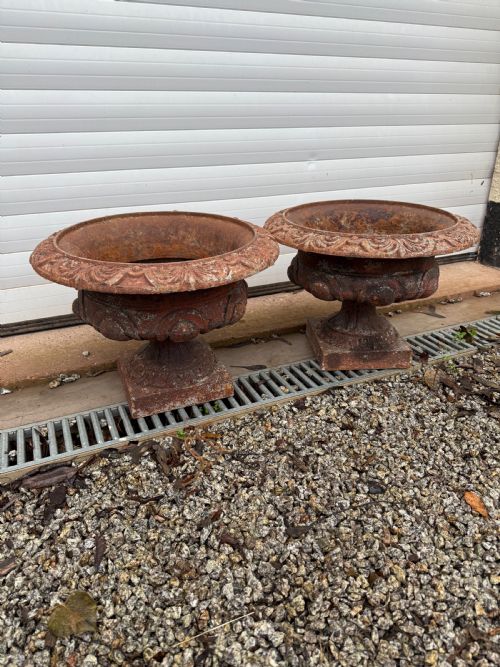


Pair Cast Iron Pots
Pair cast iron pots bring enduring structural presence to outdoor spaces, offering heavy-set utility built to withstand the elements.
Pair Cast Iron Pots
When you search for pair cast iron pots, you encounter heavy garden vessels predominantly formed as urns, planters, and campana forms designed for twin display. These matching compositions serve architectural roles flanking pathways, doorframes, and garden steps.
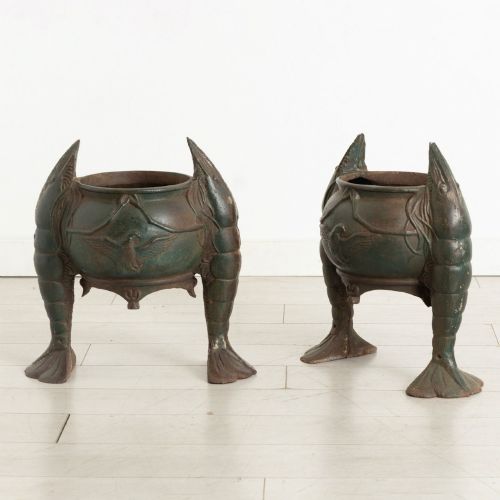
The selections span the nineteenth century through the mid-twentieth century, capturing Victorian classical revival styles alongside French nineteenth-century interpretations and novel sculptural forms like shrimp.
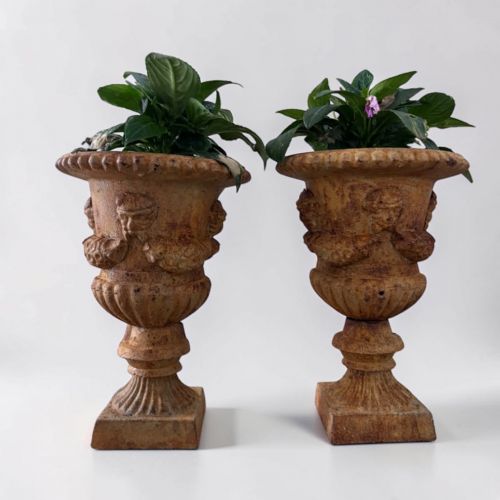
Most examples function as outdoor display containers for garden flora, combining structural heft with classical ornamentation such as fluting and plinths.
Materials and construction
These vessels rely entirely on durable cast iron, poured into foundry moulds to achieve thick, resilient walls capable of holding soil and weathering seasonal extremes outdoors. The material provides the substantial weight necessary for stable garden placement.
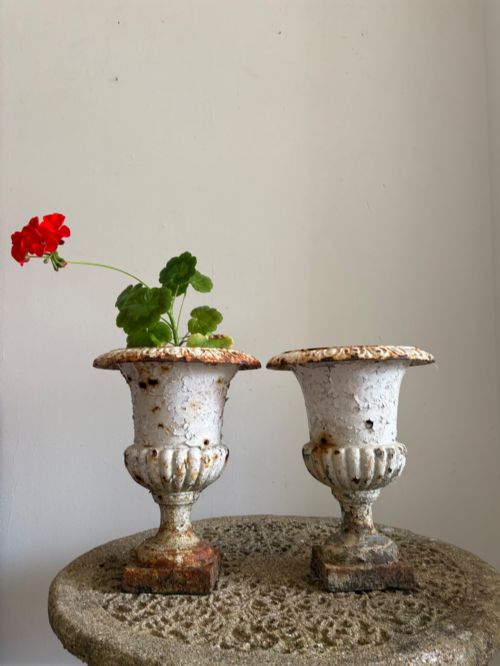
Many instances retain historic painted surfaces or weathered patination, which developed naturally through outdoor exposure or through applied protective coatings over the dark metal substrate.
The inventory records span the nineteenth century, Victorian era, and mid-twentieth century, predominantly utilising cast iron with occasional paint.
Factors of quality
Quality reveals itself in the crispness of the cast ornamentation, where sharply rendered fluting and distinct classical details separate superior foundry work from softer, worn castings. The thickness and integrity of the iron structure also dictate the longevity and substantial feel of the vessels.
The presence of original decorative paint or harmonious aged patination contributes significantly to the visual character of the matched pair, distinguishing well-preserved examples from those with unsympathetic later interventions.
The Pair Cast Iron Pots Glossary
- Campana urn
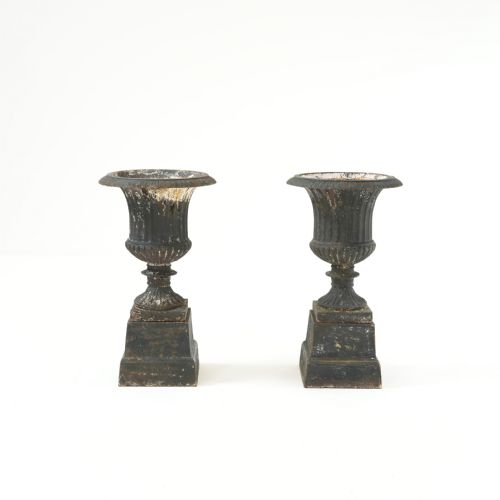
- A bell-shaped garden vessel with a flared rim, frequently mounted on a short stem and square plinth base. This classical silhouette originates from antiquity and remains popular in nineteenth-century garden design.
- Plinth
- A heavy rectangular or square base block that elevates the urn or planter above ground level. It provides additional height and visual stability to the composition.
- Fluted
- Decorated with parallel vertical grooves carved or cast into the body of the vessel. This classical architectural detail adds textural depth to the cylindrical or bell-shaped surface.
- Patina
- The surface appearance acquired by cast iron through age, weather exposure, and successive layers of paint. Collectors value stable, authentic surface skins that reflect long exterior use.
Pair Cast Iron Pots: Frequently Asked Questions
How heavy are these cast iron pots?
These pieces possess substantial physical weight due to the dense iron material used in their foundry production. This heavy mass ensures they remain stable outdoors without anchoring.
Positioning them requires planning, and moving a matched pair typically demands two people to prevent damage to the vessels or surrounding paving.
Can I leave them outside in winter?
Cast iron stands up reliably to outdoor elements and seasonal temperature shifts throughout the year. The robust metal composition handles rain and frost without structural failure.
Ensuring adequate drainage holes remain clear prevents trapped water from freezing and expanding inside the vessel walls.
How do I date an iron urn?
Dating relies on examining stylistic indicators such as Victorian classical revival motifs or French nineteenth-century design traits. Surface characteristics like early paint layers also offer clues to age.
Cast quality and construction seams provide further context when determining whether a piece dates to the Victorian era or later into the twentieth century.
Are matching pairs identical?
Matched pairs designed for architectural symmetry share the same form, decorative motifs, and approximate scale. Foundry techniques of the period occasionally introduced minor casting variations between twin vessels.
These subtle differences confirm individual sand-mould casting rather than modern machine replication.
How should I plant heavy garden urns?
Filling the base with broken crocks or lightweight material improves drainage and reduces total weight before adding soil. This practice protects the inner walls and prevents excessive water retention.
Selecting plants with moderate root systems ensures the flora thrives within the restricted soil volume of the urn.