


Vintage Iron Planters
Vintage iron planters are heavy metal vessels designed to hold garden displays, bringing robust industrial character and classical form to outdoor spaces.
Vintage Iron Planters
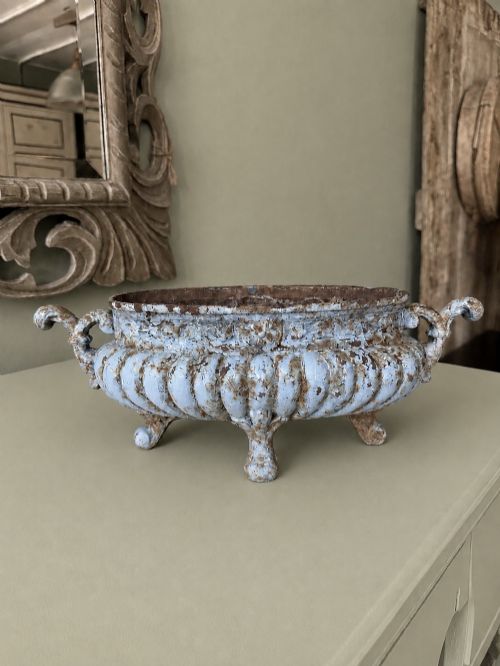
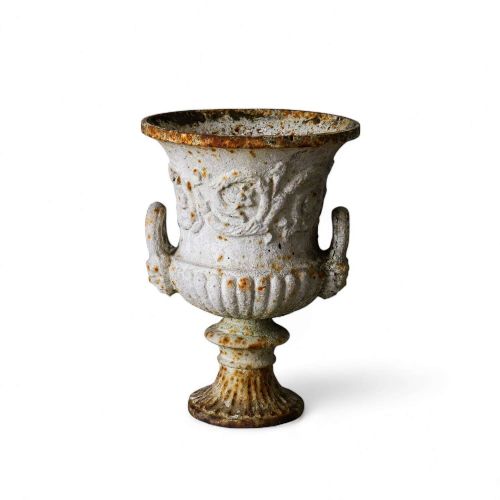
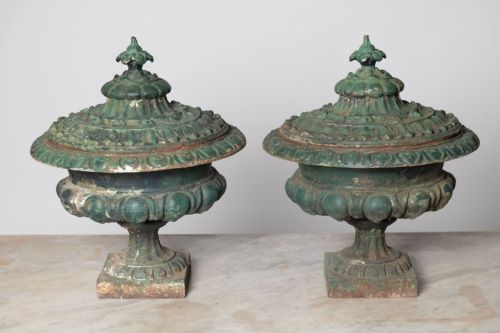
Vintage iron planters comprise garden urns, plant stands, and jardinieres originating primarily from the nineteenth century, including Victorian, Edwardian, and Georgian periods. Buyers searching this phrase meet everything from small French table urns to large estate campana urns and tiered wirework plant stands.
Many examples stem from notable foundries or estate workshops, displaying styles ranging from neoclassical and French chateau to industrial wrought iron work. These vessels served functional roles in conservatories and gardens, evolving into decorative focal points for modern terraces.
Materials and Technique
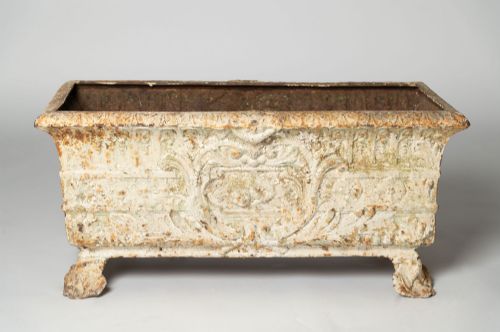
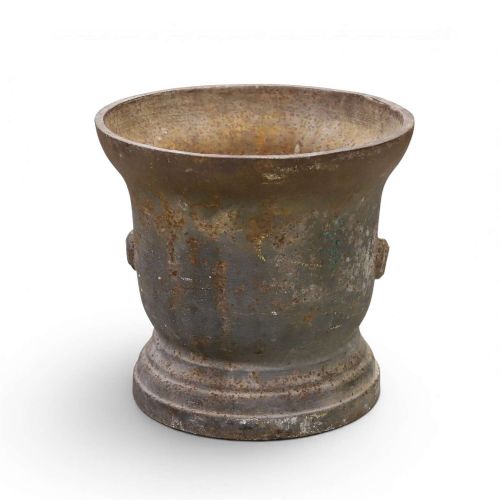
Makers utilised cast iron and wrought iron as primary structural materials, frequently combining them with paint, copper, oak, or sheet metal. Cast iron pieces emerged from foundry moulds, producing crisp classical details like fluting and scrollwork.
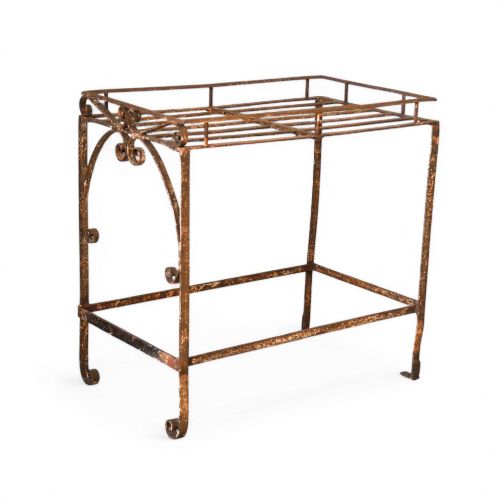
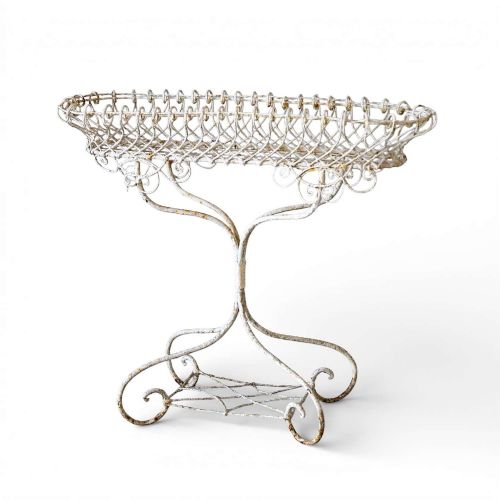
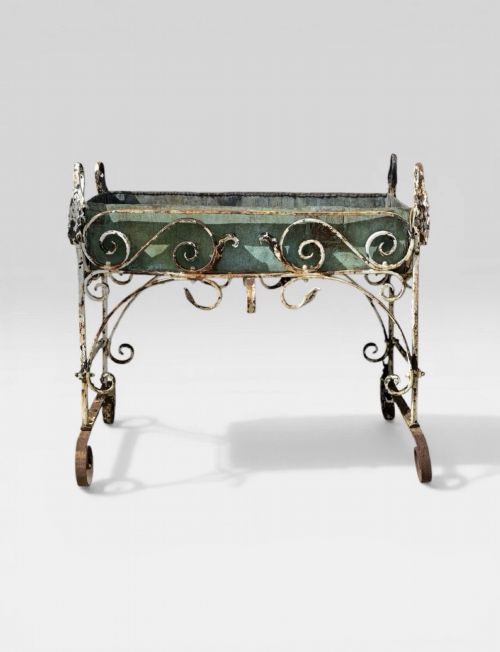
Wrought iron objects relied on hand forging, welding individual bars into lattice baskets, scrollwork frames, and tiered conservatory plant stands. Surviving surfaces often display original distressed paint finishes, verdigris, or weathered patinas accumulated over decades of outdoor exposure.
Listings feature cast iron, wrought iron, copper, and oak across Victorian, Georgian, and Edwardian periods.
Evaluating Quality
Quality rests upon the crispness of the casting and the distinction of the foundry work, separating mass-produced items from finer studio or foundry pieces. Sharp relief on campana urns and balanced proportions in scrollwork indicate superior craftsmanship.
The integrity of the metal and the character of the surface finish further distinguish better examples. Original undisturbed paint layers, honest weathering, and robust structural weight without modern reinforcement elevate a piece's desirability.
Coalbrookdale Urns·Andrew Handyside·Val D Osne Foundry
The Vintage Iron Planters Glossary
- Campana
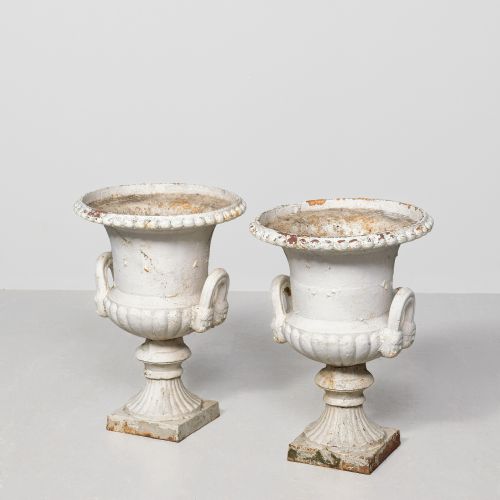
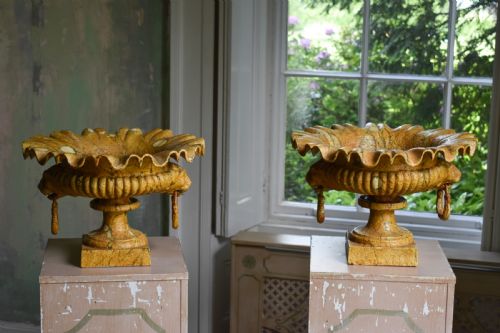
- A bell-shaped garden urn with a flared rim, widely produced in cast iron during the nineteenth century. These classical vessels often sat upon matching plinths.
- Jardiniere
- An ornamental pot or stand designed to hold growing plants or flowers. They appear in cast iron, wirework, and copper variations.
- Verdigris
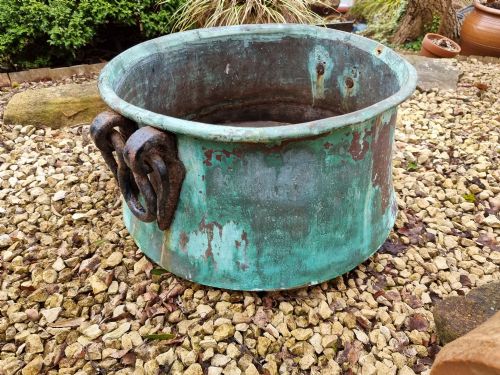
- A green patina formed naturally on copper and brass surfaces through atmospheric oxidation. This chemical change provides a protective layer and aged appearance.
- Wirework
- Metal rods and wire bent and joined to form lightweight yet sturdy plant stands and tiered garden displays. Edwardian and Victorian examples utilised this technique for conservatories.
- Scrumbled
- A decorative paint technique involving mottled or smeared translucent glazes over an opaque base coat. It mimics natural grain or texture on metal and wooden surfaces.
Vintage Iron Planters: Frequently Asked Questions
How do I care for cast iron outdoors?
Cast iron handles outdoor environments well due to its natural density and weight. Regular checks for moisture accumulation help preserve the metal integrity.
Applying protective wax or suitable exterior paint prevents rust progression. Keeping the base elevated on stones stops prolonged contact with wet ground.
Were these urns originally painted?
Many nineteenth-century cast iron urns received protective lead-based paint coatings upon leaving the foundry. White, dark green, and black remained standard choices for garden statuary.
Original distressed paint layers add significant character to vintage pieces. Owners often maintain these aged surfaces rather than stripping them down to bare metal.
Can wirework stands hold heavy pots?
Victorian and Edwardian wirework stands were engineered to support substantial conservatory plants despite their delicate appearance. The interwoven metal structure distributes weight across multiple tiers.
Inspecting the joints for structural stability ensures safe loading. Lighter decorative pots suit the upper tiers, while heavier specimens sit securely at the base.