
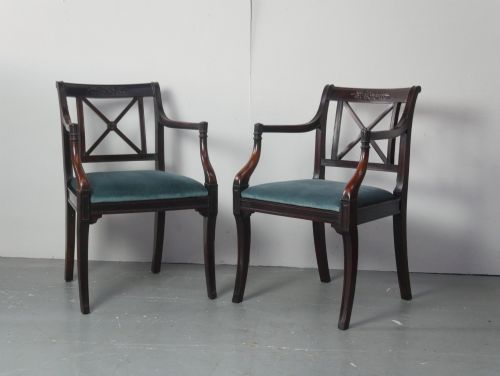
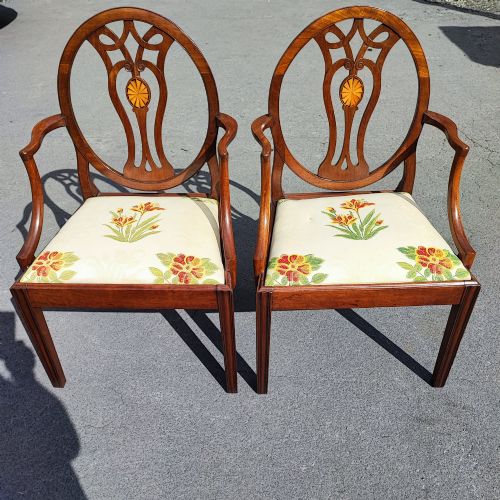
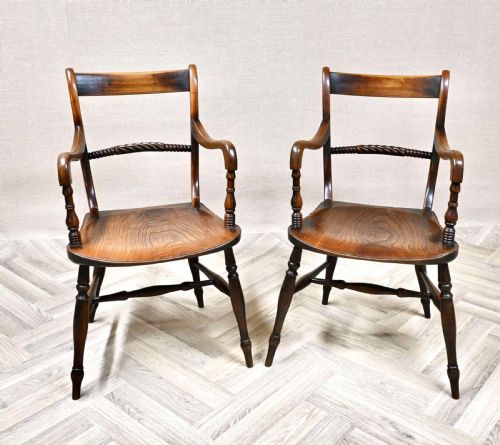
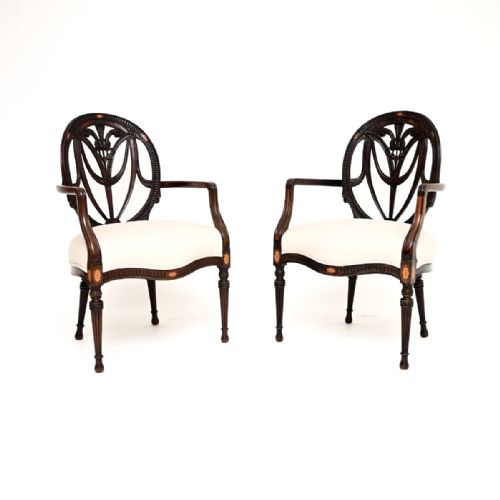
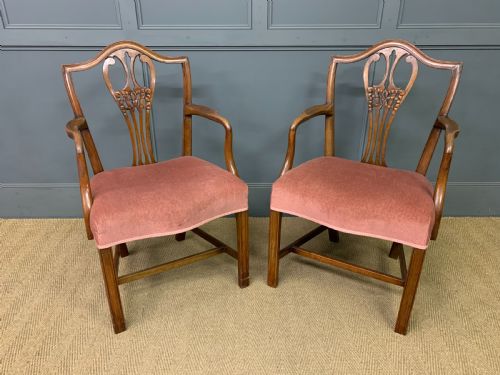
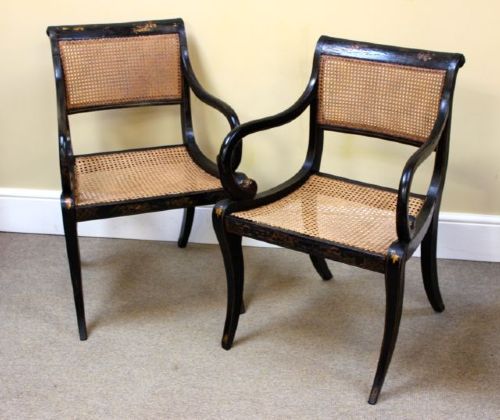
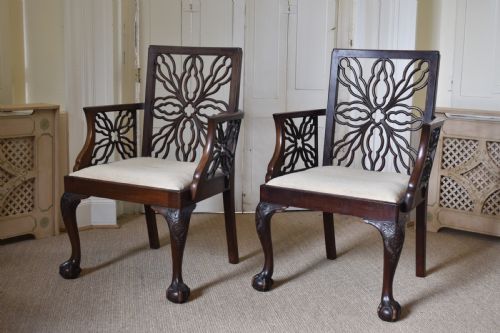
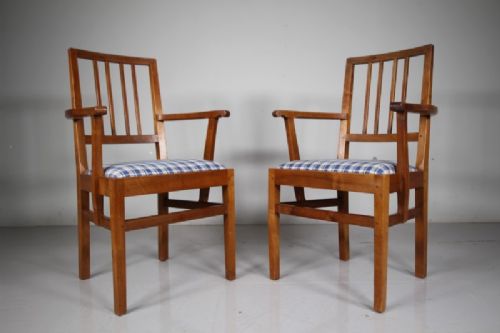
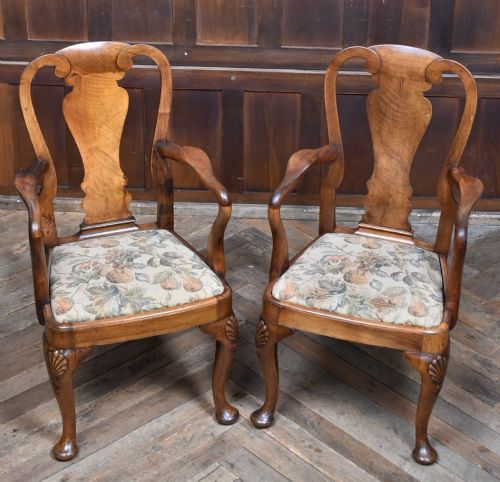
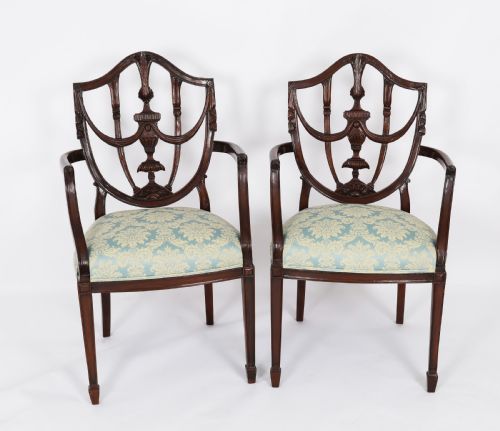
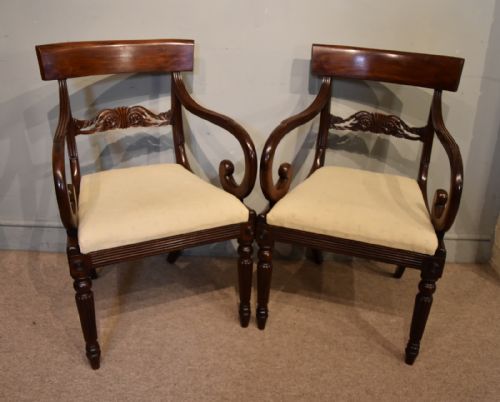
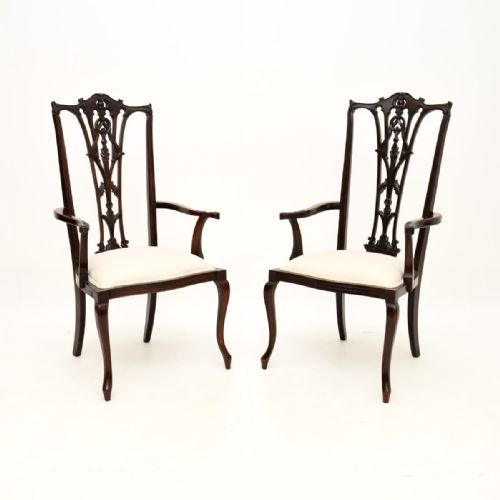
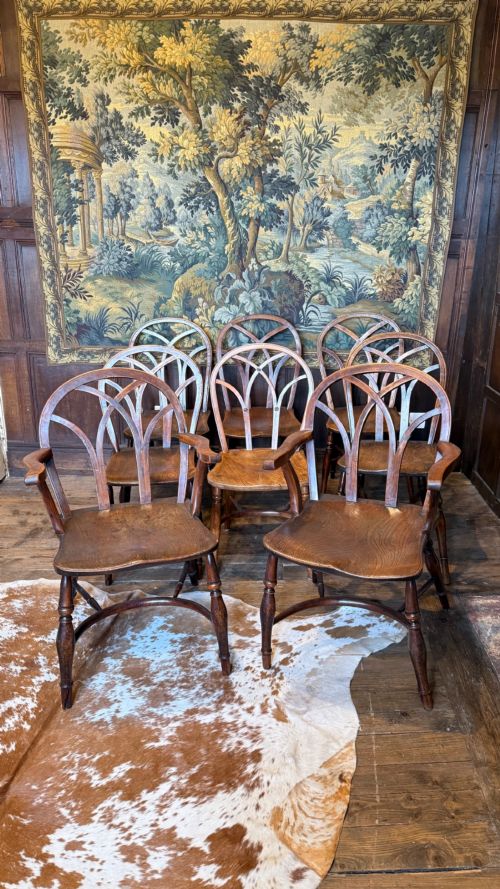
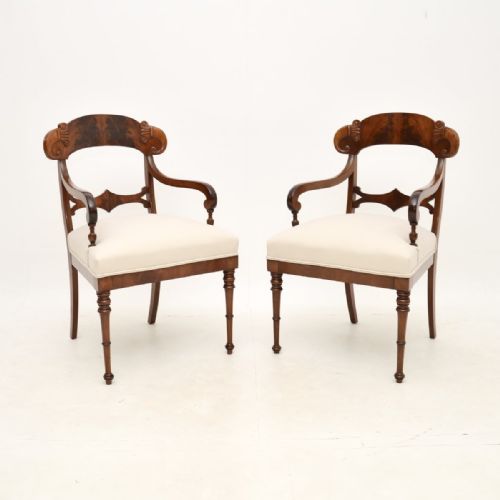
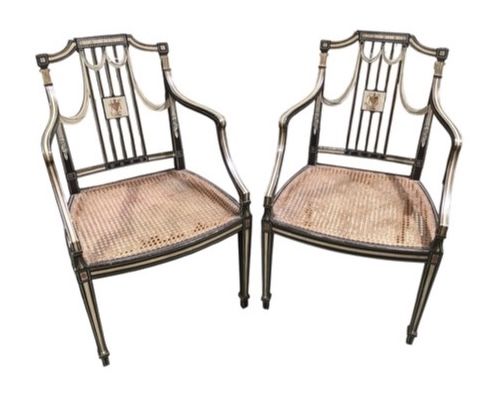
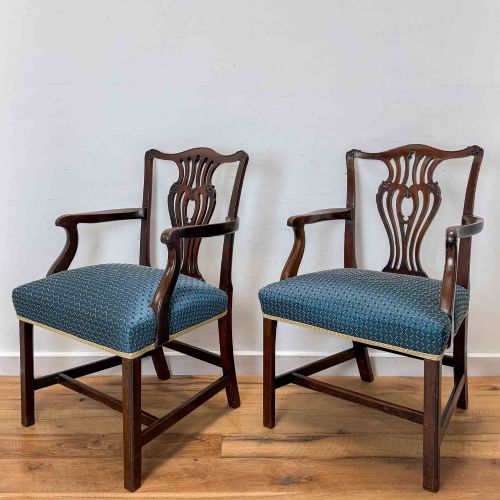
Pair Carver Dining Chairs
These pair carver dining chairs offer seating with supportive arms, appearing frequently in mahogany and oak across various historical periods.
Pair Carver Dining Chairs
When you search for pair carver dining chairs, you encounter seated furniture designed with integrated armrests for the ends of a dining table. The selection spans the Georgian, Regency, and Victorian eras, alongside Edwardian and later revival pieces.
Mahogany forms the dominant timber across the listings, often shaped into Chippendale or Hepplewhite styles with open arms. Oak examples also appear regularly, reflecting both country traditions and Arts and Crafts design.
Most entries comprise matched sets of two armchairs intended to sit alongside side chairs. The origins range from English workshops to Swedish design and regional vernacular traditions.
Materials and construction
Cabinetmakers utilised dense timbers, primarily mahogany and oak, supplemented by elm and walnut for regional and country pieces. Timber selection dictated the structural integrity of the arms and legs, which endured daily use at the dining table.
Joinery methods involved traditional mortise and tenon frames, occasionally reinforced with intricate carving, brass details, or string inlay. Upholstery materials included leather, velvet, fabric, and caned panels fitted to drop-in or fixed seats.
The listings span eight distinct periods, led by nineteenth-century examples and supported by Georgian and Edwardian designs.
Judging quality
Superior examples demonstrate crisp timber carving, balanced proportions, and well-executed joinery where the arms join the upright supports. Lesser pieces show coarser timber selection or later replacement parts that disrupt the original silhouette.
The choice of secondary woods and the precision of decorative elements such as inlaid stringing or ropetwist turnings distinguish standard workshop output from master craftsmanship.
Edward Barnsley·Gillows·Heals of London·Mouseman·William Morris
The Pair Carver Dining Chairs Glossary
- Carver chair
- An armchair designed specifically for use at the dining table, featuring open arms to accommodate dining attire.
- Bar-back
- A chair back incorporating one or more horizontal transverse wooden slats resembling the rail of a fence or bar.
- Elbow chair
- An alternative historical term for an armchair, referencing the support provided for the sitter's arms.
- Caned
- A seating surface or back panel woven from split rattan or cane material, offering lightweight flexibility.
- Shield back
- A chair back shaped in the outline of a heraldic shield, popular in late eighteenth-century furniture design.
Pair Carver Dining Chairs: Frequently Asked Questions
What is a carver chair?
A carver chair is an armchair traditionally placed at the head and foot of a dining table. The integrated arms provide additional comfort compared to standard dining chairs.
They share the same overall height and stylistic vocabulary as the matching side chairs in a set.
How do I date these chairs?
Dating relies on examining the timber species, construction joints, and stylistic motifs like shield backs or reeded legs. Georgian and Regency pieces show distinct classical influences not found in later Edwardian revivals.
Maker stamps, labels, and secondary woods further narrow down the exact period of manufacture.
Are these comfortable for daily use?
Most antique carver chairs provide sturdy support, though seat heights and back angles reflect historical preferences rather than modern ergonomic standards. Upholstered or leather pads offer a softer seat for extended dining.
Their sturdy timber frames ensure durability for contemporary living spaces.
How do I match them with a table?
Consider the timber tone, such as the deep red hues of mahogany or the warmer grain of oak, to coordinate with existing furniture. The height of the arms is also crucial to ensure the chair slides neatly beneath the table top.
Sticking to compatible periods like Regency or Georgian revival creates a cohesive interior scheme.