
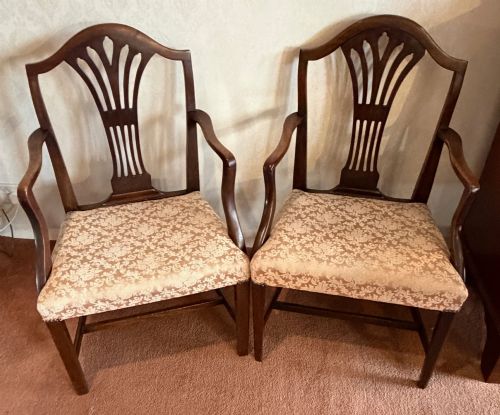


Period Style Elbow Chairs
Period style elbow chairs bridge formal dining and quiet study, offering sturdy arm support in mahogany, walnut, and painted finishes.
Period Style Elbow Chairs
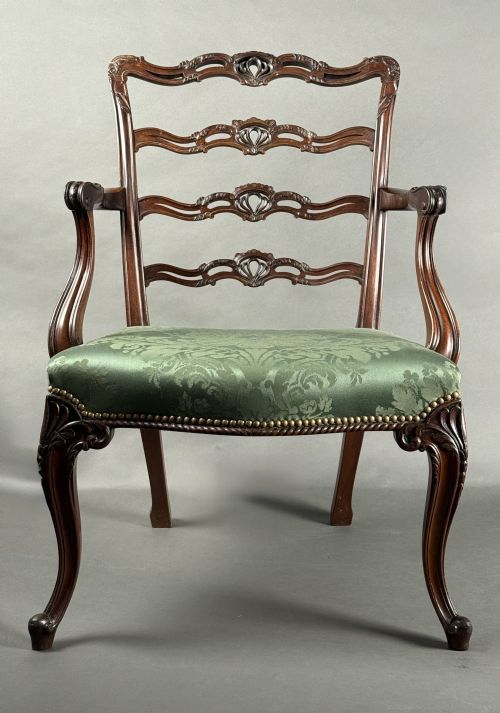
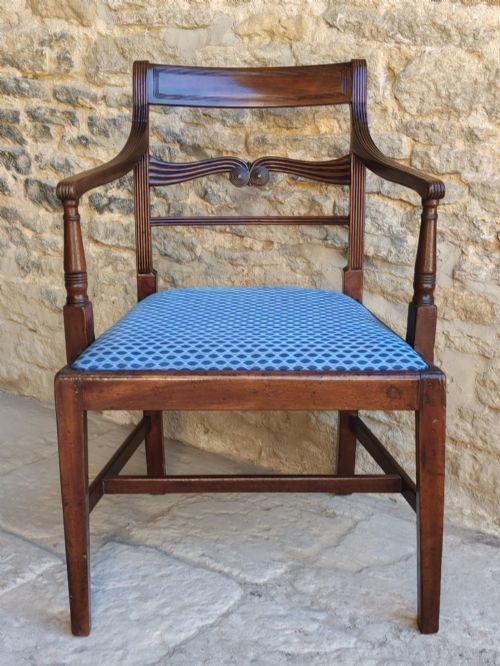
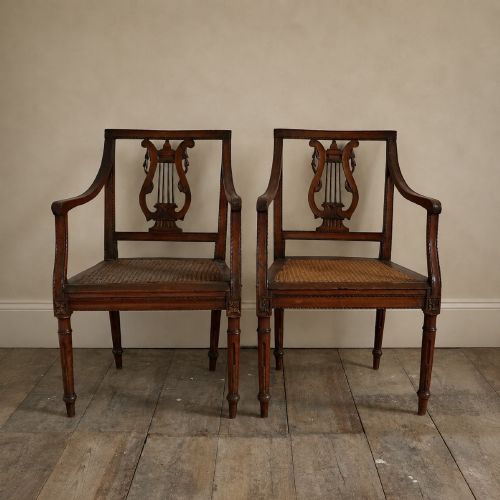
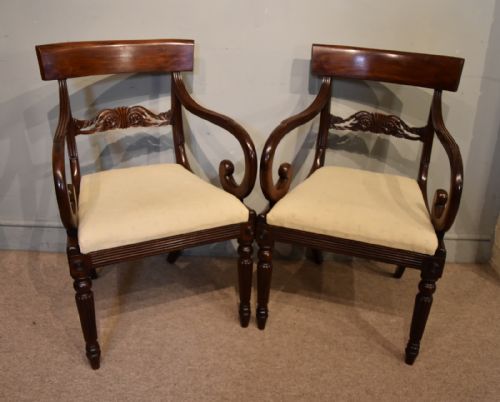
These seats serve as carvers, desk chairs, and library armchairs designed to sit alongside dining tables or within morning rooms. The selection draws heavily from the Georgian, Regency, and Victorian eras, alongside later revival pieces produced around the turn of the twentieth century.
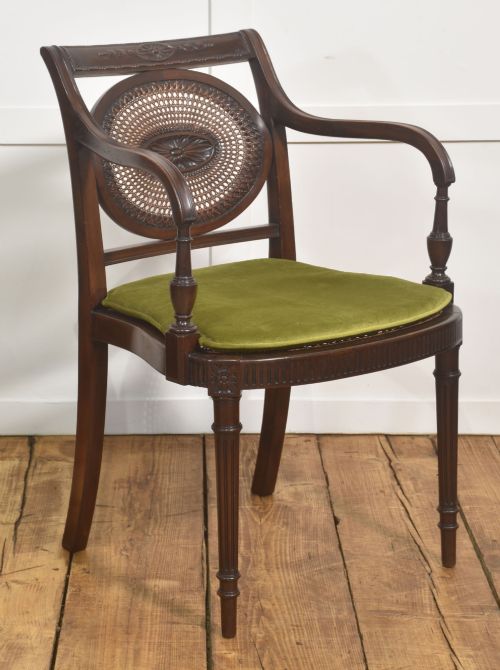
Mahogany forms the dominant timber across the listings, accompanied by walnut, painted surfaces, and brass inlay. Seat materials range from cane and hand-dyed green leather to standard upholstery fabric and tapestry.
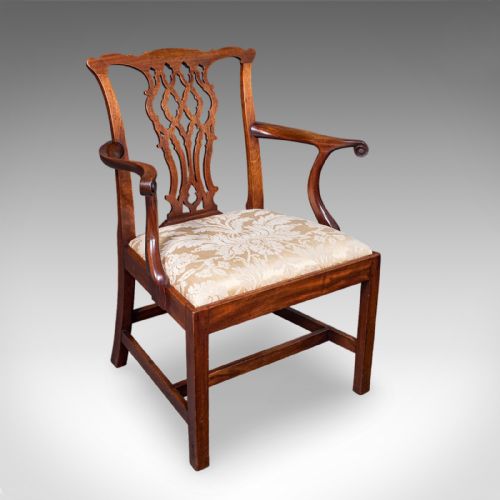
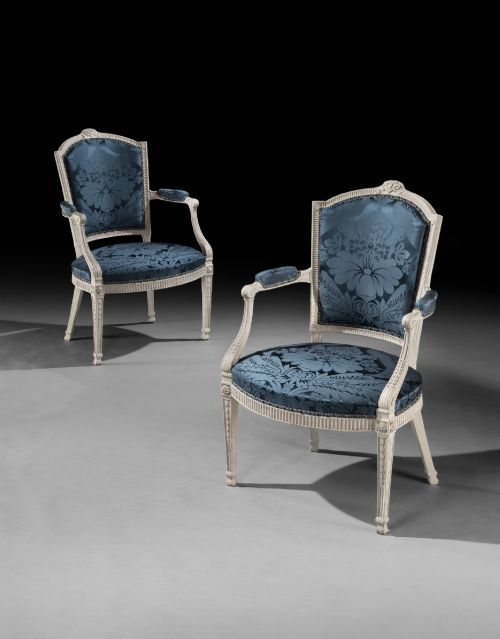
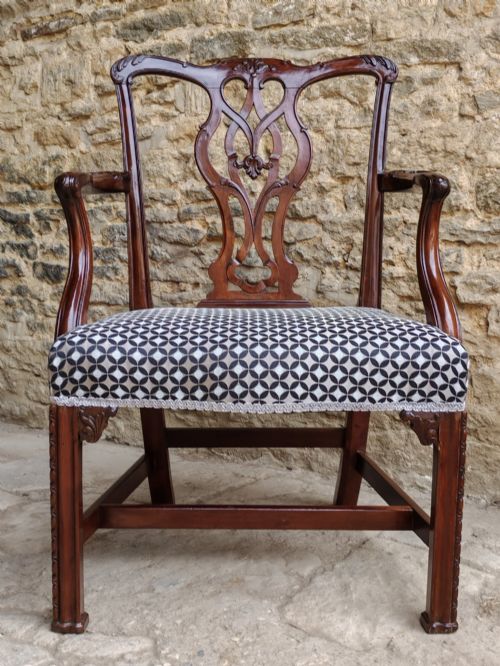
Forms span from eighteenth-century originals to later nineteenth and early twentieth-century interpretations in the Chippendale, Hepplewhite, and Sheraton tastes. Buyers frequently encounter matched pairs alongside individual carvers and occasional child-sized variants.
Quality variations
The degree of hand-carving defines the upper tier of these seats, seen in crisp relief work on the splats, arm terminals, and front rails. Finer examples maintain crisp timber edges and balanced proportions without relying on heavy secondary reinforcement.
Material selection marks the distinction between standard production and exceptional work, particularly in the choice of dense, well-figured mahogany and high-grade leather or cane inserts. Original eighteenth-century construction methods contrast against later revival output, though both categories demonstrate varied levels of cabinetmaker skill.
One remarkably small mahogany child's chair waits patiently among the full-sized elbow seats.
The Period Style Elbow Chairs Glossary
- Carver chair
- An armchair designed to match a set of single dining chairs, traditionally placed at the head of the table. These seats feature supportive arms to accommodate the person carving the meat.
- Elbow chair
- A term for an armchair with low arms, frequently utilised in libraries, morning rooms, and desks. The compact arm design allows the sitter to pull close to a table.
- Chippendale style
- A decorative design based on the eighteenth-century pattern books of Thomas Chippendale. Pieces in this taste display carved ribbon backs, interlaced splats, and cabriole legs.
- Hepplewhite style
- A light and graceful design aesthetic associated with the late eighteenth century. These seats typically feature shield-shaped or heart-shaped backs and tapered legs.
- Cane seat
- A seating surface woven from rattan or split cane plants. This method provides a resilient and breathable platform for daily use.
Period Style Elbow Chairs: Frequently Asked Questions
Where should I place an elbow chair?
These seats suit studies, bedrooms, and hallway corners where a single statement chair functions as an occasional seat. They also serve at the heads of dining tables alongside matching single chairs.
Their compact arm proportions allow them to slide beneath standard desk heights more easily than heavy library armchairs.
How do I care for leather seats?
Hand-dyed leather surfaces require occasional cleaning with a dry cloth and gentle conditioning to prevent the hide from drying out. Avoid placing the timber frames near direct heat sources or strong sunlight.
Maintaining a stable room temperature protects both the wood polish and the underlying joinery from movement.
What is the difference between an original and a revival piece?
Original pieces date directly to the eighteenth or early nineteenth century, constructed during the primary reign or period of the style. Revival pieces were manufactured later in the nineteenth or early twentieth century in homage to those earlier forms.
Both categories utilise traditional timber framing, but material age and construction quirks help separate the two eras.
Can I use these chairs for daily dining?
Carver chairs function well at dining tables provided the arm height clears the underside of the table rim. The sturdy mahogany and walnut frames offer reliable daily support.
Check the seat height and arm clearance against your specific table before arranging them for meals.