




Pair Carved Wooden Reliefs
These pair carved wooden reliefs bring depth and texture to a room, offering matched symmetry through centuries of hand-carved panels, plaques, and architectural elements.
Pair Carved Wooden Reliefs
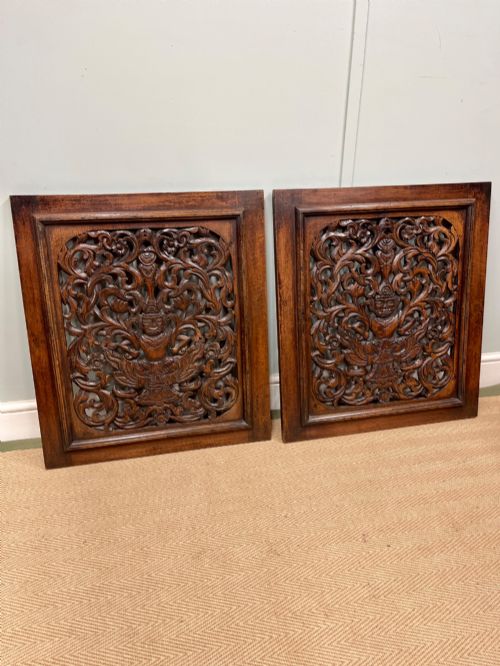
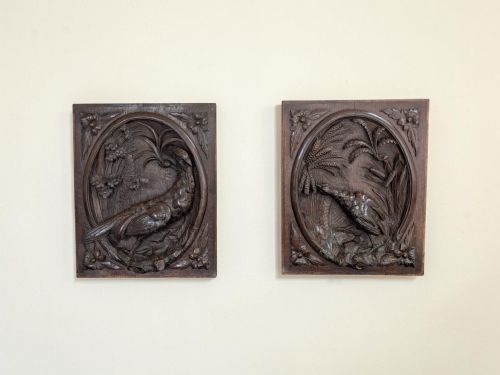
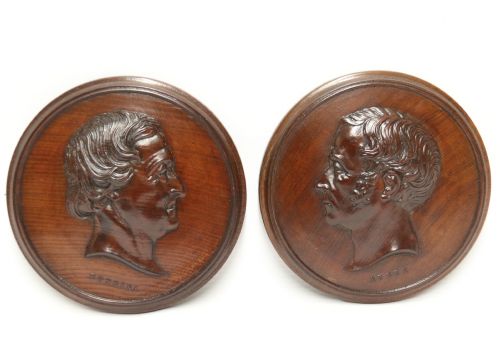
When searching for pair carved wooden reliefs, you encounter matched sets designed for walls, furniture, and architectural settings. These objects range from 16th century European figures and 18th century classical scenes to 19th century Black Forest plaques and Asian temple carvings.
The most common forms on this page include wall panels, decorative plaques, and architectural salvage. Many examples function as symmetrical wall decoration, while others form parts of armchairs, folding tables, and large tribal doors.
Origins stretch across Europe, Asia, and Africa, encompassing styles from French painted boiserie and Chinese Qing Dynasty woodwork to African tribal panels. The variety reflects workshops producing matched pairs for domestic interiors and public spaces alike.
Materials and techniques
Carvers shaped these pieces primarily from oak, mahogany, walnut, limewood, teak, and softwood using chisels and gouges. Hardwoods allowed for intricate detail in deep relief, while softer woods served for painted boiserie and architectural elements.
Surface treatments vary according to origin and period, including natural polished wood, applied paint, and giltwood. Some items utilise contrasting tones or dark stains to heighten the shadow and depth of the carved motifs.
Listings feature oak, mahogany, teak, and limewood across periods spanning from the 16th century through to the 1920s.
Judging quality in carved reliefs
The integrity of the timber and the preservation of original surface finishes dictate the desirability of an item. Panels retaining early paint, genuine giltwood, or aged patination stand apart from examples with sanded surfaces or later alterations.
The Pair Carved Wooden Reliefs Glossary
- Relief
- A sculptural technique where figures or designs project from a flat background. High relief stands out prominently, while low relief remains closer to the surface plane.
- Boiserie
- French interior wood panelling, often carved and painted in decorative schemes. These panels frequently adorn walls in grand domestic settings.
- Giltwood
- Wood that has been covered with a thin layer of gold leaf or powder. This finish adds luminosity and highlights intricate carved details.
- Herm
- A carved bust or figure supported on a square pillar, tapering towards the base. These architectural supports often appear in classical interior design.
- Trophy
- A sculptural grouping of symbolic objects, such as hunting gear or musical instruments, carved in wood. Black Forest plaques frequently utilise this motif.
Pair Carved Wooden Reliefs: Frequently Asked Questions
How do I hang heavy wooden reliefs?
Heavy panels and plaques require secure wall fixings distributed evenly across the weight of the timber. Metal brackets or concealed battens screwed into studs provide the necessary support.
Ensure the wall material can bear the load before mounting antique woodwork. Professional installation is recommended for large architectural fragments.
How should I clean antique carved wood?
Dust the carvings gently with a soft, dry brush to remove particles from deep recesses. Avoid using water, liquid cleaners, or modern polishes that can damage aged timber and original finishes.
Maintaining a stable room humidity prevents the wood from drying out or splitting over time. Natural beeswax applied sparingly helps preserve dry surfaces.
Are these panels always sold as matching pairs?
The items listed here consist of matched pairs designed to be displayed together. Symmetry governed the creation of many historical wall panels and architectural elements.
Each piece in a pair complements the other through mirrored motifs, balanced dimensions, or corresponding subjects. Keeping them together preserves their decorative intent.
What is the difference between panels and plaques?
Panels generally served as structural components of furniture, doors, or walling. They often feature linear framing and integrated joinery edges.
Plaques function primarily as standalone decorative items meant for display on a wall. They focus entirely on the central carved subject rather than structural utility.