


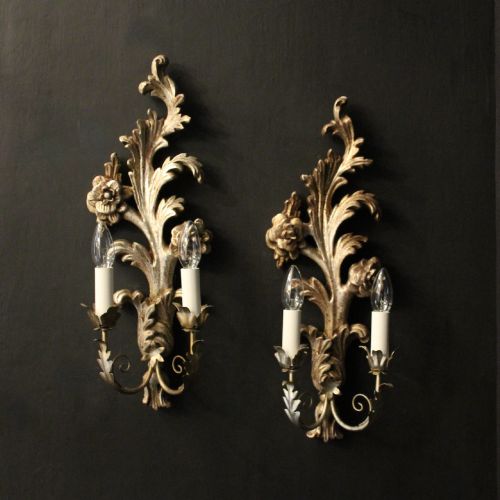
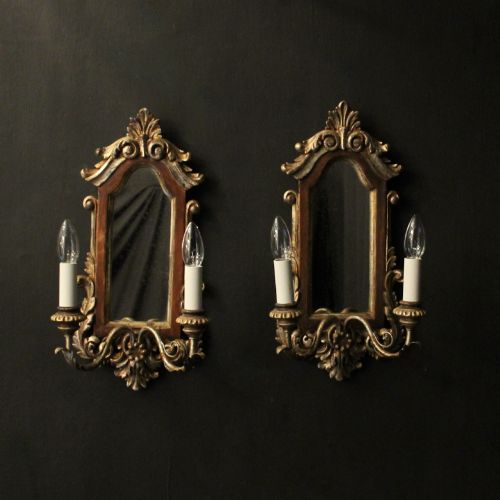
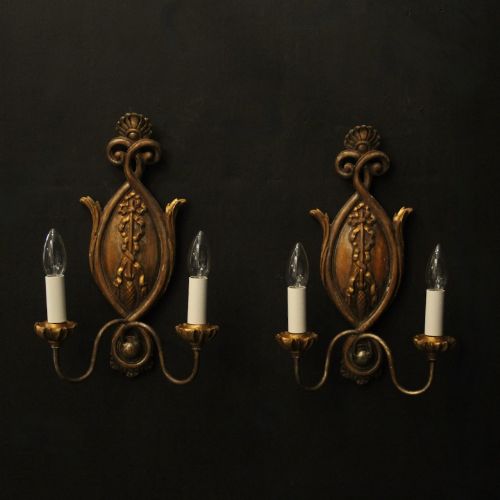
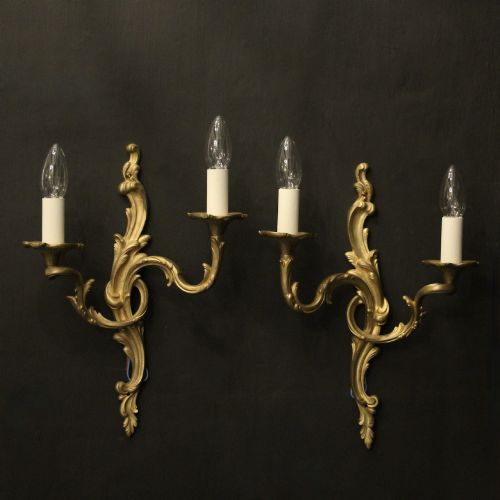
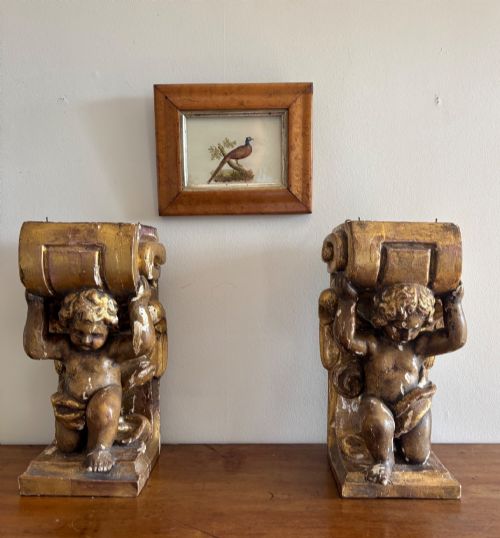
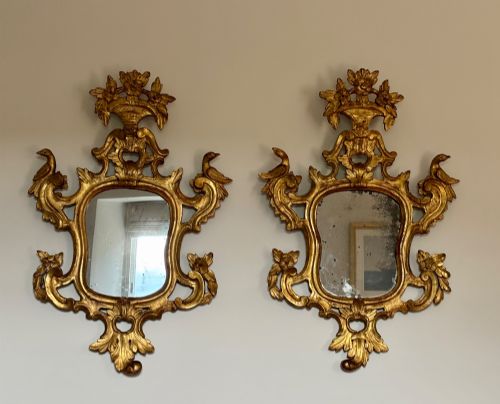
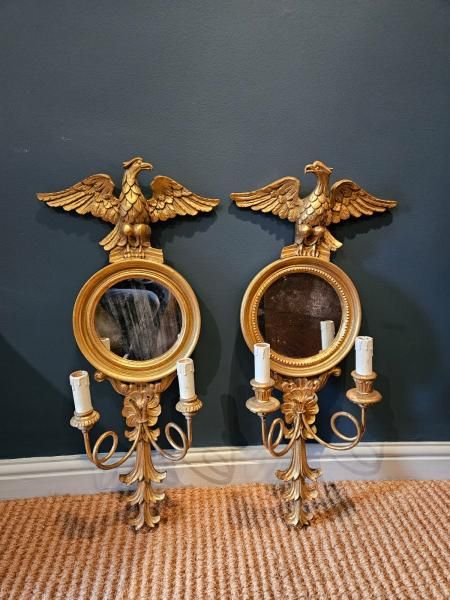
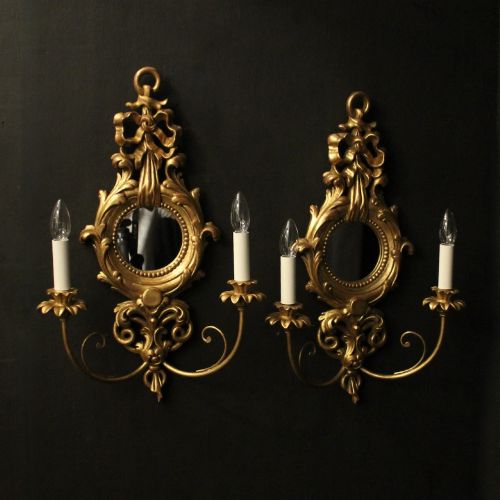
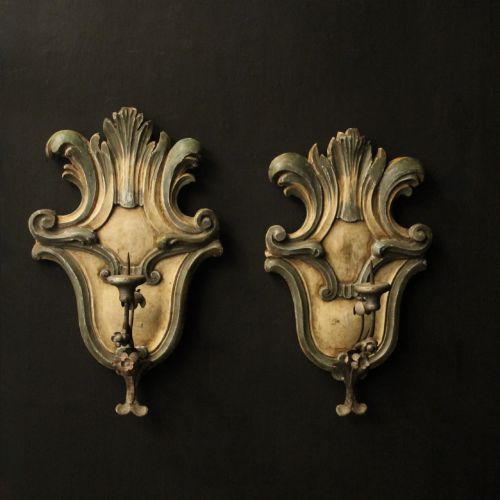
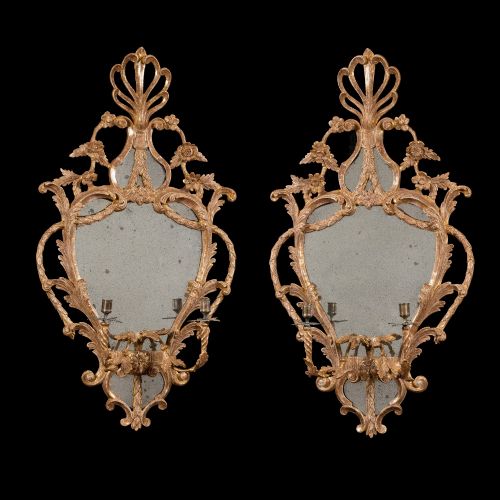
Pair Carved Sconces
These pair carved sconces bring decorative illumination and period character to a room, mounted directly onto wall surfaces.
Pair Carved Sconces
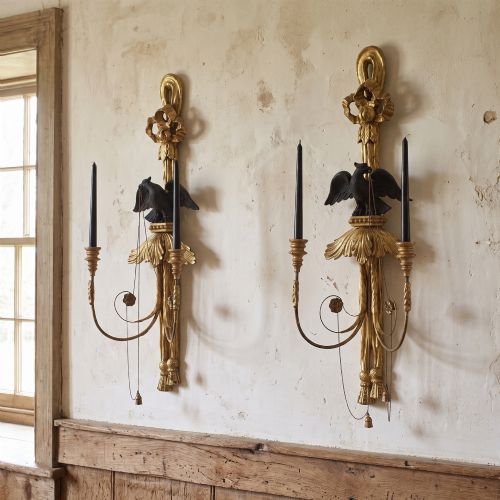
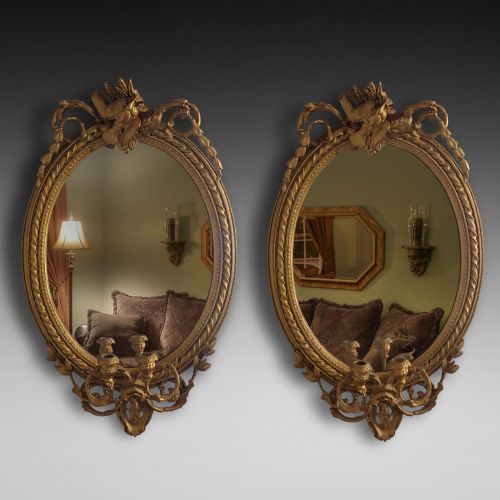
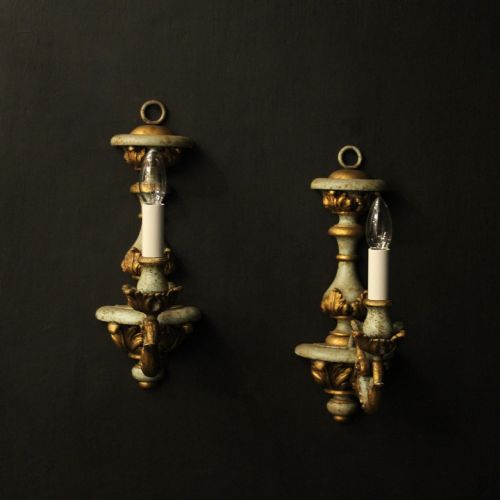
When you search for pair carved sconces, you encounter matched sets of wall-mounted light fittings and candle brackets created in timber and finished with ornate surfaces. The examples found here span from the eighteenth century through to the early decades of the twentieth century, reflecting classical and revival tastes.
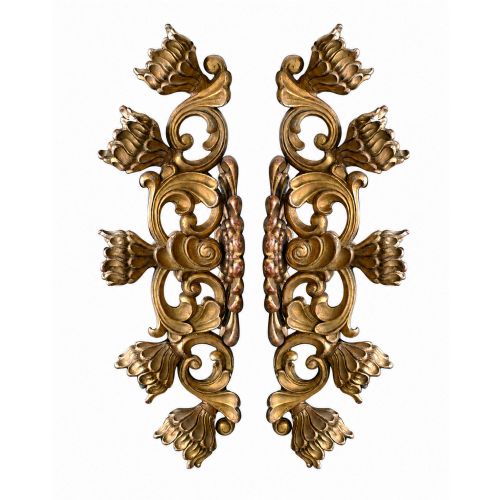
The most common forms on this page include Florentine and French giltwood twin-arm wall lights, alongside carved wood brackets and mirrored girandoles. Makers and craftsmen utilised timber bases shaped with scrolls, cherubs, and putti to hold candles or electric bulbs.
Originating largely from Italian and French workshops, these fixtures served historically to multiply candlelight by reflecting illumination off gilt surfaces and mirror plates. Buyers select them today to provide symmetrical accent lighting and sculptural interest on panelled or plastered walls.
How they were made
The structural foundation of these pieces relies on hand-carved timber, frequently pine or softer woods, shaped into scrollwork, foliage, and figures such as cherubs. Artisans applied layers of gesso to smooth the wooden surface before adding gold leaf, silver gilt, or polychrome paint.
Metal components such as brass, bronze, and ormolu form the arms and candle nozzles on many wall lights, joined securely to the wooden backplates. Where mirrors are integrated, antique glass plates are secured within the carved frames to bounce light back into the interior space.
Listings feature items dated from the seventeenth century through to the 1930s, constructed in giltwood, brass, and carved wood.
What varies in quality
The depth and crispness of the hand-carving separate standard production from superior examples, as skilled carvers achieved naturalistic movement in drapery, feathers, and floral motifs. The quality of the gilding application, whether using genuine gold leaf or paint, dictates how the surface ages and reflects light.
Originality of components also defines the standard of a set, where matching backplates, unified arms, and intact period mirror plates hold greater design integrity than heavily restored or assembled pairs.
The Pair Carved Sconces Glossary
- Girandole
- A branched wall-mounted candlestick, frequently incorporating a mirror backplate to reflect the flame. These fixtures served a dual purpose of illumination and decoration in period interiors.
- Giltwood
- Timber that has been coated with gold leaf or gold paint over a prepared gesso ground. This finish provided a luxurious appearance that caught candlelight effectively.
- Gesso
- A plaster-like mixture applied to carved wood to create a smooth surface for gilding and painting. It allowed craftsmen to achieve sharp relief details before applying gold leaf.
- Putti
- Depictions of chubby male infants, often winged, derived from classical art and frequently carved into the woodwork of Italian and French wall lights. They add a whimsical narrative element to the design.
- Ormolu
- Finely chased and gilt bronze used for decorative mounts and candle arms on nineteenth-century light fittings. The technique involves applying a mercury-gold amalgam to bronze.
Pair Carved Sconces: Frequently Asked Questions
How do I hang heavy carved sconces safely?
These wooden and metal fixtures require secure fastening into solid wall studs or appropriate masonry anchors to support their combined weight safely.
Consult a professional installer to ensure the wall structure can bear the load of heavier giltwood and mirrored backplates.
Can antique sconces be wired for electricity?
Many wall lights from the twentieth and late nineteenth centuries are adapted to accept modern electrical wiring while retaining their historic appearance.
An experienced electrician should inspect and update internal components to meet current safety standards before use.
How do I clean antique giltwood surfaces?
Dust these delicate wooden frames gently using a soft, dry brush without applying water or chemical solvents that could damage the gold leaf.
Preserving the fragile gesso and gilding requires minimal intervention and careful handling during routine household cleaning.
How can I tell eighteenth-century sconces apart from later revivals?
Earlier pieces exhibit hand-carved tool marks, distinct wood shrinkage, and wear patterns on the gesso that differ from twentieth-century revival production.
Examining the construction methods on the reverse of the backplate reveals the age of the timber and joining techniques.