
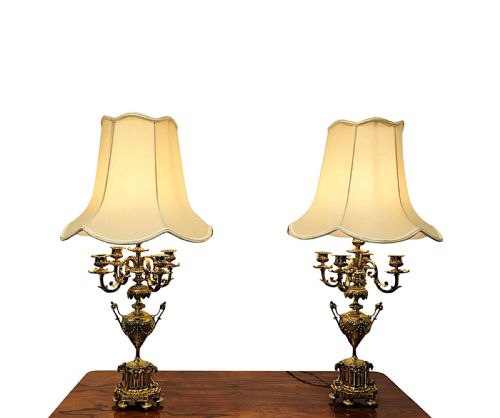


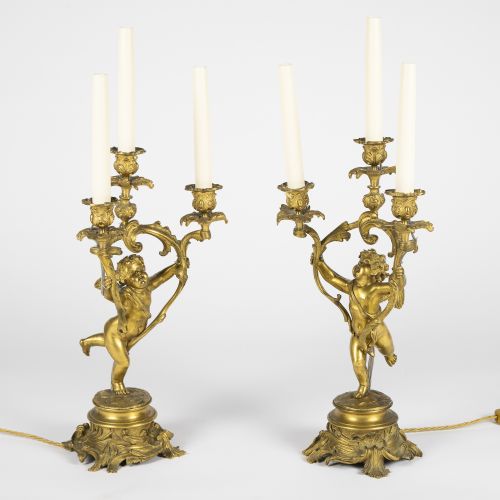


Pair Candelabra Table Lamps
Pair candelabra table lamps bring dual function and sculptural presence to a room, combining branching candlelight fittings with modern illumination.
Pair Candelabra Table Lamps
Pair candelabra table lamps merge multi-arm lighting structures with domestic table lamps, originating primarily from nineteenth and early twentieth century production. These dual-purpose objects often began life as traditional candelabra or girandoles before conversion to electricity.
The selection here encompasses French Rococo, Neoclassical, and Victorian expressions alongside English Regency and Napoleon III styles. Brass, bronze, and giltwood form the structural bodies, frequently paired with crystal drops and fabric elements.
How They Were Made
Metalworking techniques shape these pieces through cast brass, gilt bronze, and ormolu, often incorporating hand-chased surface details. Foundational materials include marble bases, carved giltwood, and china supports.
Glass components arrive via cut crystal pendants, bobeches, and girandole mirrors that reflect electric and ambient light. Fabric elements complete the upper portions where shades attach to the electrified stems.
What Varies in Quality
Quality rests upon the crispness of the metal casting and the depth of the gilding or silvering applied to the bronze, brass, or wood. Sculptural figures such as cherubs, putti, and mermans display differing levels of anatomical detail and hand-finishing.
The integration of original crystal drops, intact girandole mirrors, and substantial marble bases distinguishes finer examples from simpler utilitarian conversions. Heavier gauge metalwork and harmonious proportions elevate the piece.
The Pair Candelabra Table Lamps Glossary
- Candelabra
- A branched candlestick holder designed to support multiple candles simultaneously. Many examples adapt into electric lamps.
- Girandole
- A decorative wall sconce or table candelabrum featuring a small mirror plate behind the candles to reflect light.
- Ormolu
- Finely chopped high-karat gold applied to a bronze base using a mercury amalgamation process. This technique creates a rich golden finish on nineteenth-century French pieces.
- Putti
- Depictions of plump, winged infant cherubs commonly cast in bronze or carved in wood on French revival lighting.
- Bobeche
- A collar or drip pan fitted beneath the candle nozzle to catch melting wax. They frequently hold hanging crystal prisms.
Pair Candelabra Table Lamps: Frequently Asked Questions
Were these originally electric lamps?
Most examples began as standard candelabra or girandoles using wax candles before later conversion to electricity. Workshops adapted the central stems or branches to house wiring while retaining the original decorative metalwork.
This conversion process preserves the historic appearance of nineteenth and early twentieth century lighting while meeting modern domestic requirements.
How do I identify French styles here?
French pieces often display distinct decorative vocabularies such as Rococo asymmetry, Neoclassical symmetry, or Napoleon III grandeur. Look for cast putti, cherubs, gilt bronze, and cut crystal elements characteristic of Parisian workshops.
English equivalents tend toward more restrained brass frameworks and classical Regency proportions.
Where should I place these lamps?
Their height and branching arms suit placement on large sideboards, entrance consoles, or substantial mantelpieces. The dual function provides both ambient vertical glow and decorative sculptural weight.
Ensure surrounding surfaces offer adequate depth to accommodate the wider footprint of twin-arm or triple-light bases.
What materials make up the bases?
Foundational supports vary from cast brass and bronze to carved giltwood, marble, and china bases. These heavy materials provide necessary counterweight for the branching upper arms.
Crystal drops and glass components further add to the overall weight and reflective quality of each piece.