

Pair Cabriole Leg Tables
Pair cabriole leg tables unite symmetry and curves, offering matching surfaces rooted in 19th and early 20th century craftsmanship that anchor a room.
Pair Cabriole Leg Tables
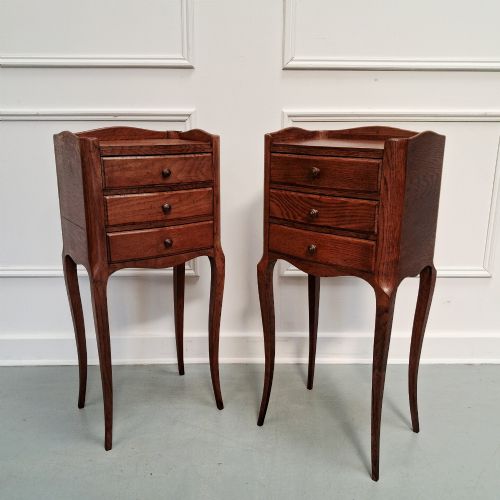
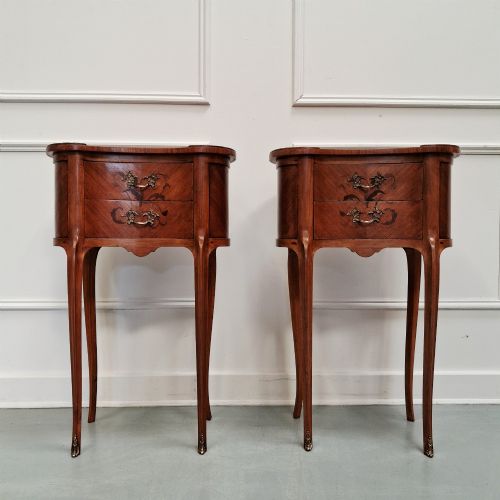
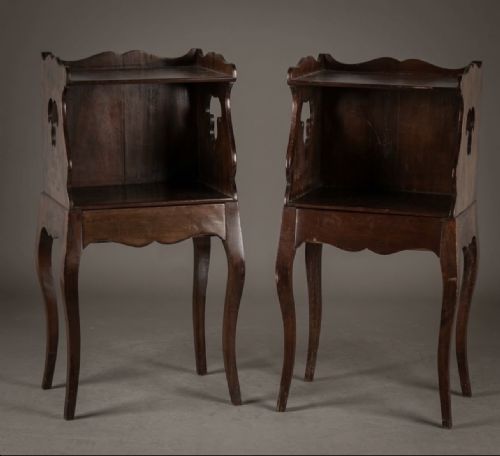
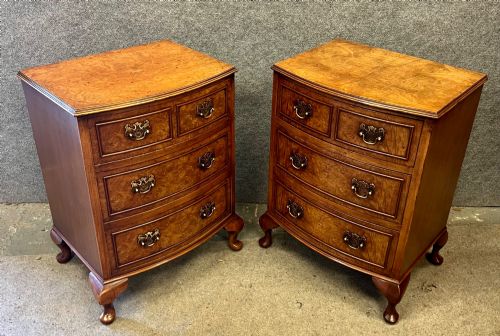
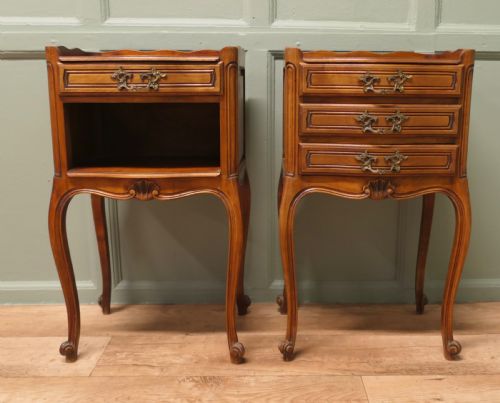
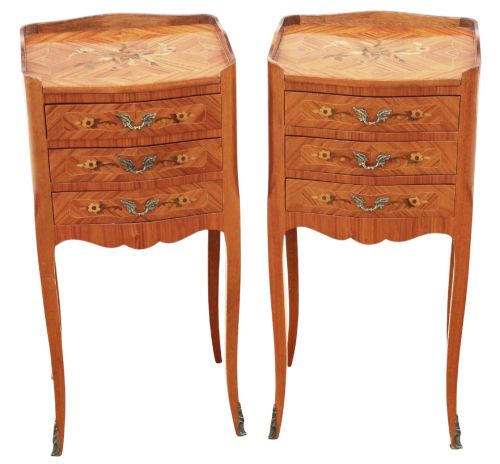
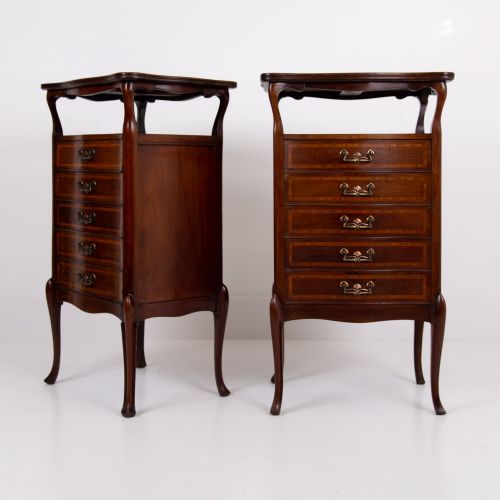
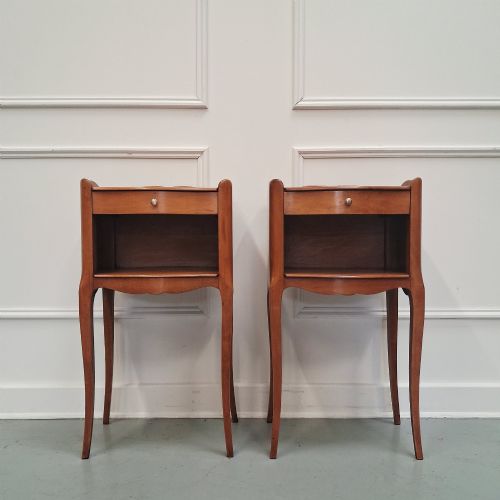
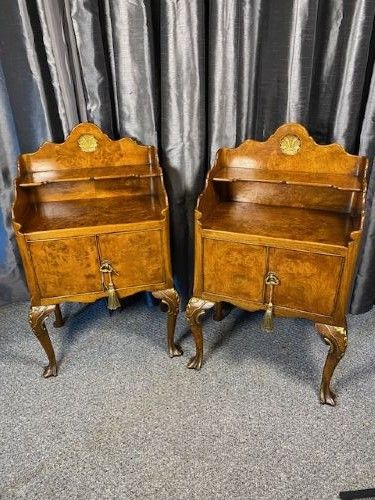
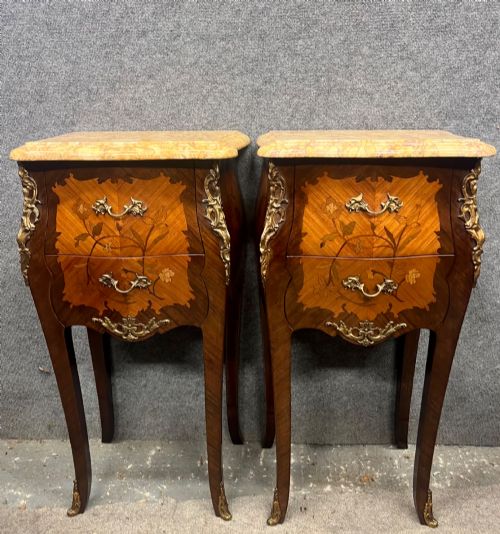
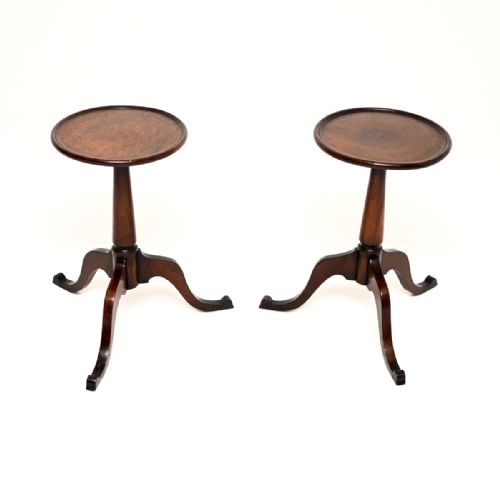
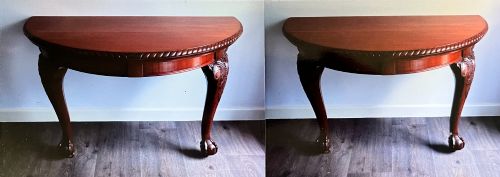
Pair cabriole leg tables appear most frequently on this page as matching bedside cabinets, lamp tables, and wine tables dating from the late 19th century through to the 1930s. These dual forms serve practical roles beside beds or seating while maintaining decorative balance through their curved supports.
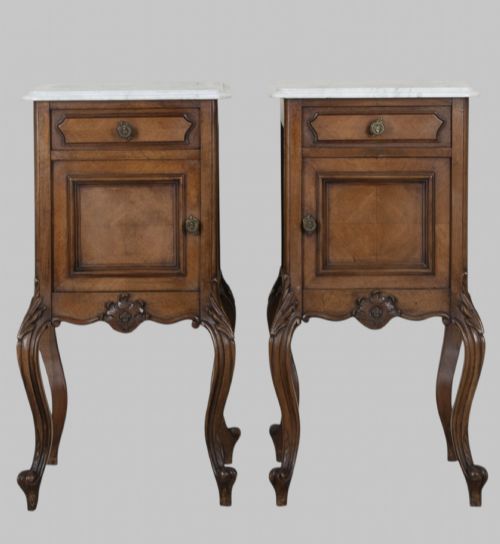
The inventory leans heavily towards continental European workshops, particularly French Provincial and Louis XV revival pieces, alongside traditional English mahogany and walnut designs. Buyers encounter everything from compact bedside chests with marble tops to slender wine tables and console arrangements.
Originating from periods spanning the Victorian era to the interwar decades, these matched sets demonstrate the enduring appeal of the double format. Their forms adapt easily to modern interiors while preserving distinct historical characteristics.
How they were made
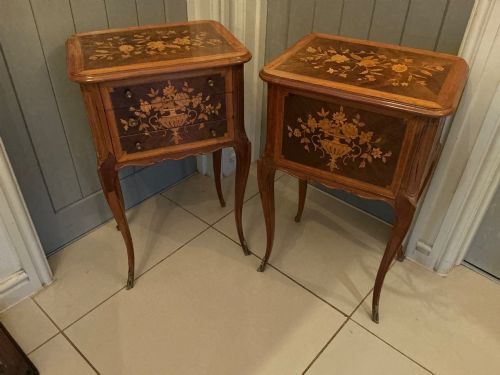
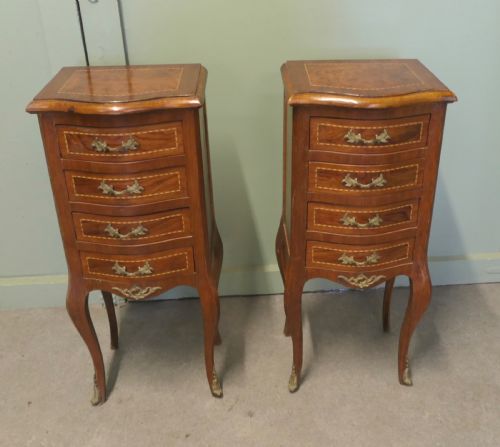
Cabinet makers utilised dense hardwoods such as walnut, mahogany, and oak, often applying figured veneers like burr walnut, kingwood, and satinwood to create decorative surface patterns. Marquetry inlay work frequently ornaments the drawer fronts and tops of French provincial pieces.
Structural embellishments include cast ormolu mounts, brass details, and inset marble slabs that provide durable, finished surfaces on top of wooden cabinets. The defining cabriole legs are shaped from solid timber, sweeping outward at the knee and tapering inward to the foot.
Joinery methods reflect traditional workshop practices of the 19th and early 20th centuries, ensuring stability in slender forms like tripod wine tables and tall bedside lockers.
Listed items span the 19th century up to the 1930s, embracing French Provincial, Georgian, and Queen Anne styles.
What varies in quality
The refinement of the woodwork largely dictates the standard of a pair cabriole leg tables set, particularly in the fluidity of the leg curves and the precision of the carved details. Superior examples display seamless transitions in the timber grain across both matching items.
Materials such as figured burr walnut, matched marquetry panels, and heavy ormolu mounts separate standard production items from finer workshop output. The integration of auxiliary materials, including intact marble tops and original brass hardware, elevates the standing of the pieces.
Symmetry between the two items remains paramount in matched sets, where consistent proportions and matching timber tones indicate a true original pair rather than a later assembled grouping.
The Pair Cabriole Leg Tables Glossary
- Cabriole leg
- A furniture support that curves outward at the knee and inward at the ankle, mimicking an animal's leg. This form became central to 18th-century design and later revival styles.
- Ormolu
- Gilded bronze ornamentation applied to furniture mounts and corners. It adds metallic contrast to wood surfaces.
- Marquetry
- Decorative veneer patterns assembled from thin slices of various coloured woods. Craftsmen apply these designs to table tops and cabinet doors.
- Chevet
- A small bedside table or cabinet of French origin. These pieces often incorporate single drawers and enclosed cupboards.
- Serpentine
- A furniture front or edge that curves outward in the centre and inward at the sides. This shape adds visual movement to cabinet pieces.
Pair Cabriole Leg Tables: Frequently Asked Questions
Are these tables strictly for bedrooms?
While many examples on this page function as bedside cabinets or nightstands, the category also encompasses wine tables, lamp tables, and console arrangements.
Smaller formats adapt readily to living rooms and hallways as decorative surface space.
How do I identify a true matched pair?
Examine the timber grain, dimensions, and structural details across both items to confirm consistent origin.
True pairs exhibit matching wear patterns and construction methods rather than assembled similarities.
What periods do these pieces represent?
The selection spans from 19th-century Victorian items to early 20th-century pieces, including Edwardian and 1930s interpretations.
Revival styles look back to earlier French Louis XV designs while employing contemporary manufacturing techniques of their day.
How should I care for marble-topped tables?
Marble surfaces require gentle cleaning with neutral soap and water to avoid staining the porous stone.
Wooden frames benefit from regular waxing to maintain the finish of walnut, mahogany, or oak veneers.