
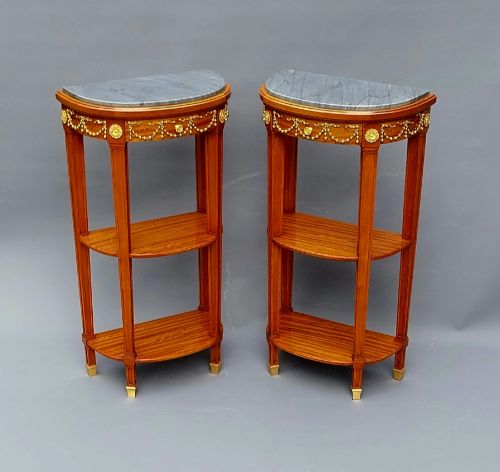
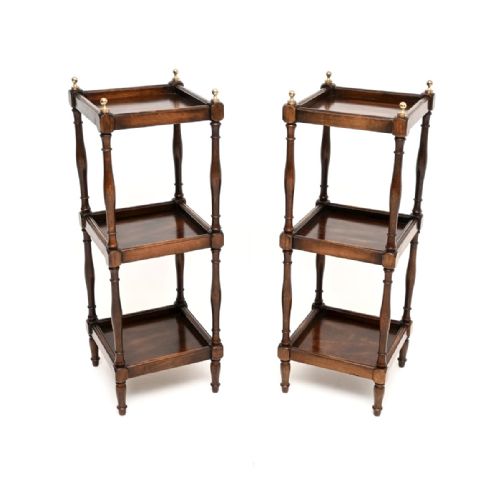
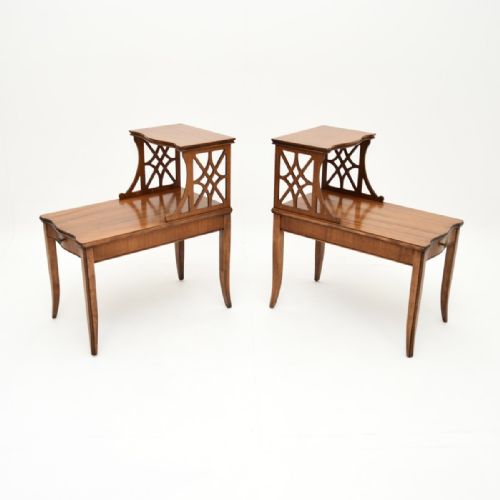
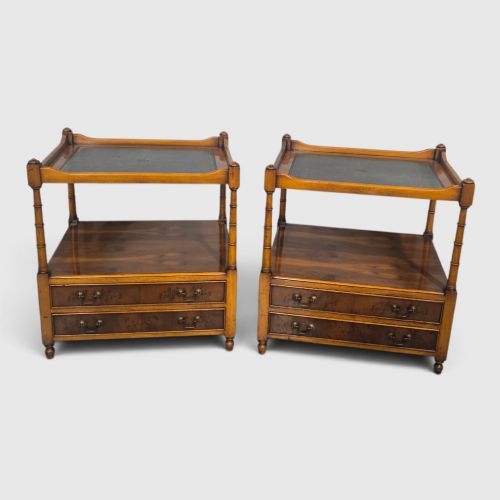
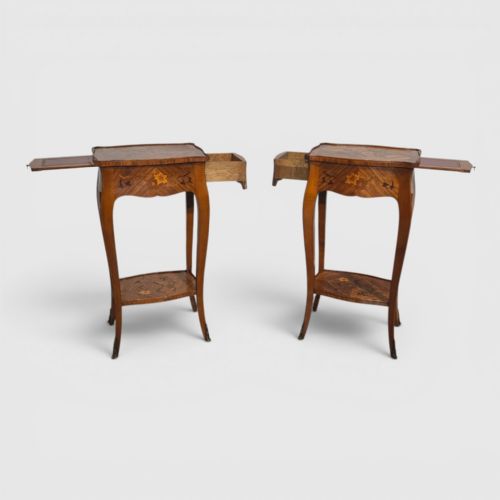
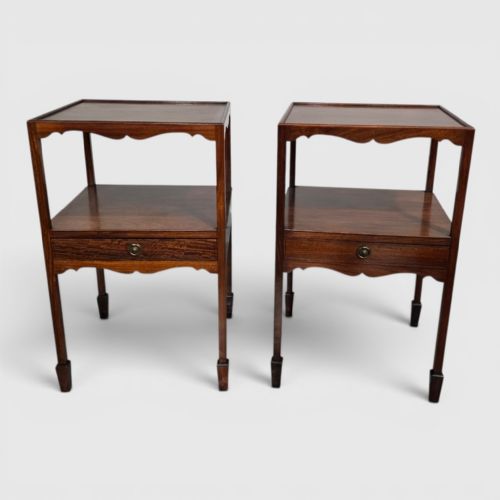

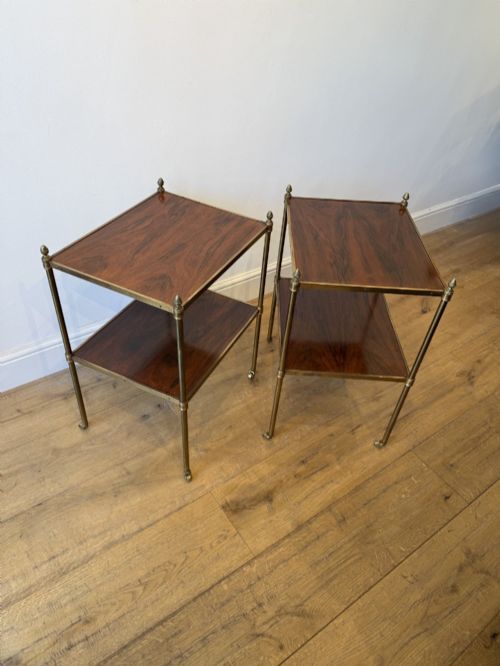

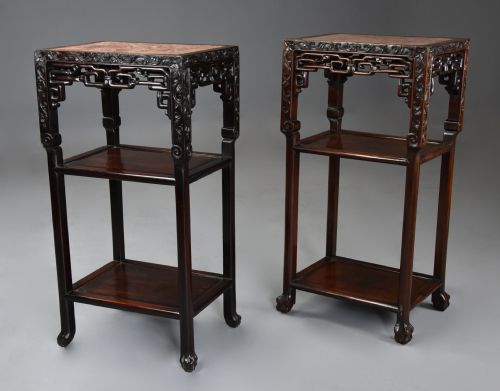


Tier Side Tables Pair
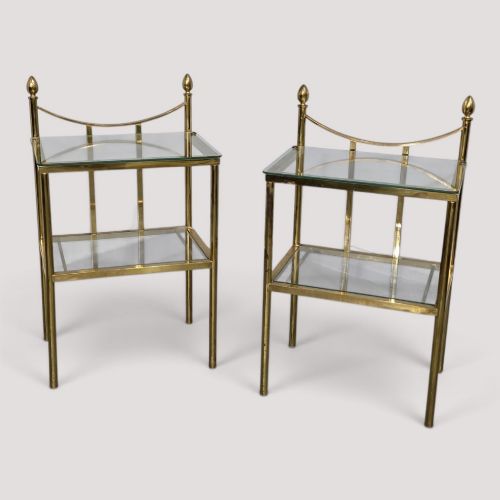
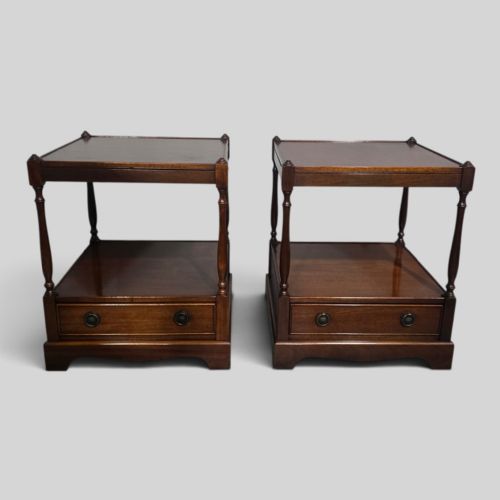
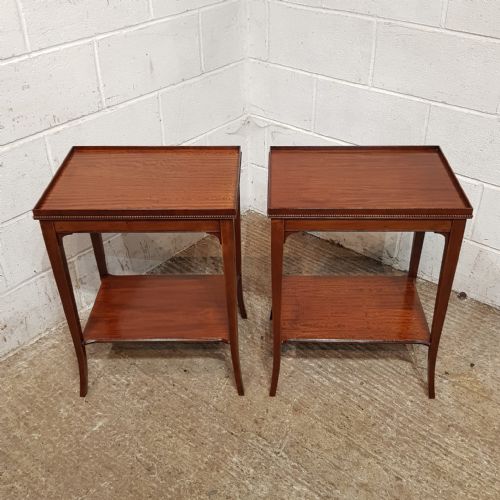
These tier side tables pair options offer dual-surface utility, bringing balanced proportions and period character directly to living spaces or bedrooms.
Tier Side Tables Pair
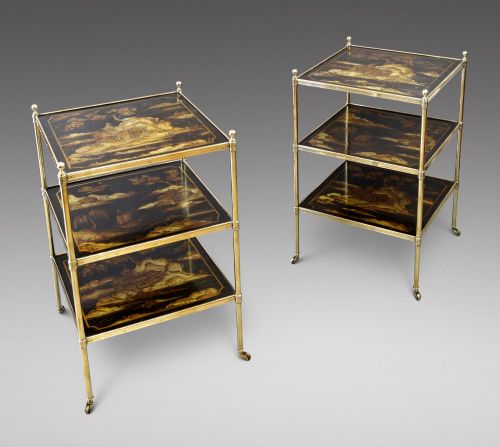
When you search for a tier side tables pair, you encounter dual-surface forms spanning side tables, lamp tables, bedside tables, and etageres. These pieces provide stacked display surfaces or storage tiers that suit domestic spaces.
The selections span from Edwardian and Victorian eras to the 1930s, featuring styles such as Regency, Art Deco, and French marquetry taste. Mahogany, oak, and walnut form the core structural timbers across these matched pairs.
You frequently meet two-tier and three-tier formats, including what-nots and plant stands, which balance vertical height with small footprints.
How they were made
Cabinetmakers utilised solid timbers such as mahogany, oak, walnut, and Chinese hardwood, often pairing them with decorative veneers like rosewood, satinwood, and kingwood. Marquetry inlays and gilt metal mounts frequently enriched the surfaces.
Structural integrity relied on traditional joinery methods, supporting multiple tiers connected by turned or slender uprights, sometimes incorporating inset marble tops or glass panels alongside brass details.
Listings include oak, mahogany, rosewood, walnut, satinwood, and marble across styles spanning Georgian, Regency, Edwardian, and Art Deco periods.
What varies in quality
The standard of a pair rests upon the crispness of timber selection, the precision of marquetry or inlay work, and the structural harmony between the matched items. Superior examples display refined proportions and careful matching of grain patterns across both pieces.
The integrity of secondary woods, the retention of original brass or gilt metal mounts, and the subtlety of carved details differentiate standard production from finer workshop output.
Gilbert Rohde·Hille, England·Mallett·Donald Ross·E W Godwin
The Tier Side Tables Pair Glossary
- Etagere
- A set of open shelves or tiers used for displaying small objects. These freestanding pieces often feature two or three levels supported by slender uprights.
- Whatnot
- A piece of furniture consisting of several open shelves above one another, designed for ornaments or books. They appear in nineteenth-century forms.
- Marquetry
- Decorative inlay work using strips of wood and other materials to form geometric or floral patterns on furniture surfaces. It defines many French and Edwardian pieces.
- Qing Dynasty
- A historical period of Chinese imperial rule associated with carved hardwood stands and tables imported during the nineteenth century.
Tier Side Tables Pair: Frequently Asked Questions
What defines a tier side tables pair?
These items consist of two matched auxiliary tables featuring multiple levels or stacked surfaces for display and placement.
They appear across various periods, functioning as bedside tables, lamp stands, or etageres.
How were these tables used originally?
Households utilised these dual-surface pieces beside seating or beds to hold lamps, decorative objects, or books.
Their stacked tiers maximised surface space while maintaining a compact floor footprint.
How do I distinguish Edwardian from Regency examples?
Edwardian items frequently display satinwood inlays, lighter mahogany tones, and Edwardian aesthetic traits dating around nineteen hundred.
Regency examples show earlier neoclassical lines, heavier brass details, and origins closer to the early nineteenth century.
Are matched pairs harder to find?
Original matched pairs involve two pieces manufactured together or unified historically, sharing identical timber, dimensions, and decorative schemes.
Finding true pairs remains less common than encountering single tables separated over time.