

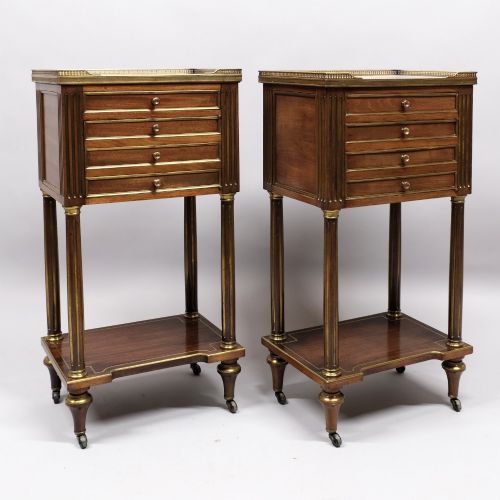


Tall Side Tables Drawer
Tall side tables drawer designs offer practical surface space combined with concealed storage, spanning periods from the Georgian era through to the 1930s in mahogany, oak and walnut.
Tall Side Tables Drawer
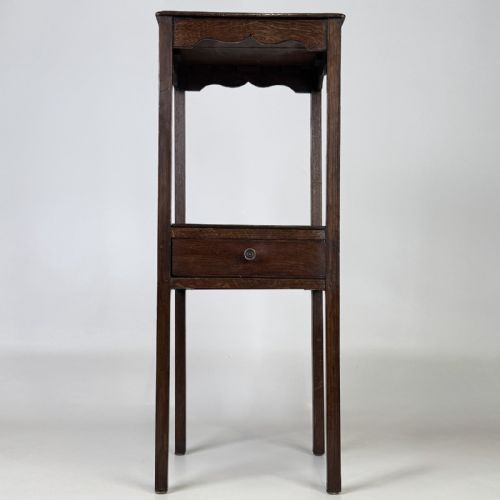
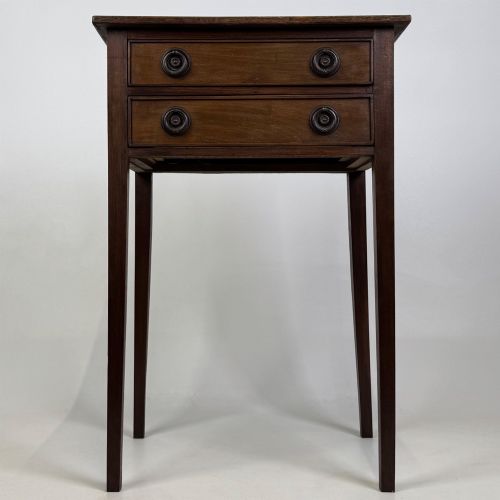
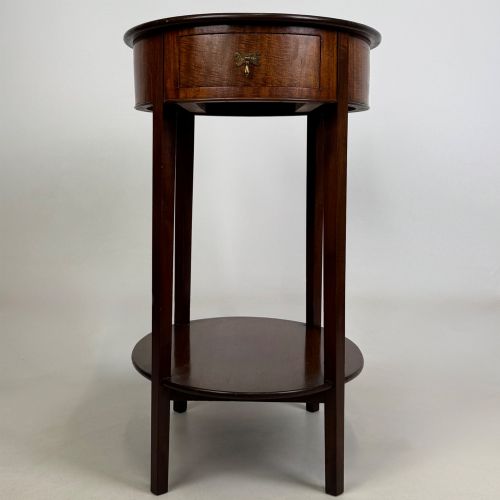
When searching for tall side tables drawer pieces, buyers encounter a diverse selection of upright furniture formats designed for compact spaces. These include bedside cabinets, tall side lockers, lamp tables and narrow occasional tables equipped with integral storage.
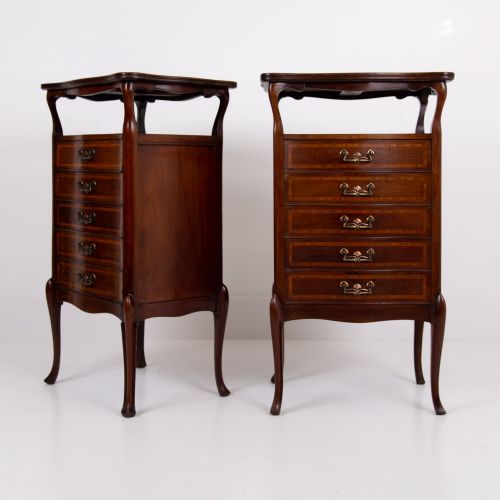
The inventory on this page draws heavily from the Victorian, Edwardian and early twentieth century periods, alongside select Georgian and nineteenth century examples. French styles such as Louis XV and Louis XVI appear frequently alongside British cabinet-making traditions.
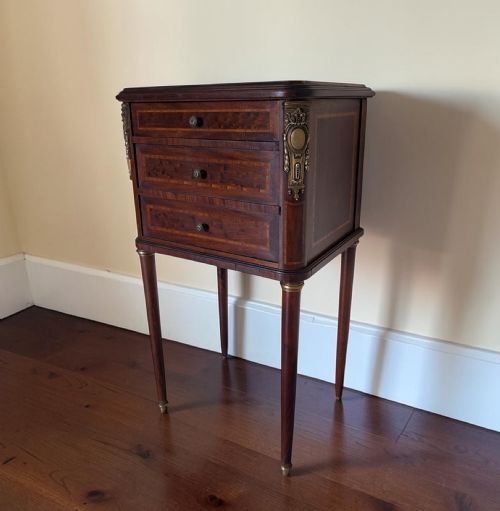
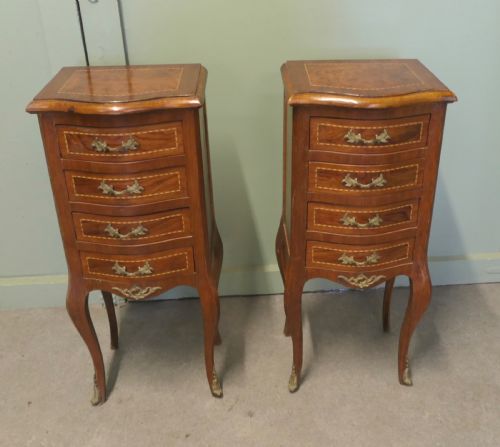
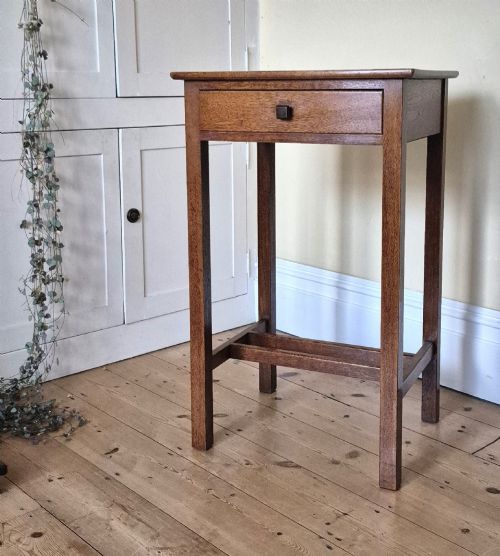
Forms range from simple single drawer oak and pine tables to elaborate multi-drawer French pieces featuring kingwood veneers and brass mounts. Proportion is key to their utility, with many pieces offering narrow footprints suited to tight spaces.
How they were made
Cabinet makers utilised a rich palette of timbers, employing dense hardwoods like mahogany, walnut, rosewood and kingwood alongside domestic oak, pine and pitch pine. Finer pieces often incorporated satinwood banding and intricate floral marquetry to enhance the visual depth of the surfaces.
Structural embellishments relied on quality metalwork, with brass details, handles and ormolu mounts fitted to drawers and corners. Construction techniques varied from traditional British joinery to refined French carcase building, ensuring sturdy frames for everyday use.
Current listings feature pieces spanning the Georgian era up to the nineteen-thirties, constructed in mahogany, oak, walnut and kingwood.
What varies in quality
The calibre of a piece rests upon the selection of timber veneers and the precision of the cabinet work, particularly in the dovetailing of drawers and the alignment of brass mounts. Superior examples demonstrate careful matching of grain patterns across multiple drawers and panels.
Proportion and decorative restraint dictate distinction, where refined carving, delicate inlay work or restrained ormolu detailing elevate a functional bedside or side table into a piece of considered design.
Hubert Simpson of Kendal
The Tall Side Tables Drawer Glossary
- Ormolu
- Gilded bronze ornamentation applied to furniture, commonly found on French pieces from the nineteenth and early twentieth centuries. It provides a metallic contrast to dark woods like mahogany and kingwood.
- Marquetry
- Decorative veneer work arranged in pictorial or floral patterns across table tops and drawer fronts. Craftsmen cut contrasting timbers to fit precisely within a background veneer.
- Whatnot
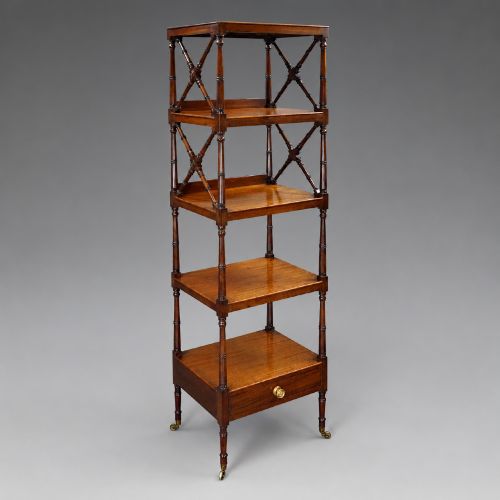
- An open set of multi-tiered shelves, sometimes featuring a drawer, designed for displaying or storing small objects. These pieces emerged strongly in the Georgian and Victorian periods.
- Kingwood
- A dense, richly figured Brazilian timber utilised extensively in high-end cabinet making for decorative crossbanding and geometric veneering. It brings a deep, warm tone to French bedside cabinets.
- Refectory table
- A long, narrow dining or serving table of sturdy construction, often produced in oak and associated with historic monastic or manor house interiors.
Tall Side Tables Drawer: Frequently Asked Questions
What is a tall side table with a drawer?
These are upright furnishings combining a compact surface top with one or more integrated storage compartments. They serve various domestic functions from bedside placement to lamp tables.
Their elevated stature allows them to fit narrow gaps while providing reachable storage capacity through fitted drawers.
Which periods do these tables come from?
The available selection spans from Georgian and Regency eras through the Victorian and Edwardian decades, extending into the nineteen-twenties and nineteen-thirties.
Late nineteenth and early twentieth century pieces dominate the current listings, alongside distinct French regional examples.
How were different woods used?
Makers utilised robust structural timbers like oak, pine and mahogany for frames, whilst employing decorative exotic veneers such as kingwood, walnut and rosewood for visual surfaces.
Inlays of satinwood and floral marquetry were frequently added to enhance the aesthetic appeal of the drawer fronts and table tops.
Are these tables suitable for modern bedrooms?
Their compact footprints and functional drawer space make them practical for contemporary sleeping quarters and narrow hallways. Many pieces offer specific height advantages for modern bed frames.
They provide character and concealed storage without demanding excessive floor space.