


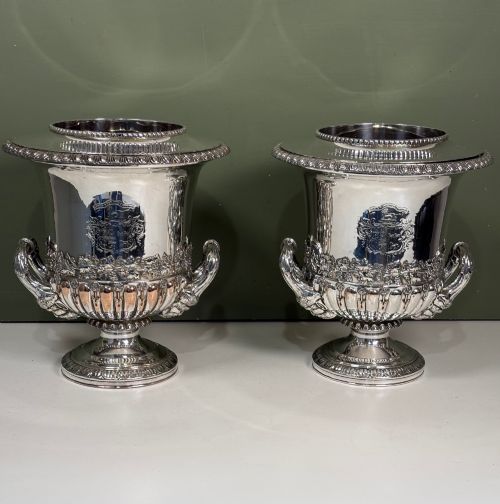


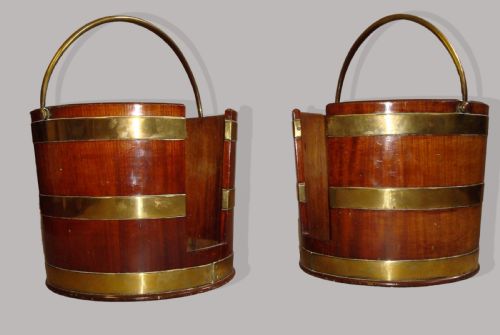
Pair Buckets
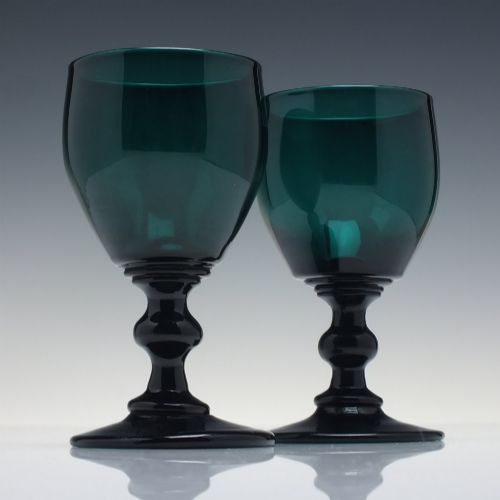
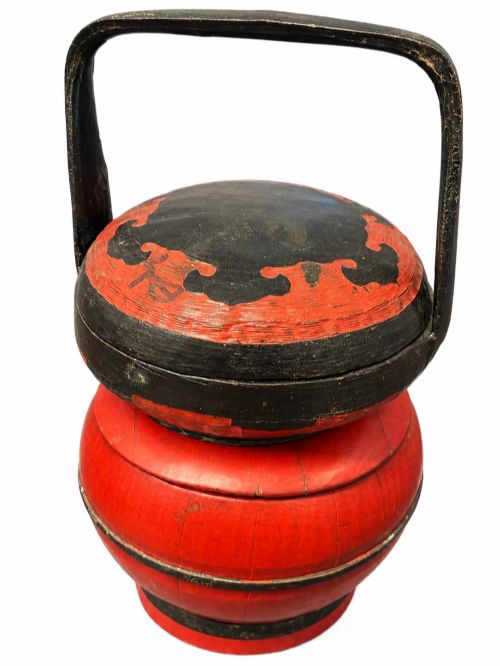
Pair antique buckets serve distinct domestic roles, spanning from wine coolers and ice pails to coal scuttles and planters in brass, copper, and mahogany.
Pair Buckets
Pair antique buckets encompass a functional variety of vessels designed for cooling wine, holding ice, containing coal, or serving as planters and jardinières. When searching this phrase, buyers encounter examples originating from the eighteenth, nineteenth, and early twentieth centuries, reflecting diverse periods such as Georgian, Regency, and Victorian.
The materials utilised range from traditional hardwoods like mahogany with brass bands to metals including copper, brass, silver plate, and cast iron, alongside ceramic and porcelain forms. These objects often adapt utilitarian forms into decorative accessories, whether intended for the dining room sideboard or the hearth.
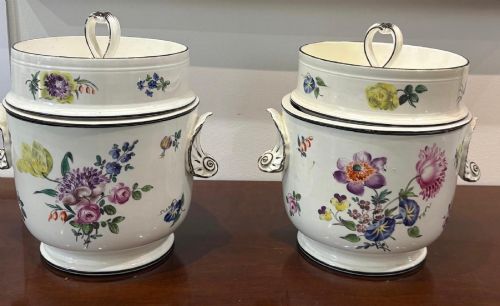
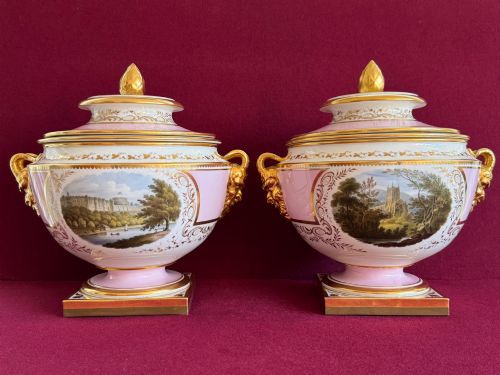
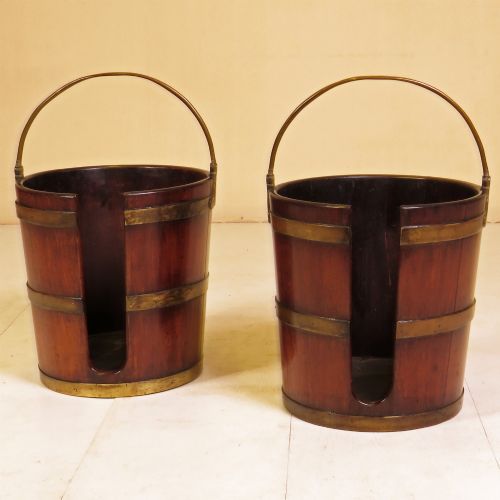
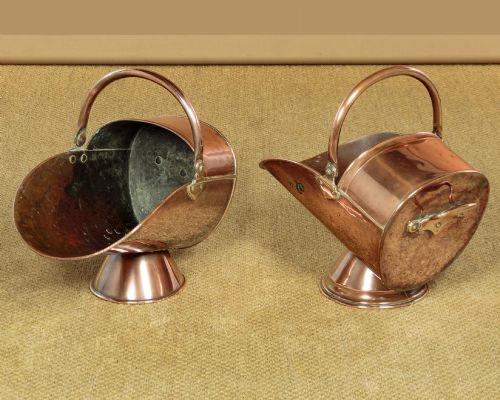
Forms span wine coolers, ice pails, coal scuttles, and jardinières, demonstrating how utilitarian vessels transitioned into ornamental pieces for period interiors. The selection includes specific variations such as plate buckets, peat buckets, and champagne coolers.
How they were made
Woodworking techniques define the eighteenth-century mahogany pieces, where staves are coopered together and secured with brass bands or hoops to hold plates or wine. Cabinetmakers shaped these vessels with attention to grain and structural integrity, often incorporating brass carrying handles.
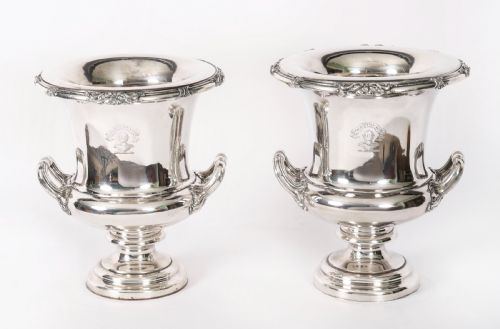
Metalworking methods govern the production of copper, brass, and silver-plated examples, utilising hammering, casting, and plating techniques. Old Sheffield Plate and later silver plating applied over base metals created formal wine coolers and champagne buckets of considerable weight.
Ceramic ice pails and creamware vessels involved potting and glazing, decorated with painted patterns from factories such as Worcester. Cast iron and enamel provided robust construction for utilitarian items like coal scuttles and fire buckets.
Pair Buckets Retail Price Guide 2026
Typical asking prices for pair buckets among the pieces listed under this phrase on Sellingantiques today, from the lower quarter to the upper quarter. They describe what is for sale here now, not the wider market.
Object types include wine coolers, ice pails, coal scuttles, plate buckets, and jardinières, showing both domestic and fireside applications.
What varies in quality
The standard of materials and metalwork distinguishes finer examples, particularly in the weight of the brass banding on mahogany buckets and the thickness of silver plating on wine coolers. Superior pieces exhibit crisp casting, refined chasing, and well-preserved original surfaces without excessive repair.
Design complexity and adherence to period style influence the standing of each piece, ranging from simple utilitarian copper scuttles to elaborate campana-form wine coolers. Maker attribution and factory provenance add distinct gradations of quality.
The integrity of construction, particularly in coopered wooden vessels and riveted metal seams, determines durability and overall execution.
Chamberlain Worcester·Flight Barr And Barr·Hawksworth Eyre And Co·Luc Lanel For Christofle·Elkington
The Pair Buckets Glossary
- Campana
- A bell-shaped vessel form commonly utilised for Regency wine coolers and ice pails. This classical silhouette derives from ancient Roman bronze and marble vases.
- Old Sheffield Plate
- A composite material formed by fusing a sheet of silver to a copper ingot, popular for wine coolers before electroplating. This technique produces a warm lustre distinct from later plated items.
- Creamware
- A refined earthenware developed in the eighteenth century, frequently glazed in pale cream tones. Ice pails and tablewares utilised this ceramic body for formal dining.
- Coopered
- Constructed from wooden staves fitted together side by side and bound by metal hoops. This method provided the watertight integrity required for wine cooling and plate washing.
- Jardiniere
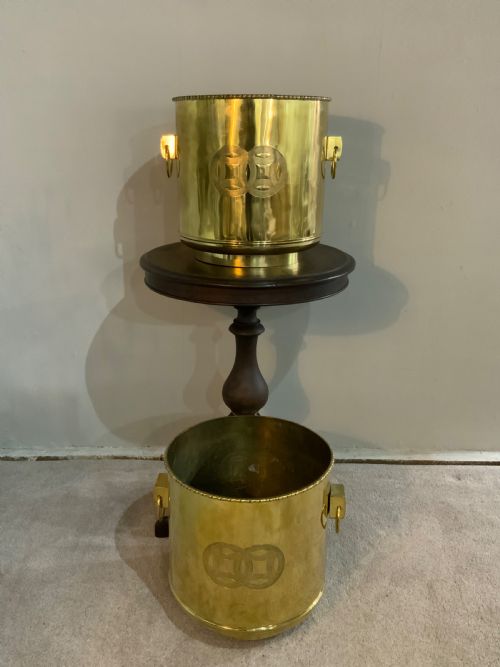
- A decorative pot or stand designed to hold growing plants or flowers. These vessels appear in materials such as polished brass and ceramic.
Pair Buckets: Frequently Asked Questions
How were antique wine coolers used?
Wine coolers and ice pails held bottles and ice at the dining table during formal meals in Georgian and Regency households. They kept beverages chilled within easy reach of guests.
Servants filled these heavy vessels with ice or cold water before bringing them into the dining room. Metal liners and insulated construction helped maintain low temperatures throughout the meal.
How do I identify Regency pieces?
Regency items often feature classical motifs, campana silhouettes, and strong architectural lines influenced by ancient Greek and Roman design. Materials like Old Sheffield Plate and dark mahogany predominate in this era.
Proportions tend to be bold and sculptural, reflecting the taste of the early nineteenth century. Metal mounts and handles often incorporate classical foliage or animal forms.
Can I use antique buckets for plants?
Many copper, brass, and ceramic buckets function effectively as jardinières or plant holders in modern interiors. Their decorative surfaces complement interior planting schemes.
Metal vessels should be fitted with protective inner liners to prevent moisture damage from watering. This practice preserves the historic interior surfaces of the bucket.