

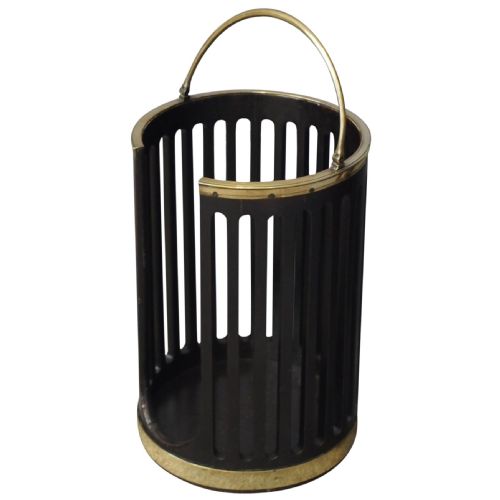


Brass Bound Pails
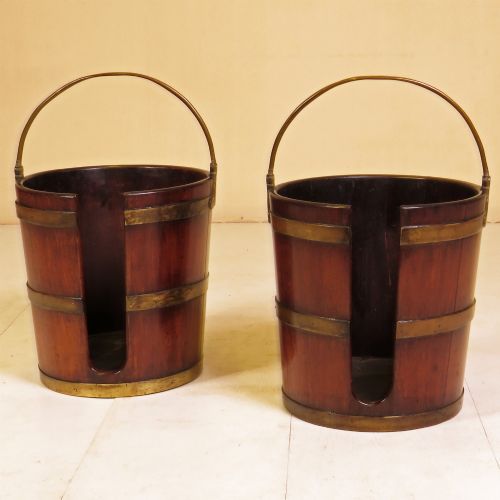
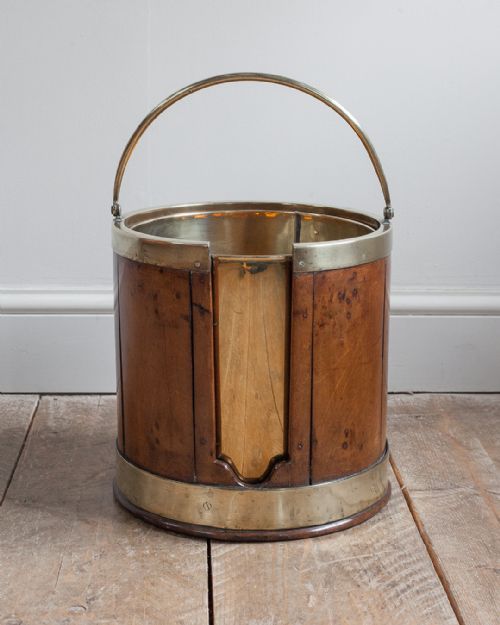
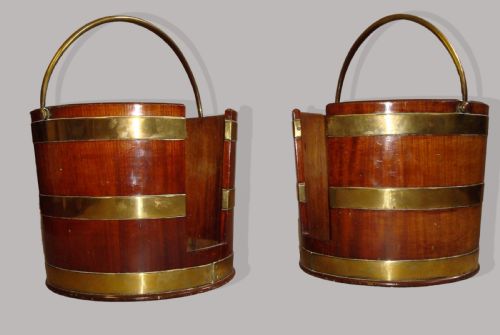
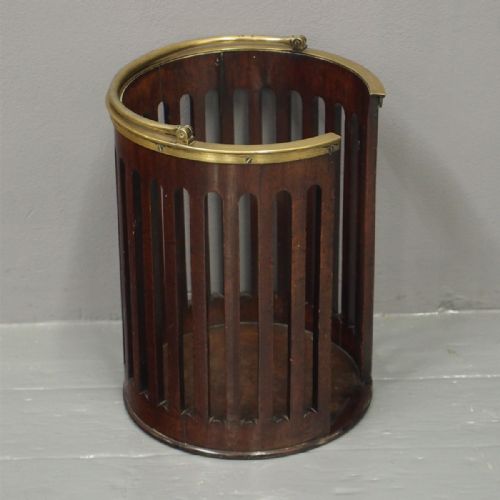
These brass bound pails are classic mahogany vessels crafted for the dining room or hearth, combining timber and metal for daily utility.
Brass Bound Pails
When you search for brass bound pails, you find functional containers shaped from rich timbers and secured with metal bands. These items include plate buckets, wine coolers, and fireplace buckets originating from the Georgian and Victorian eras. The listings here centre on mahogany examples spanning the eighteenth and nineteenth centuries.
The most common form on this page is the George III mahogany plate bucket, often built with stave construction. Alongside these plate buckets appear oval wine coolers and decorative containers fitted with zinc or iron components. Each piece reflects the domestic storage needs of period British interiors.
How they were made
Maker workshops constructed these pails using solid mahogany shaped into tight vertical staves, a technique borrowed from cooperage. Artisans then fitted heavy brass bands around the timber body to secure the structure and provide decorative contrast. Handles of brass or iron were attached to the sides for lifting.
Internal linings of zinc occasionally appear to protect the wood from moisture when holding ice, wine, or ash. The exterior surfaces received hand-polished finishes that highlight the grain of the mahogany while maintaining durability.
Brass Bound Pails Retail Price Guide 2026
Typical asking prices for brass bound pails among the pieces listed under this phrase on Sellingantiques today, from the lower quarter to the upper quarter. They describe what is for sale here now, not the wider market.
The inventory spans the eighteenth and nineteenth centuries, including specific Georgian and Victorian items.
What varies in quality
The distinction between standard containers and finer items rests in the precision of the cooperage and the weight of the metalwork. Superior pieces display closely fitted mahogany staves and substantial brass bands that sit flush against the timber. Heavier gauge brass and well-cast handles elevate the status of an object.
Proportion and form dictate the visual appeal of each vessel, particularly in oval wine coolers versus cylindrical plate buckets. The depth of the wood patina and the integration of period-appropriate interior liners further distinguish the better examples.
The Brass Bound Pails Glossary
- Plate bucket
- A deep cylindrical vessel designed to hold ceramic plates safely during dining service. These items typically feature a vertical handle and brass banding.
- Stave
- A narrow strip of mahogany with edges shaped to fit adjacent pieces in a curved body. Coopers joined these elements together to form the walls of the pails.
- Wine cooler
- A large brass bound container intended to chill bottles using ice. Georgian examples often present an oval profile rather than a round one.
- Zinc lining
- A protective metal insert placed inside the timber bucket to hold moisture or fireplace ash. This addition prevented the mahogany staves from rotting.
- George III
- A design period spanning the late eighteenth and early nineteenth centuries. Pieces from this era show specific classical proportions in British cabinetmaking.
Brass Bound Pails: Frequently Asked Questions
What were brass bound pails used for?
These vessels served practical domestic roles in wealthy households, functioning primarily to transport porcelain plates or chill wine at the dining table.
Other variations acted as fireplace buckets for carrying coal or ash near the hearth.
How do I date a brass bound pail?
Dating relies on observing the timber species, the profile of the brass bands, and the overall construction methods used by the maker.
Georgian examples display specific mahogany grain and joinery traits that separate them from later Victorian pieces.
Are these pails waterproof?
Many examples feature interior zinc linings designed to hold water or ice without damaging the surrounding mahogany staves.
Unlined wooden buckets will allow liquid to seep through the joints over time.
How should I clean the brass bands?
The brass bands require gentle dusting with a dry cloth to preserve the natural oxidation built up over centuries.
Avoid harsh metal polishes that remove the historic surface character of the brass.