
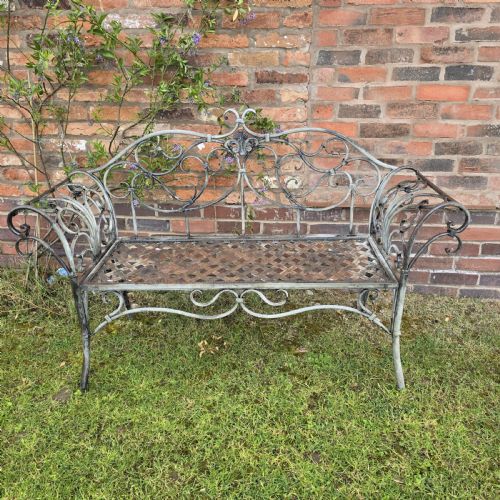


Painted Wrought Iron Bench
A painted wrought iron bench brings structural metalwork into the garden, offering enduring seating shaped by historical styles.
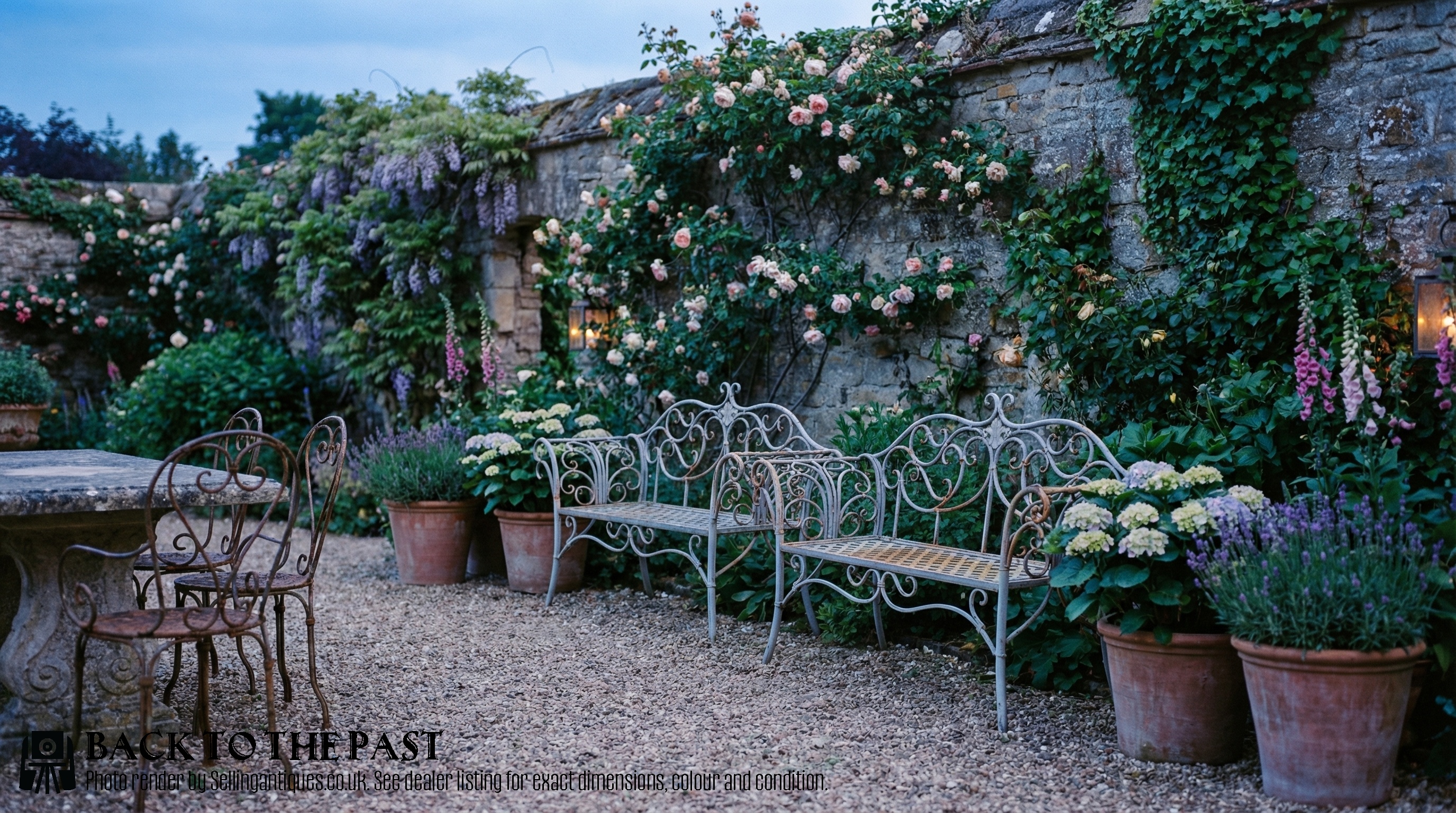
Painted Wrought Iron Bench
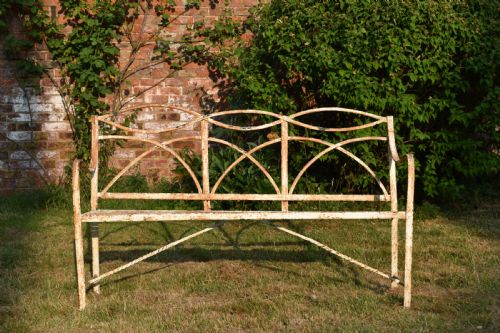
A painted wrought iron bench is a sturdy outdoor seat formed from durable metalwork designed to withstand the elements. When you search for a painted wrought iron bench, you encounter examples spanning the Victorian, Edwardian, and Regency periods, alongside pieces from the nineteen twenties and thirties.
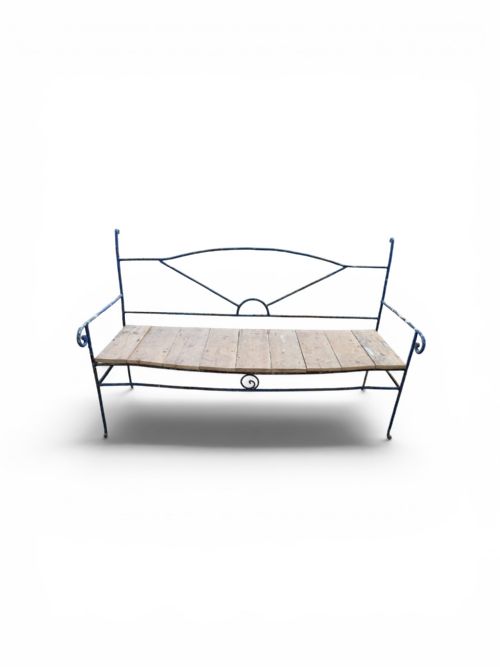
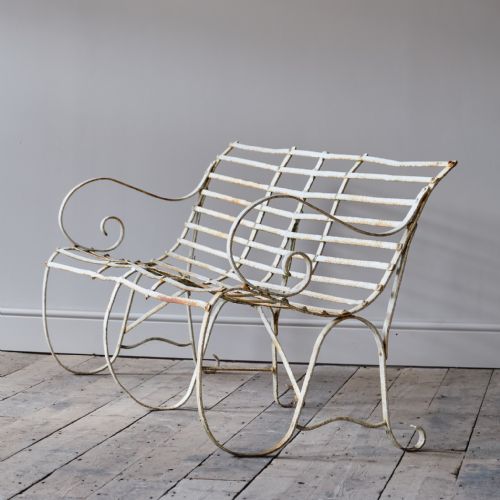
The selections on this page encompass traditional garden seats, scroll benches, and strapwork designs. Many incorporate iron, steel wire, and wood elements to create comfortable garden furniture.
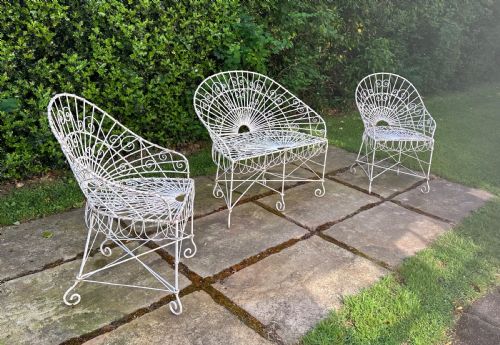
Origin variations include English and French pieces, ranging from formal regency style forms to rustic industrial garden seats. These seating options often appear alongside matching chairs, arbours, or tables.
How they were made
Makers shaped wrought iron and metal using traditional blacksmithing techniques, hammering and bending the material into scrolls and structural supports. Strapwork patterns and wirework construction created geometric rigidity while maintaining a light visual profile.
Layers of protective paint were applied over the metal surfaces to prevent rust and provide colour, often surviving in patinated states on older pieces. Wooden slats or accents were sometimes integrated into the seats and frames for added comfort.
Listings feature items spanning the nineteenth century through the nineteen forties, constructed from wrought iron, cast iron, wire, and wood.
What varies in quality
The distinction between ordinary and superior pieces lies in the crispness of the scrollwork and the complexity of the strapwork patterns. Heavier gauge iron and meticulous hand-forged joints indicate careful workshop production rather than mass manufacture.
The integrity of the original paint layers and the stability of the structural frame determine the preservation state of the bench. Pieces retaining authentic surface textures and uncompromised metal integrity stand apart from heavily restored or weathered examples.
The Painted Wrought Iron Bench Glossary
- Wrought iron
- A tough, malleable form of iron that can be heated and hammered into decorative scrolls and structural bars. This material defines the framework of antique garden seating.
- Strapwork
- A decorative pattern formed of flat strips of metal interwoven or arranged in geometric straps. It provides both structural support and visual ornamentation on seat backs.
- Arbours
- Garden structures designed to support climbing plants, often incorporating benches or seating areas within their framework. These architectural pieces frame outdoor walkways.
- Scroll bench
- A seat featuring curved, spiral metalwork motifs incorporated into the arms, backrest, or legs. This design element characterises many period garden seats.
Painted Wrought Iron Bench: Frequently Asked Questions
How do I protect my bench outdoors?
Keep the metal sealed with appropriate exterior paint to prevent moisture from causing rust beneath the surface. Regular maintenance preserves the structural integrity of the ironwork.
Positioning the bench on paved surfaces rather than directly on damp soil also reduces moisture absorption from the ground.
Are these benches comfortable to sit on?
Many designs incorporate curved strapwork or wooden slats that conform naturally to the body. Adding loose cushions enhances comfort during extended periods of sitting.
Heavier metal strapwork distributes weight evenly across the frame without sagging.
How do I date a metal bench?
Examine the construction methods, such as hand-forged joints versus machine welding, alongside stylistic cues from the Regency or Victorian periods. Material choices like early steel wire or cast iron components also point to specific manufacturing eras.
Layers of historical paint can reveal age through their composition and weathering patterns.
Can I leave the bench outside in winter?
Wrought iron handles low temperatures well, provided the protective paint barrier remains intact and unbroken. Covering the bench or storing it under shelter during harsh frost prevents unnecessary weathering.
Clearing accumulated snow and leaves stops moisture from settling in the joints.