


Slatted Iron Bench
A slatted iron bench brings heavy industrial substance and open-air structure to a garden terrace, built to weather decades outdoors.
Slatted Iron Bench
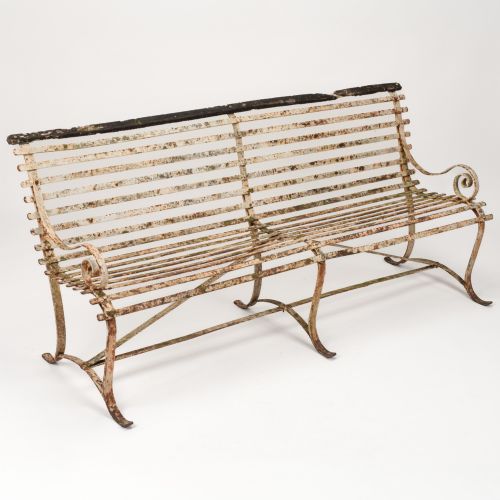
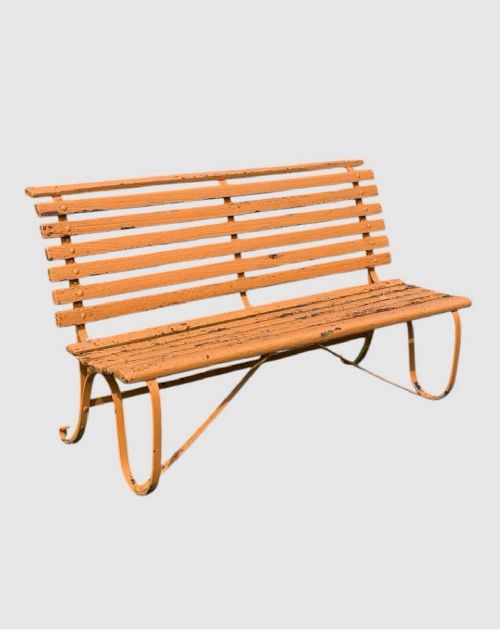
A slatted iron bench combines rigid metal supports with timber or iron laths, forming a sturdy seat designed primarily for garden and park use. The pieces gathered under this phrase span the nineteenth century through the interwar period, offering heavy structural endurance alongside decorative foundry work.
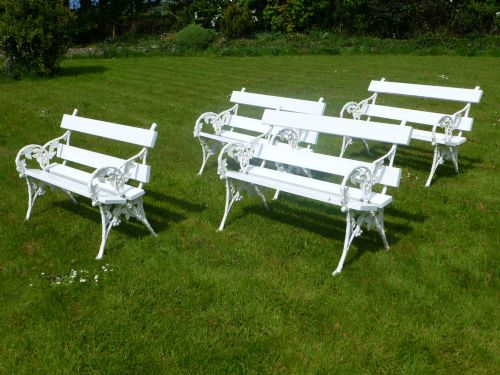
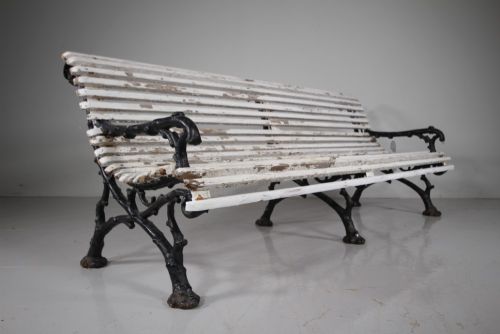
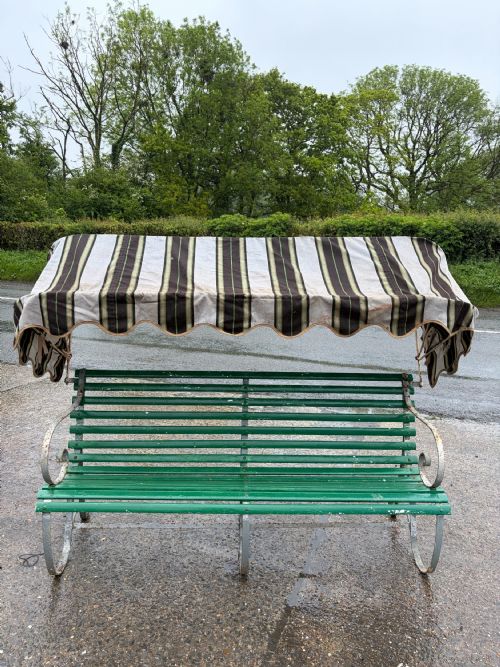
Victorian examples dominate the selection, often featuring elaborate cast iron ends shaped into scrollwork, rustic branches, or botanical motifs like blackberry and leaf patterns. Simpler strapwork designs from the Regency and Edwardian eras appear alongside later twentieth-century iterations, including pairs and variants equipped with canopies.
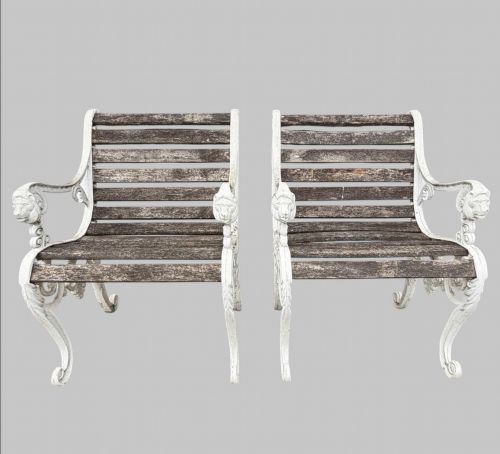
While the core form remains a heavy-duty seat, related garden furniture such as armchairs and console tables occasionally surface among the listings. Buyers encounter everything from stark industrial scrolls to ornate Coalbrookdale-inspired designs intended to anchor a lawn or patio.
What varies in quality
The sophistication of the foundry casting dictates the visual hierarchy, distinguishing crisp botanical reliefs and detailed figural work from simpler commercial production. Sharply defined veins on leaves and clean edges on scrollwork signal superior craftsmanship during the manufacturing process.
The integrity of the surviving materials establishes the standing of an individual piece, particularly the preservation of original paint layers and the soundness of the wooden slats. Matched sets command distinct attention compared to single survivors due to the survival rate of complete garden suites.
One surviving set managed to travel from an overseas polo club back to an English garden, carrying distant dust on its cast iron legs.
Falkirk foundry·Coalbrookdale
The Slatted Iron Bench Glossary
- Cast iron
- Metal poured in a molten state into a mould to form complex shapes and decorative ends. This technique allowed Victorian makers to produce elaborate garden furniture with deep relief patterns.
- Wrought iron
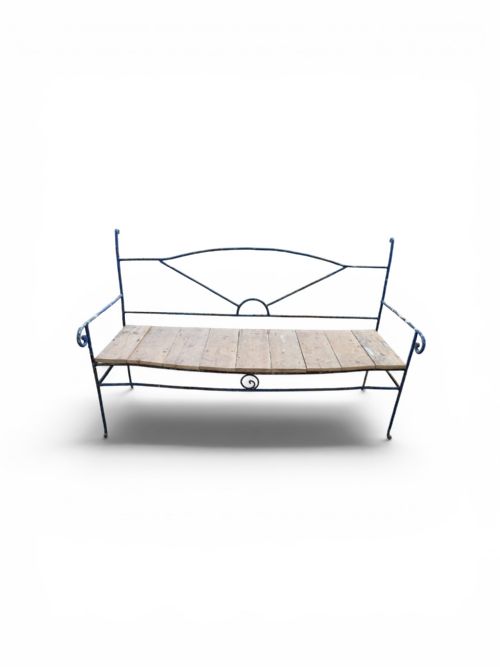
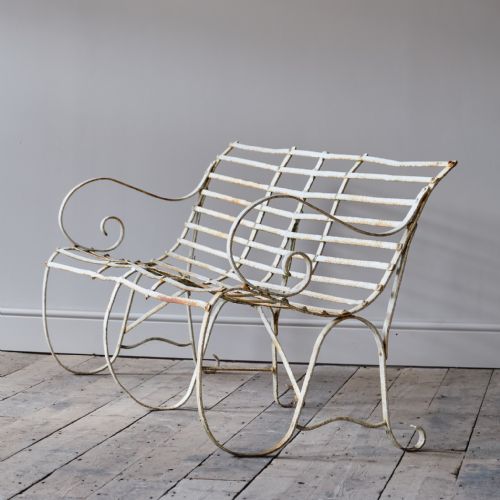
- Iron beaten and worked by hand into durable bars and straps. It provides the tensile strength seen in strapwork and scroll benches.
- Strapwork
- Flat bands of metal interlaced or arranged in geometric patterns. This decorative technique defines many Regency and Victorian bench frames.
- Coalbrookdale
- A famous ironworks location synonymous with ornate nineteenth-century garden seats. Pieces in this design tradition feature intricate foliage and rustic motifs.
- Teak
- A dense, oil-rich tropical hardwood frequently utilised for garden bench slats. It resists weathering and decay when exposed to outdoor elements.
Slatted Iron Bench: Frequently Asked Questions
Can these benches stay outdoors all year?
Cast iron and treated timber withstand outdoor conditions reliably across changing seasons. Regular maintenance helps preserve the original painted surfaces against moisture.
Garden placement benefits from solid paving or gravel to prevent the heavy iron feet from sinking into soft turf.
How do I identify a Victorian piece?
Victorian examples typically display heavy cast iron ends decorated with naturalistic motifs, rustic branches, or formal scrollwork. The construction often pairs this dense metal framework with slatted teak or painted wood.
Proportions tend to be generous, reflecting the nineteenth-century preference for substantial garden seating.
What is strapwork on a bench?
Strapwork consists of flat ribbons of iron riveted or joined into geometric patterns along the backrest or frame. This technique creates a lighter visual appearance than solid cast panels.
Pieces featuring this construction often date from the Regency and early Victorian periods.
Are pairs common for these seats?
Matched pairs appear periodically among nineteenth-century garden furniture, originally intended to flank a pathway or formal lawn. Single benches represent the majority of surviving examples.
Sets of four chairs or benches occur rarely and originate from specific institutional or estate settings.