

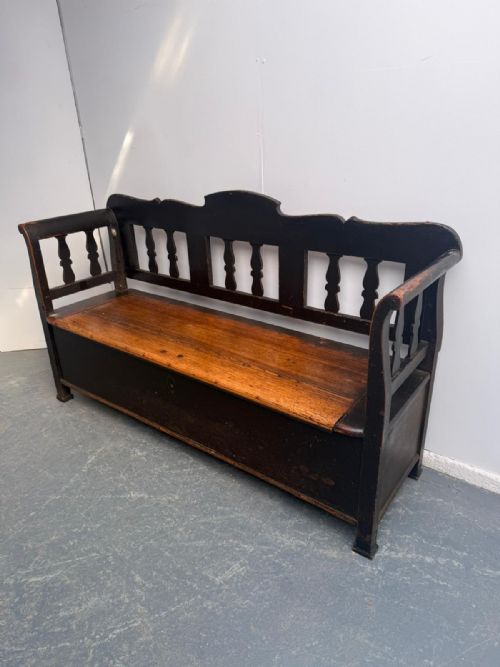
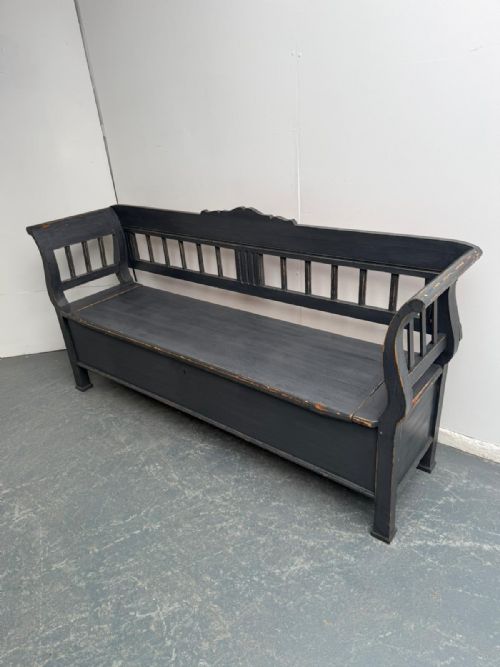

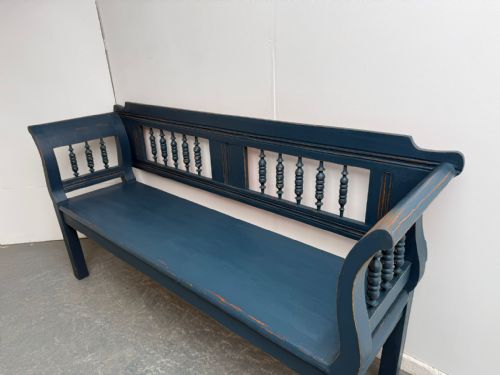

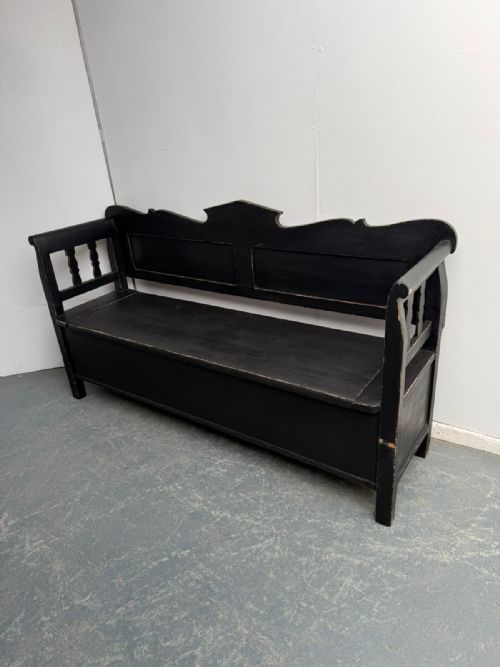

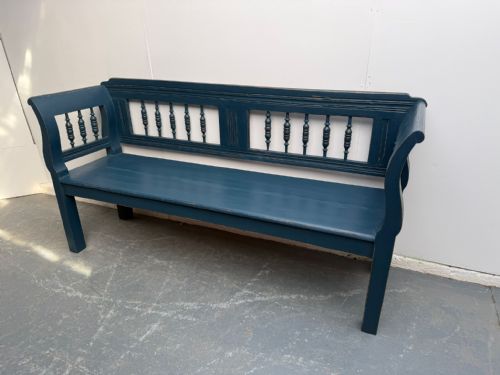


Painted Wooden Settle Seat
A painted wooden settle seat brings folk character and robust everyday seating into a room with its high back and solid build.
Painted Wooden Settle Seat
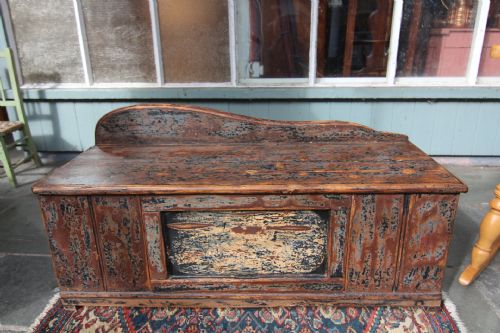
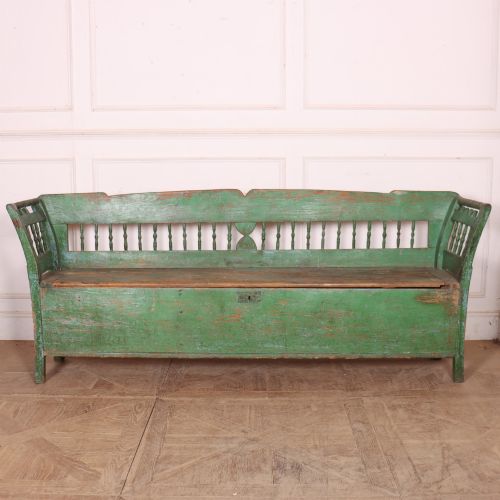
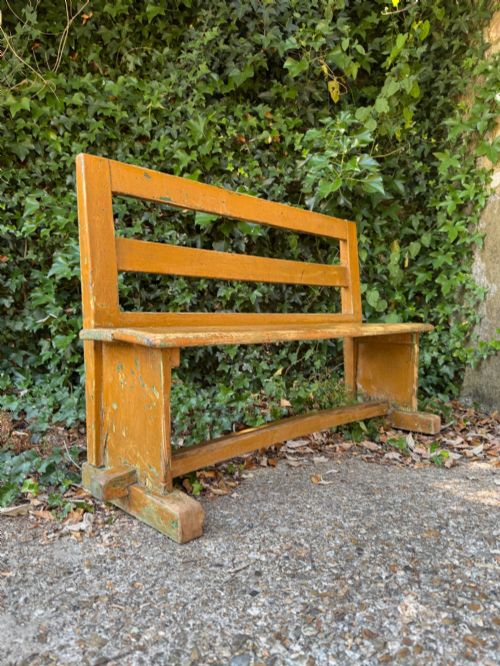
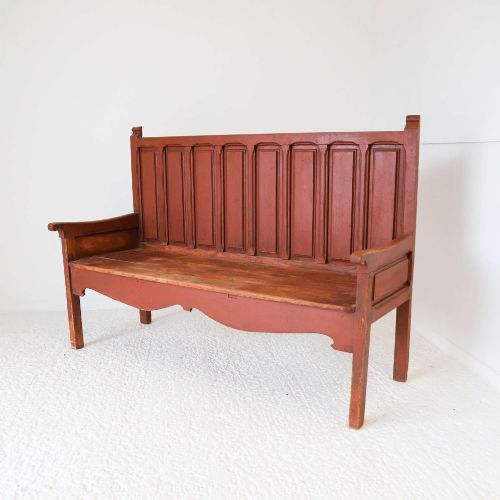
When you search for a painted wooden settle seat, you encounter high-backed benches and box settles spanning the eighteenth and nineteenth centuries. These pieces originate from farmhouse, tavern, and domestic settings across Britain, Scandinavia, and Central Europe.
The pieces on this page lean heavily towards country workshops, featuring regional variants from Hungary, Austria, Sweden, and Wales. You will find both open-frame benches and box settles with integrated storage beneath the seat.
Forms range from simple multi-seater benches to barrel back settles and corner seats designed to block draughts in older rooms. Regional styles include folk art decoration, scumble finishes, and robust vernacular carpentry.
How they were made
Pine and general timber form the primary structural carcase of these seats, worked by regional carpenters using traditional joinery. Iron fixings, ceramic elements, and occasional secondary woods support the construction of larger box settles and tavern benches.
Surfaces receive layers of historic paint, often in grey, blue, black, or cream, sometimes decorated with folk art motifs. Over the decades, these painted finishes take on natural wear that distinguishes genuine period examples from modern reproductions.
Listings feature pine and timber construction paired with historic paint finishes, spanning eighteenth-century tavern forms to late nineteenth-century country folk art.
What varies in quality
The integrity of the original paint surface dictates much of the standing of a piece, with untouched layers carrying greater interest than later overpainting. Original colour schemes, from muted greys to vibrant blues and blacks, reveal the regional palette of the maker's workshop.
Proportion and structural survival separate standard utility benches from finer examples of vernacular design. Pieces retaining their original box compartments, panelled backs, and stable timber frames represent the stronger end of the range.
The Painted Wooden Settle Seat Glossary
- Settle
- A wooden bench with a high back, solid arms, and often a storage box beneath the seat. Designed to keep draughts away from the sitter in traditional interiors.
- Box settle
- A settle featuring a hinged seat that lifts to reveal a storage compartment underneath. This form served as both seating and a chest for household goods.
- Scumble
- A decorative painting technique where a translucent top layer of glaze is manipulated over a lighter base colour to imitate grain or texture. It appears frequently on primitive pine furniture.
- Folk art
- Ornamental painting or handcrafting executed within a regional tradition rather than an academic style. These designs reflect local customs and domestic tastes.
- Barrel back
- A settle design with a curved, semi-circular high back that wraps around the user. This form offers maximum protection against cold air currents in large rooms.
Painted Wooden Settle Seat: Frequently Asked Questions
What is a settle seat?
A settle seat is a traditional wooden bench characterised by a high back, solid armrests, and sometimes an enclosed storage base beneath the seat. Historically placed near hearths, it protected occupants from cold draughts in large, uninsulated rooms.
Today, these pieces function as hallway seating or dining benches that introduce substantial vernacular character into an interior. Their enclosed backs provide a strong visual anchor against a wall.
How do I care for old painted wood?
Historic painted surfaces require minimal intervention, relying on gentle dusting with a dry microfibre cloth to remove surface grit. Avoid modern chemical polishes, abrasive cleaners, or excess moisture that might lift fragile paint layers.
Maintain stable room humidity to prevent the underlying timber from shrinking or expanding excessively. Wax can be applied sparingly to unpainted pine sections, but untouched painted areas are best left untreated.
Are these benches comfortable to sit on?
Traditional wooden settles have upright wooden backs and firm seats designed for utility rather than lounging. Their ergonomics reflect the practical domestic and tavern use of past centuries rather than modern cushioning standards.
Many owners add loose linen or fabric squab cushions to soften the seat for daily dining or hallway use. The high back provides comfortable lumbar support when sitting upright.
How can I tell the age of a settle?
Dating relies on examining construction marks, timber types, and the composition of the paint layers under magnification. Hand-cut joints, wrought iron fixings, and wear patterns around the foot area indicate prolonged period use.
Regional styles and documented workshop origins also help narrow down the decade of manufacture. Comparing the patination of the wood grain to the surface finish confirms whether the paint and timber share the same era.