






Painted Wooden Plinth
A painted wooden plinth raises a bust, urn or figure above the room, bringing architectural presence and height to domestic interiors.
Painted Wooden Plinth
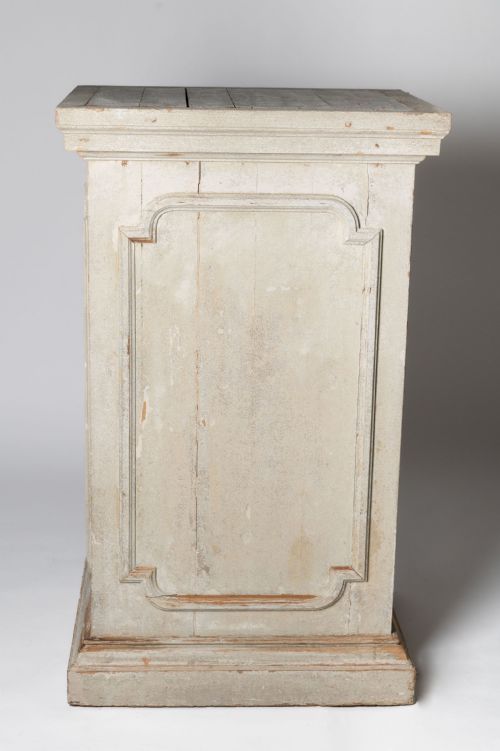
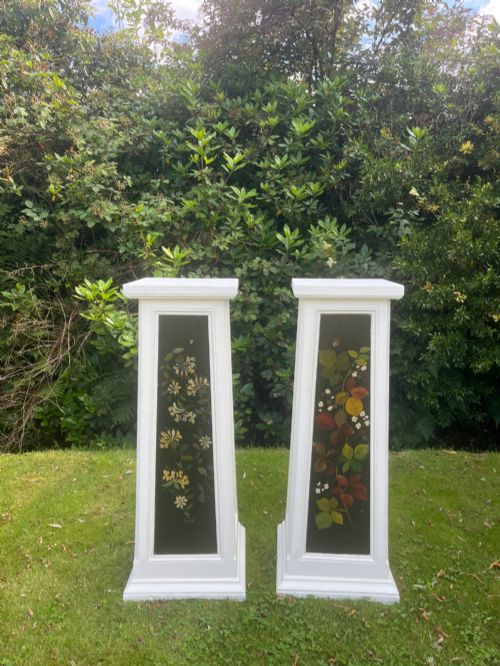
A painted wooden plinth is a sculptural display stand designed to elevate decorative objects within a room. When exploring a painted wooden plinth, buyers encounter columns, pedestals and cylindrical sculpture stands originating from various periods including the nineteenth century, the Victorian era and the Regency epoch. These supports function primarily as display furniture for art objects, busts and torcheres.
The selections available range from single columns to matched pairs, often executed in styles such as Gustavian, Neoclassical, Baroque Revival and English Country. Forms vary from simple turned wooden columns to grand scale display pieces, alongside occasional mirrors that share related decorative finishes. The majority of these objects originate from nineteenth century workshops across England, France and Sweden.
Makers utilised structural timbers such as pine and mahogany, applying decorative surface treatments to mimic more expensive materials. Buyers choose these pedestals to create focal points in hallways, drawing rooms and libraries, using their verticality to alter the proportions of a space.
Materials and construction
Makers constructed the core structure of these supports from solid timbers such as pine and mahogany, frequently utilising turned or joined construction to achieve sturdy vertical columns. Pine served as a reliable base for applied decorative schemes, whilst mahogany provided a dense foundation for fine turning and polish. Carpenters shaped these woods on lathes or joined architectural sections to form cylindrical and multi-sided pedestals.
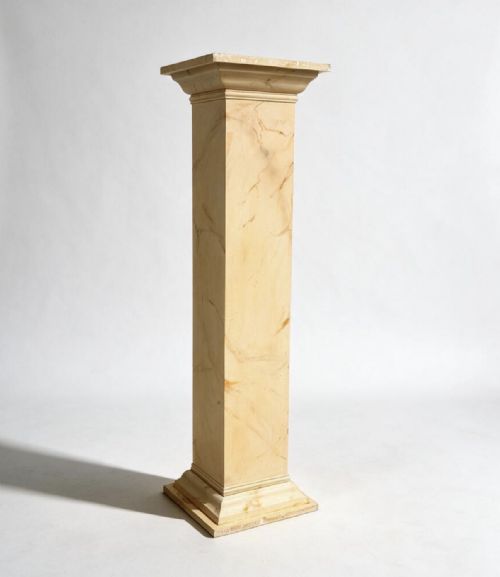
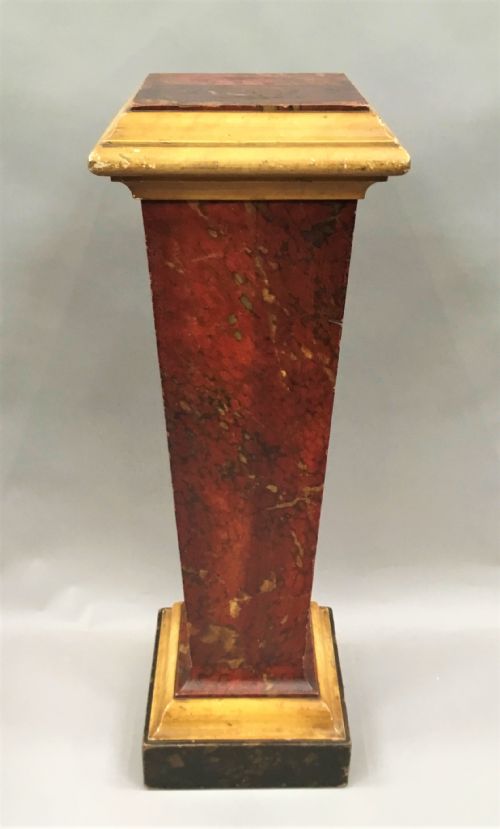
Surface decoration defined the visual character of the piece through the application of paint, gesso and gold leaf. Craftsmen painted the wooden surfaces to resemble stone or marble, creating convincing faux finishes like verde antico through careful layering of pigment. Gilding was applied in leaf form to accentuate carved details, mouldings and capitals on Neoclassical and Baroque Revival columns.
Painted Wooden Plinth Retail Price Guide 2026
Typical asking prices for painted wooden plinth among the pieces listed under this phrase on Sellingantiques today, from the lower quarter to the upper quarter. They describe what is for sale here now, not the wider market.
Some nineteenth century columns wear their faux marble paint so convincingly that visitors instinctively reach out to tap the wood for stone.
Factors of quality
The superiority of a painted wooden plinth lies in the execution of its decorative surface and the integrity of its timber substrate. Finer examples display skilful simulated marble finishes where brushwork mimics the natural veining of stone with depth and nuance, rather than flat or uniform coloration. The crispness of turned details and the harmonious application of gold leaf further distinguish masterwork pieces from simpler utility stands.
Proportion and scale dictate the visual success of a column, with well-balanced architectural proportions commanding a room more effectively than awkward dimensions. The retention of original surface treatments without heavy overpainting preserves the historical character and aesthetic value of the object. Quality is also evident in the stability of the construction and the weight of the timber used for the base.
Marguerite
The Painted Wooden Plinth Glossary
- Gesso
- A plaster mixture applied to wood as a smooth base for paint or gold leaf. It allows artisans to carve fine details before adding decorative finishes.
- Verde antico
- A dark green serpentine marble simulation created with paint on wood. Painters layered pigments to replicate the mottled appearance of ancient green stone.
- Torchere
- A tall stand designed to hold a light or a decorative object. These tall supports elevate figures or lamps above eye level.
- Parcel gilt
- Partly gilded with gold leaf to highlight specific carved areas. This technique contrasts bare or painted wood with shining metallic details.
Painted Wooden Plinth: Frequently Asked Questions
What were painted wooden plinths used for?
These tall supports served to display sculptures, urns and decorative vases in grand rooms and domestic interiors. By raising objects off the floor, they drew the eye upward and showcased prized collections.
They also functioned as torcheres to hold lighting implements or served as architectural accents within a hallway or drawing room. Their presence added a sense of classical order and verticality to the interior scheme.
How do I identify a faux marble finish?
Makers used specialised paint techniques on pine or mahogany to imitate expensive stones like verde antico and marble. Close inspection reveals hand-painted veining and layered translucent glazes designed to mimic the depth of real mineral deposits.
Original nineteenth century surfaces often exhibit subtle craquelure and wear consistent with age, distinguishing them from modern reproductions. The weight of the timber and the method of construction provide further clues to the period.
Where should I place a pedestal in a room?
Pedestals work effectively in corners, empty wall spaces or flanking doorways where they can anchor a vertical sculpture or plant. Placing them in entrance halls creates an immediate architectural statement upon arrival.
Ensure the scale of the object placed on top matches the diameter and weight capacity of the column top. Paired columns can also frame a fireplace or a large doorway for symmetry.
What is the difference between a column and a pedestal?
Columns generally follow classical architectural orders with distinct capitals, shafts and bases modelled on stone prototypes. Pedestals often feature simpler cylindrical or box-like forms designed specifically as functional display furniture.
Both types share similar wooden construction and painted finishes, but columns lean heavier into revivalist architectural styles like Neoclassical or Baroque.