
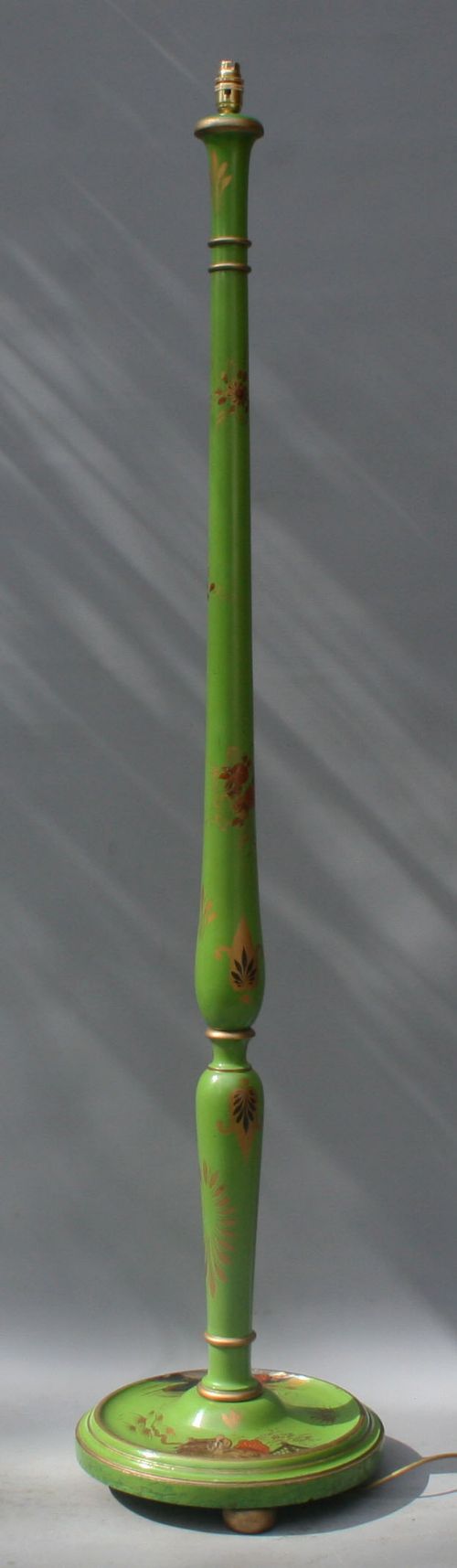


Painted Wooden Light Bases
These painted wooden light bases bring together hand-applied colour and turned timber to illuminate a room with period character.
Painted Wooden Light Bases
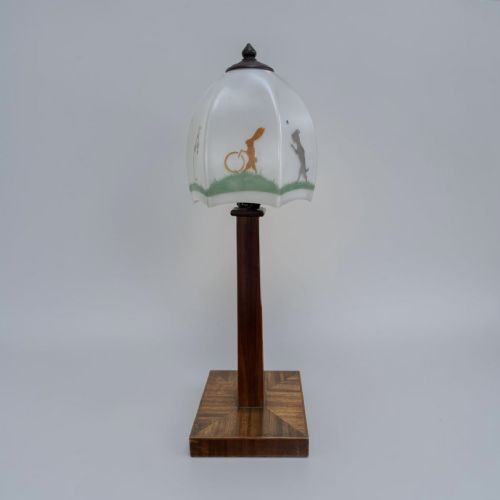
Painted wooden light bases comprise table lamps, standard lamps, and candle holders shaped from timber and finished with decorative schemes. When browsing painted wooden light bases, buyers encounter pieces spanning from the Regency period through to the Art Deco era.
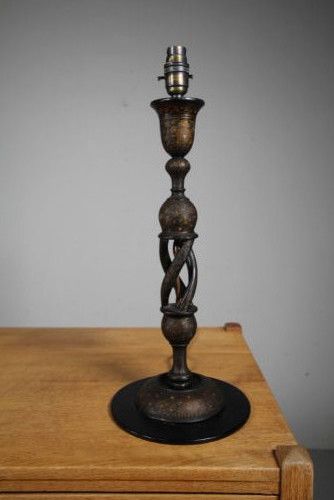
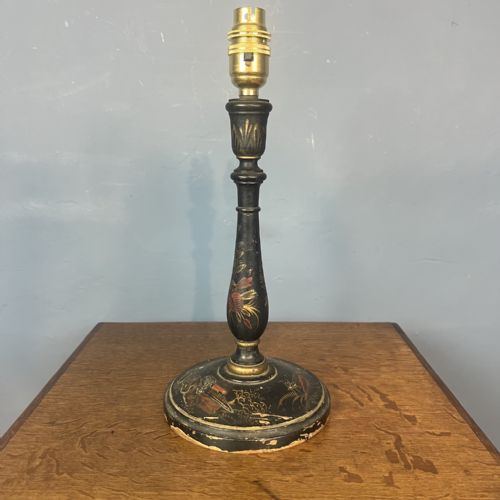
The selection includes standard lamps and table lamp bases drawing on various aesthetic traditions, such as Chinoiserie, Edwardian Chinoiserie, Anglo-Indian, and Neoclassical styles. Forms range from turned pine and sycamore columns to tall Kashmiri twist designs.
Many examples utilise painted, lacquered, or giltwood surfaces applied over wooden structures. Pieces originating from the nineteenth and early twentieth centuries dominate the selection available.
How they were made
Craftsmen shaped solid timbers such as pine and sycamore using turning lathes and hand-carving techniques to form the columns and bases. These wooden foundations provided a stable core for subsequent decorative treatments.
Makers applied paint, lacquer, and gold leaf to the wooden surfaces, often incorporating handpainted motifs or marbling effects. Brass elements occasionally appeared alongside the wood to add structural stability or functional detail.
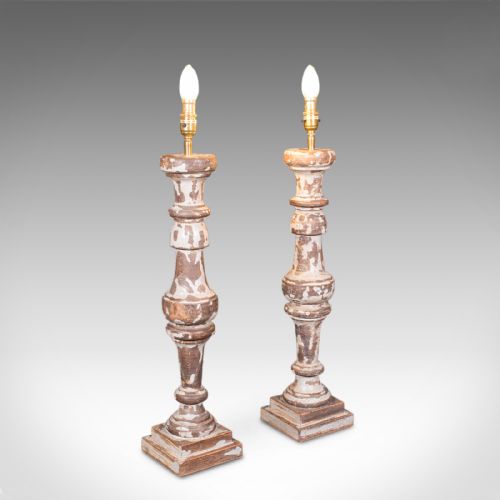
Some nineteenth-century standard lamps hide their weight in marbleised timber, giving a solid presence to otherwise slender columns.
What varies in quality
The sophistication of the painted or lacquered surface decoration dictates much of the visual merit. Handpainted Chinoiserie scenes and intricate giltwood detailing demand greater artisan skill than plain painted finishes.
The integrity of the underlying timber construction and the elegance of the turning proportion distinguish finer examples. Pieces that retain their original painted surfaces without excessive overpainting hold distinct material interest.
The Painted Wooden Light Bases Glossary
- Chinoiserie
- European interpretation of Chinese and East Asian artistic traditions, frequently expressed through painted lacquer motifs on furniture and lamps.
- Giltwood
- Timber that has been coated with a thin layer of gold leaf or gold paint to produce a rich, reflective surface.
- Standard lamp
- A tall floor-standing lighting fixture designed to illuminate a room from a vertical wooden shaft.
- Lacquer
- A durable resin finish applied in multiple layers to wooden objects, often polished to a smooth gloss.
Painted Wooden Light Bases: Frequently Asked Questions
How do I date a wooden lamp base?
Dating relies on identifying stylistic markers, construction methods, and the type of finish applied to the timber. Examining the turning profile and the wear on the painted surface offers further clues.
Pieces from the nineteenth century often display hand-turned pine or sycamore with traditional lead or brass wiring apertures, whereas later twentieth-century examples shift towards Art Deco geometry.
Were these bases originally electrified?
Many older wooden lamp bases began life as candle holders, oil lamps, or pricket candlesticks before undergoing conversion to electricity in later decades.
Conversions often involve drilling through the wooden core to run modern flex, though some retain evidence of their original lighting function.
How do I care for painted wooden surfaces?
Painted and lacquered timber requires gentle dusting with a dry, soft cloth to prevent the accumulation of grit. Avoid using harsh chemical polishes that can degrade aged paint or lacquer layers.
Keeping these bases away from direct sunlight and excessive humidity protects the wood from warping and preserves the delicate surface decoration.
What is the difference between standard lamps and table lamps?
Standard lamps are tall floor-standing fixtures designed to stand directly on the floor and illuminate a wider area of the room. Table lamps feature shorter wooden bases intended to sit on furniture such as side tables or desks.
Both forms utilise turned wooden shafts, but their scale determines their placement within an interior scheme.