


Painted Wooden Footstools
Painted wooden footstools bring character and practical low seating to a room, spanning rustic milking forms to refined Gustavian designs.
Painted Wooden Footstools
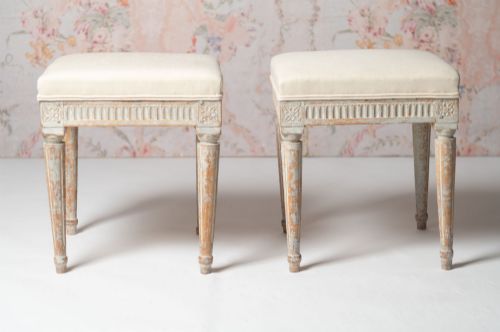
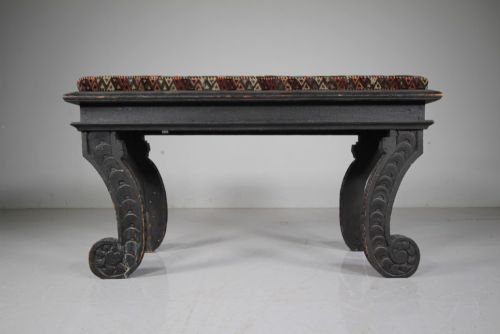
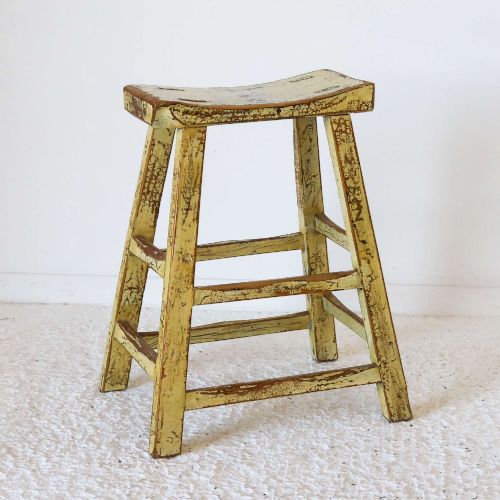
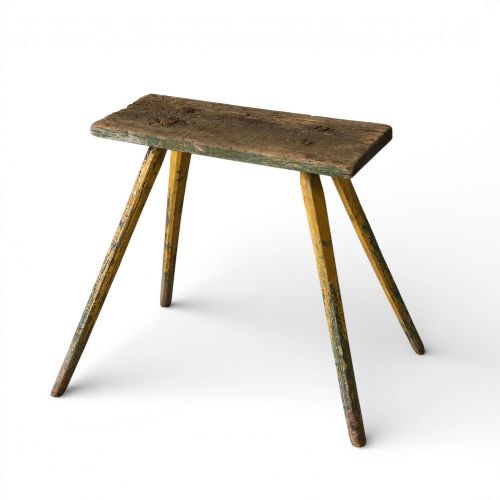
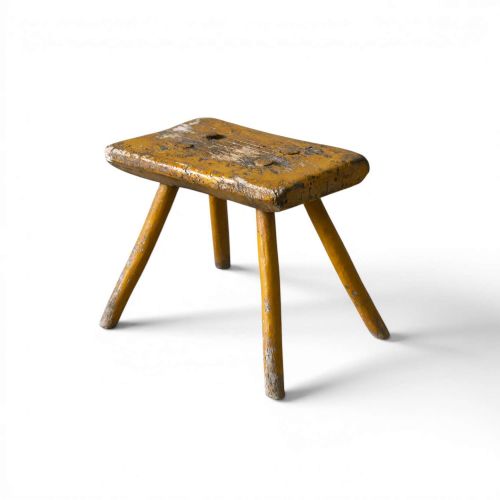
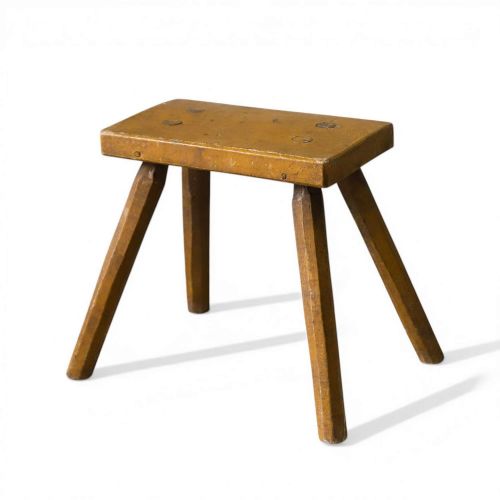
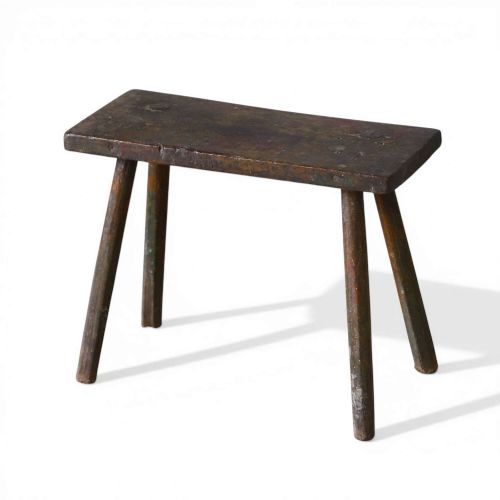
Painted wooden footstools encompass a diverse range of low seating and support forms designed for domestic interiors across Europe and Asia. When searching for painted wooden footstools, collectors encounter everything from simple rustic milking stools with original ochre or yellow paint to elegant French and Swedish seating.
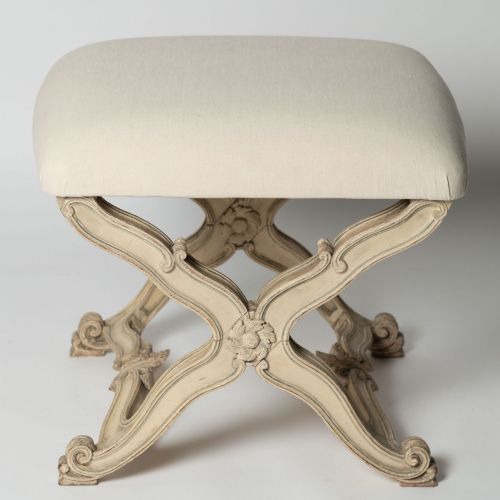
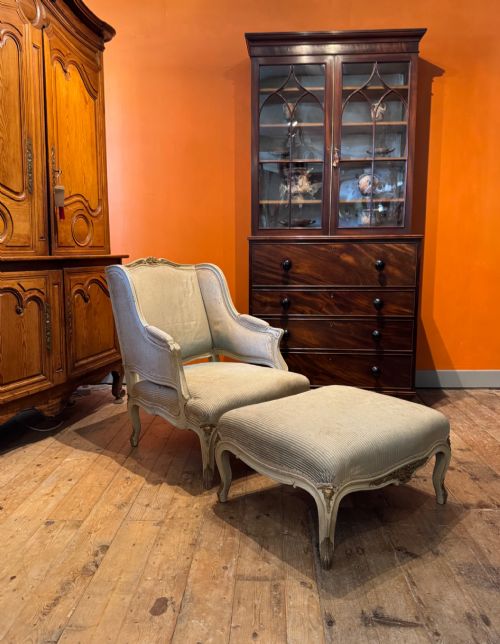
The selection ranges from compact 19th-century Eastern European examples to grander Louis XV style pieces and Chinese lacquered elm variants. Many items bridge the gap between functional footrests and decorative low seats, appearing individually or in matching pairs.
What varies in quality
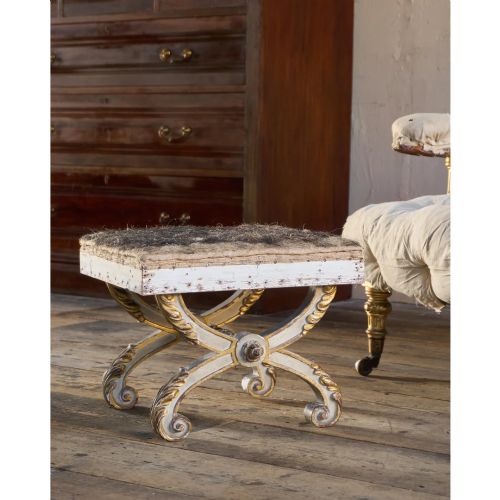
The distinction between standard examples and finer pieces often lies in the survival of original surface finishes and authentic historic paint. Untouched patination and untouched polychrome decoration elevate domestic pieces above later, over-restored equivalents.
Design sophistication and structural integrity also separate utilitarian workshop pieces from high-style salon seating. Sophisticated hand-carved detailing and balanced proportions distinguish professional cabinetmaker production from simpler vernacular joinery.
Some stools doubled as tiny milking seats, proving that farmyard productivity historically demanded a dedicated place to sit.
Miles & Edwards
The Painted Wooden Footstools Glossary
- Gustavian
- The Swedish interpretation of French neoclassical design, characterised by restrained carving, light painted finishes, and elegant proportions. This style dominates many Scandinavian seating forms.
- Milking stool
- A simple, low three-legged or four-legged utilitarian seat historically used for farm work, often possessing retained original paint today. These pieces prioritize sturdy functionalism.
- X-frame
- A structural furniture support formed by intersecting diagonal members creating a cross shape beneath the seat. This ancient form provides robust weight distribution.
- Duchesse brisée
- A French chaise longue separated into two or more parts, typically a chair and a matching low stool or footrest. It offers extended reclining comfort.
- Lacquered finish
- A hard, protective coating derived from tree sap or varnish applied in multiple layers to wooden surfaces. It yields a smooth, durable sheen.
Painted Wooden Footstools: Frequently Asked Questions
Are painted wooden footstools sturdy enough for daily seating?
Most pieces were built for functional domestic or agricultural use, meaning sturdy construction is standard across many surviving examples. However, delicate decorative forms or older antique frames require more careful consideration regarding daily weight loads.
Heavier timber construction and solid pegged joints typically indicate a piece designed to handle active use. Checking the individual frame condition ensures a seat remains practical for everyday placement.
How do I identify original paint on antique wooden stools?
Original painted surfaces generally exhibit natural wear, craquelure, and micro-chipping consistent with age and usage over decades. Layering and subtle fading under friction points distinguish authentic historic finishes from modern repainting.
Close inspection under natural light reveals the integration of the pigment into the underlying timber grain. Professional evaluation helps confirm whether the surface coating matches the manufacturing period of the piece.
Where did regional painted footstools originate?
The listings show diverse origins spanning 19th-century Eastern Europe, rural France, Sweden, and China. Each region utilised local timber stocks and distinct aesthetic traditions, resulting in varied colour palettes like ochre, yellow, and green.
European provincial makers favoured light palettes or rustic patinas, while Asian workshops utilised lacquered elm or carved figurative elements. Understanding these regional traits helps collectors contextualize individual forms.
How should I integrate a low painted stool into a room?
Low stools function effectively as moveable seats beside firesides, functional footrests near armchairs, or decorative surface supports for books and plants. Their modest scale allows them to fit easily into tight corners or tuck beneath tables when not in use.
Pairing matching pieces across a room creates visual symmetry, while a single rustic milking stool adds textural contrast to modern interiors. The varied heights and painted finishes complement both neutral and vibrant interior colour schemes.