
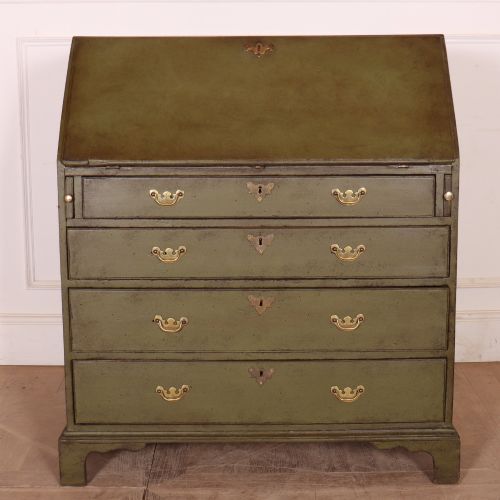
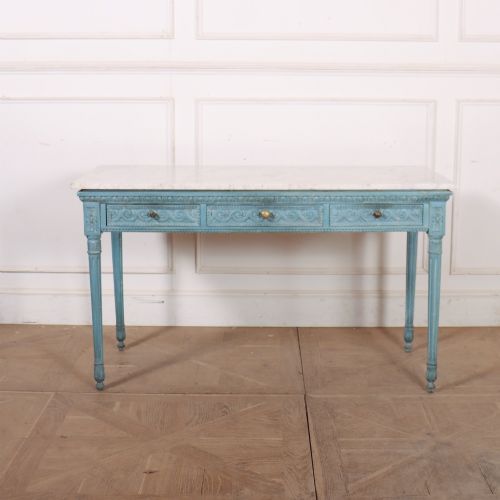
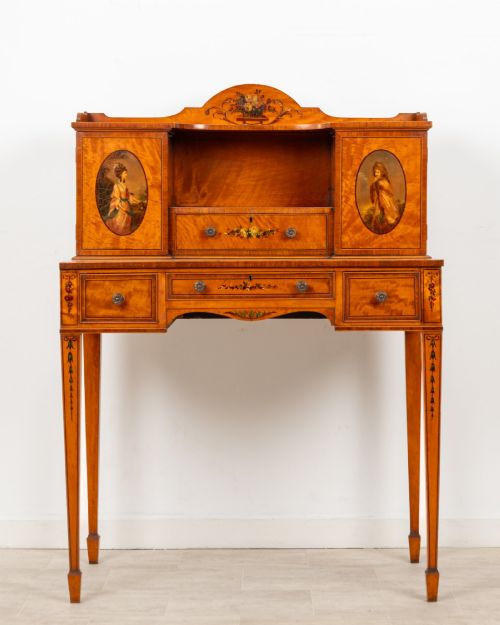
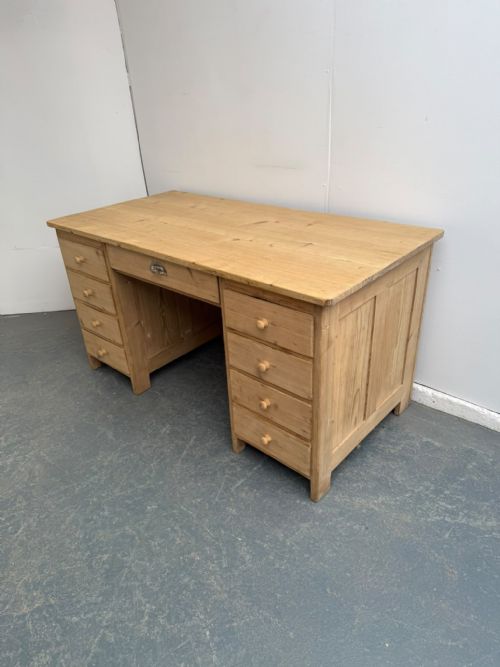

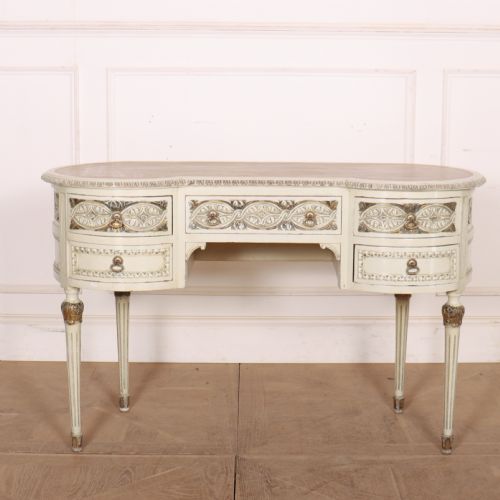


Painted Wood Writing Desk
A painted wood writing desk brings hand-finished colour and decorative surface work directly to the study.
What they are
A painted wood writing desk combines practical workspace with applied surface decoration, drawing on forms from the Regency period through the late nineteenth century. These pieces appear as side tables, console tables, lamp tables, and secretary desks with drop-down fronts.
The selection here includes examples in English country, Regency, Italian Neoclassical, and French Rococo Revival styles. Makers such as Gillows inform the design lineage of the English country pieces found on this page.
Surfaces show various decorative treatments including Vernis Martin lacquer work and painted satinwood. Buyers frequently encounter nineteenth-century interpretations alongside earlier Regency forms.
How they were made
Construction relies on timber and softwood carcasses finished with painted decoration, lacquer, or exotic veneers like kingwood and satinwood. Cabinet makers incorporated brass fittings, ormolu mounts, and occasionally marble tops into the primary structure.
Surface ornament involves meticulous hand-applied paint and varnish layers, characteristic of nineteenth-century revival work and Vernis Martin techniques. Carved wooden elements define the console and table formats seen across Italian and French examples.
Retail Price Guide 2026
Typical UK retail prices for painted wood writing desk, calculated from the Sellingantiques database of over a million retail prices indexed since 2003. This retail price guide relies exclusively on Sellingantiques data; no external sources or auction records are used, so the figures do not describe the wider market.
Materials recorded across the inventory include painted wood, softwood, kingwood, satinwood, brass, ormolu, marble, and lacquer.
What varies in quality
Quality rests in the precision of the painted decoration and the selection of underlying timber, distinguishing standard production from finer cabinet work. Pieces associated with established design houses demonstrate superior joinery and balanced proportions.
The integration of secondary materials like ormolu mounts, brass hardware, and marble inserts elevates the overall execution. Refined surface finish and well-preserved lacquer work separate the better examples from simpler utility pieces.
Gillows
The Painted Wood Writing Desk Glossary
- Secrétaire abattant
- A tall writing cabinet featuring a fold-down writing flap that conceals inner drawers and pigeonholes. This form provides a compact upright footprint while offering a dedicated writing surface.
- Satinwood
- A dense, lustrous timber native to India and Sri Lanka, prized for its golden sheen and smooth grain. It frequently serves as a fine veneer or solid ground for painted decoration.
- Vernis Martin
- A type of simulated Japanese lacquer developed in eighteenth-century France and revived later. It uses multiple layers of varnish to create translucent, glossy decorative finishes.
- Ormolu
- Gilded bronze applied as decorative mounts, feet, or handles on furniture. It adds metallic contrast and ornamental detail to wood surfaces.
- Console table
- A table designed to stand against a wall, traditionally supported by wall brackets or decorative legs. In desk combinations, it merges surface display with functional writing space.
Frequently Asked Questions
What is a painted wood writing desk?
A painted wood writing desk is a piece of antique furniture that combines a surface for writing with decorative paintwork or lacquer. These items span various nineteenth-century styles, including Regency and French Rococo Revival.
They function both as practical writing stations and decorative focal points within a room. The category encompasses side tables, console tables, and drop-front secretary desks.
How do I identify a Regency period desk?
Regency desks and tables display architectural restraint, balanced proportions, and classical design influences. They often incorporate painted finishes alongside timber construction.
Looking at the leg configuration, hardware, and overall silhouette helps distinguish Regency pieces from later nineteenth-century revival furniture.
Where were these desks used?
These desks served in private studies, drawing rooms, and country house sitting rooms for correspondence and record keeping. Their decorative surfaces suited them for display in prominent household spaces.
Console and side table formats allowed them to sit flush against walls when not in active use as writing surfaces.
How do I care for painted wood surfaces?
Care for painted and lacquered wood requires avoiding direct sunlight and excessive moisture to protect the finish. Gentle dusting with a soft, dry cloth preserves the decorative layers.
Maintaining stable room humidity prevents the timber beneath the paint from expanding or contracting.