
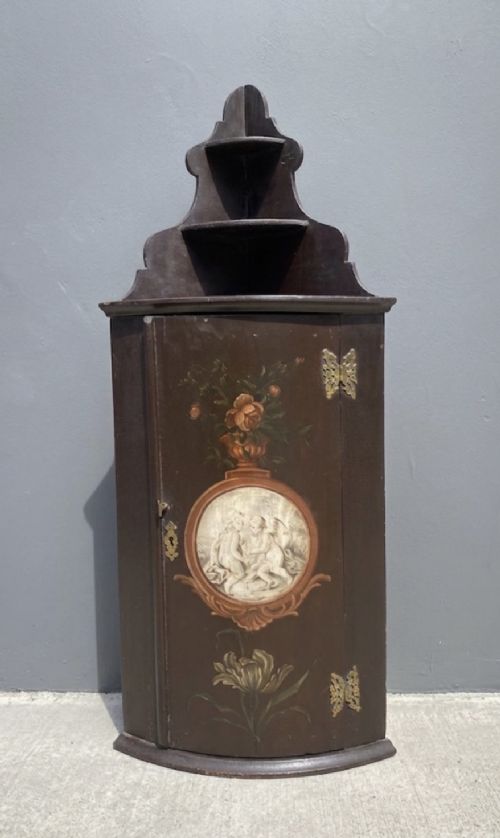


Painted Wood Wall Cabinet
These painted wood wall cabinet pieces bring functional storage and historic surface character straight to your walls.
Painted Wood Wall Cabinet
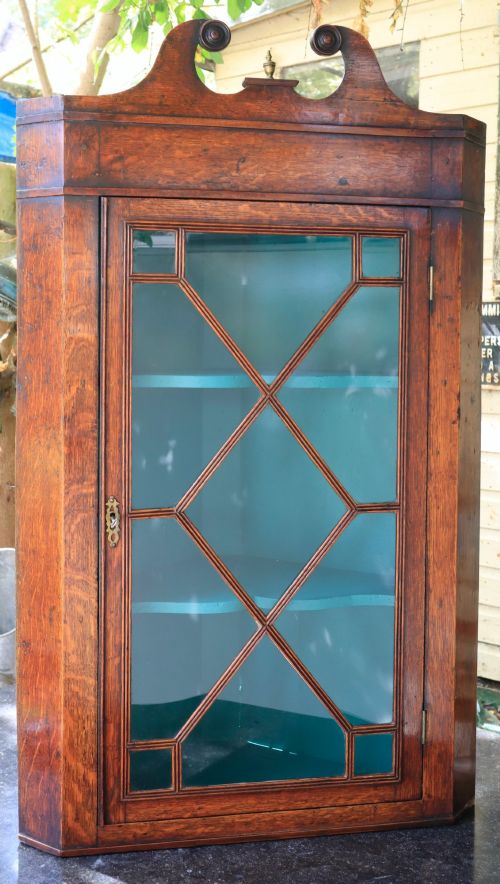
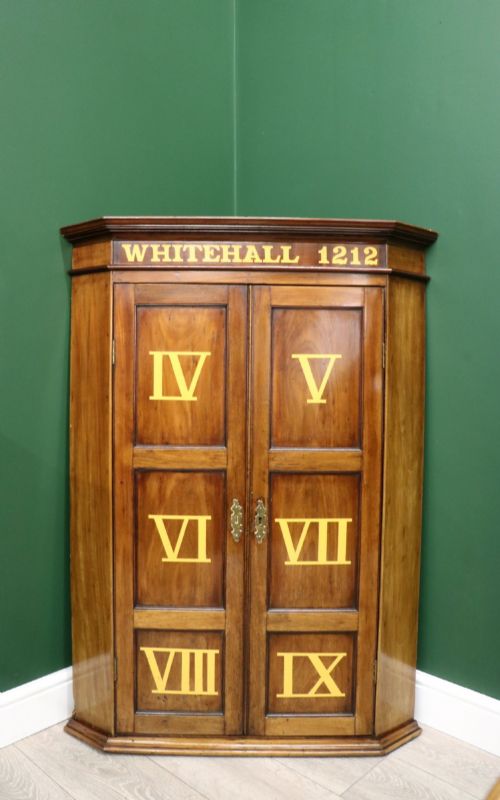
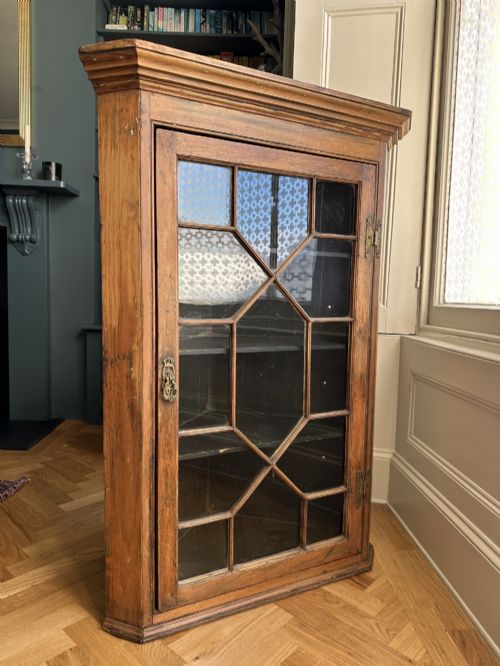
A painted wood wall cabinet provides compact storage designed to hang directly on a wall or fit neatly into a corner. You will encounter corner cabinets, small cupboards, and wall cupboards spanning centuries of domestic production.
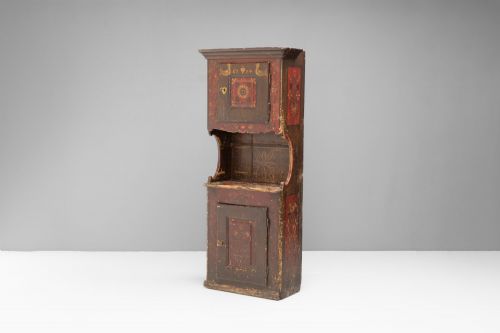
The selection here ranges from early Georgian spice cupboards to nineteenth-century Scandinavian and Swedish pieces, along with French provincial examples. These items combine timber construction with decorative painted finishes tailored for everyday use in compact spaces.
How they were made
Pine and oak form the primary timber bodies of these cabinets, frequently assembled with traditional joinery to support the weight of the structure. Brass hardware such as hinges and latches often secures the doors, while iron elements appear on certain early regional pieces.
Surfaces receive layers of paint, sometimes incorporating gold leaf or decorative schemes such as Chinoiserie. Glass panels are integrated into glazed doors and display cabinets to showcase the interior shelves.
Early spice cupboards feature tiny internal hiding spots behind miniature doors designed to keep secret ingredients away from curious household staff.
What varies in quality
The integrity of the original paint surface distinguishes standard utility pieces from those retaining decorative schemes. Traces of early or original decoration contribute significantly to the character of a cabinet.
Construction refinement also sets examples apart, from simple vernacular pine cupboards to architecturally structured Italian tabernacles or detailed French hand-carved doors.
The Painted Wood Wall Cabinet Glossary
- Corner cabinet
- A storage unit built with an angled back to fit directly into the corner of a room, saving valuable floor space.
- Spice cupboard
- A small wall-hanging cabinet traditionally fitted with multiple internal drawers or compartments for storing culinary herbs and spices.
- Tabernacle
- An architectural wall fixture with an elaborate frame and structure, often resembling a small shrine or altar cabinet.
- Chinoiserie
- A decorative style employing European interpretations of Chinese artistic motifs, frequently executed in painted and gilded finishes.
- Glazed door
- A door fitted with glass panes to allow visibility into the interior display shelves.
Painted Wood Wall Cabinet: Frequently Asked Questions
How were wall cabinets used?
These cabinets served to store valuable provisions, tableware, and domestic items safely above floor level.
Smaller examples like spice cupboards kept high-value ingredients secure and close to hand in the kitchen or parlour.
Where should I hang one?
Corner cabinets suit empty room junctions where standard rectangular furniture would jut out awkwardly.
Flat wall cupboards work well above sideboards or desks to provide eye-level storage without consuming floor space.
How do I identify periods?
Look to the structural proportions and decorative vocabulary, such as the architectural details found on Georgian or seventeenth-century pieces.
Pine carcasses with original painted finishes frequently point towards nineteenth-century Scandinavian or regional British vernacular traditions.
Are the painted finishes original?
Many pieces retain layers of historic paint applied decades or centuries after their initial construction.
Examining the wear patterns and pigment integration helps determine whether a surface coating dates to the period of manufacture.