


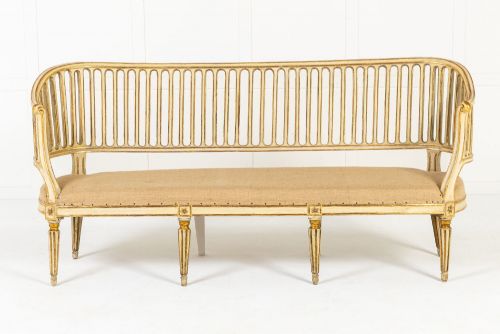

Painted Window Bench
A painted window bench offers a graceful perch beneath the casement, combining timber structure with decorative pigment.
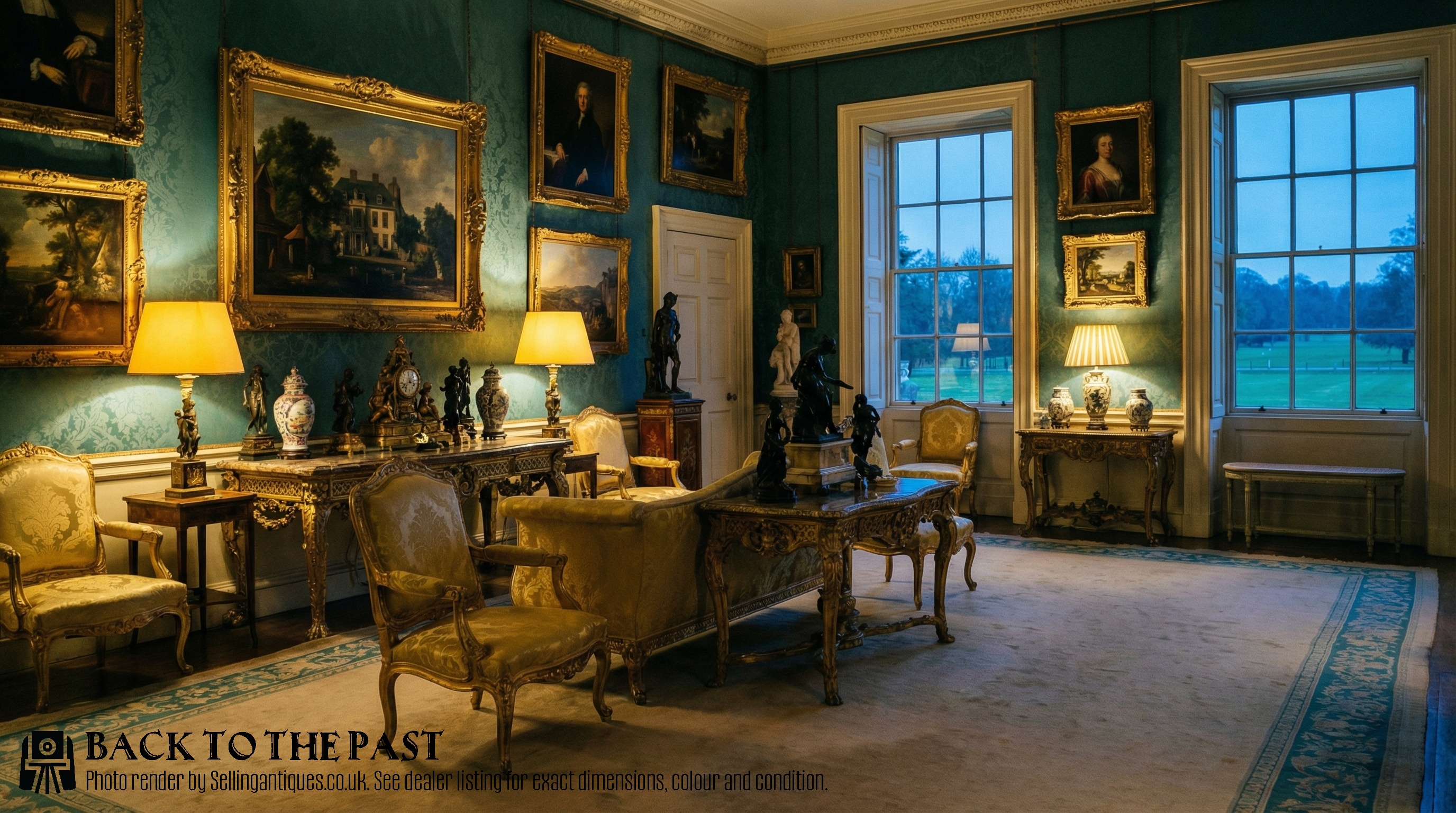
Painted Window Bench
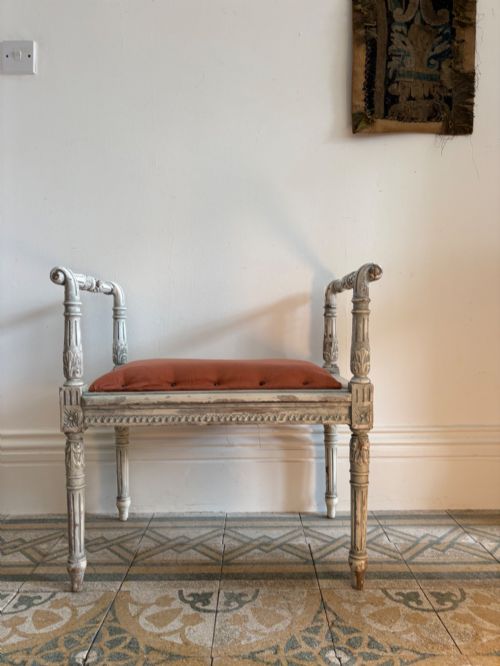
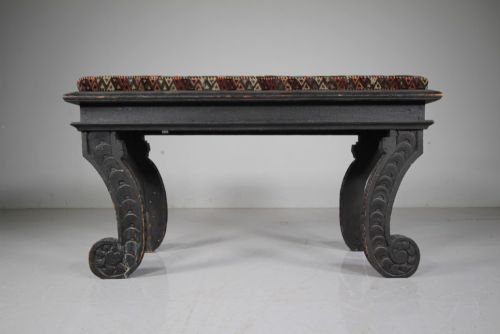
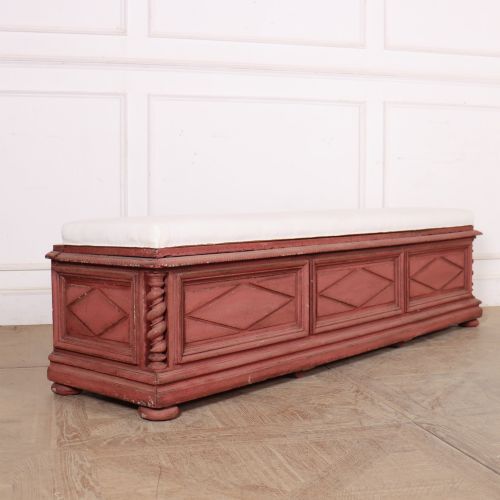
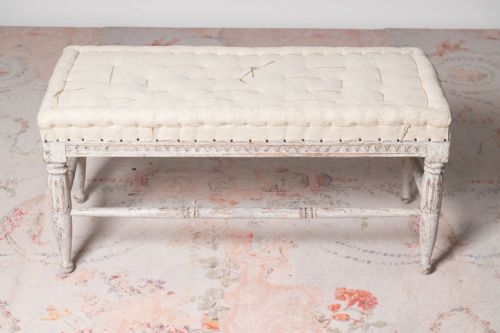
When you search for a painted window bench, you encounter seating designed for light-filled rooms, ranging from long stools and settees to compact window seats. The pieces on this page span the eighteenth, nineteenth, and early twentieth centuries, reflecting diverse European traditions.
You are most likely to meet nineteenth-century examples alongside Edwardian and 1900s variants. Forms include Swedish Gustavian pieces, English pine and satinwood designs, and French seating in Louis styles.
Origins stretch across England, Sweden, Italy, and France. These origins determine the underlying palette, whether it is white Swedish paint or gilt-accented English satinwood.
How they were made
Construction relies on timber frames shaped from beech, pine, or satinwood. Joinery supports the load, while secondary materials such as cane provide flexible seat bases.
Surface finish involves applied layers of paint, sometimes paired with gilt highlights. Upholstery utilises fabric, linen, and silk for the seating area.
Listings feature items from the eighteenth, nineteenth, and early twentieth centuries, incorporating materials such as cane, gilt, fabric, and painted wood.
What varies in quality
The refinement of the timber frame and the nuance of the painted surface distinguish examples. Finer pieces display careful carving on beech or satinwood, whereas simpler utilitarian items use painted pine.
The integrity of the original structure and the subtlety of the decorative paint layer dictate the overall standard. Subsequent overpainting alters the visual weight of the piece.
The Painted Window Bench Glossary
- Gustavian Neoclassical
- A Swedish aesthetic characterised by restrained classical motifs and light-coloured painted finishes. This style emerged in the late eighteenth century and influenced Scandinavian furniture for generations.
- Satinwood
- A dense, lustrous timber utilised for fine cabinetwork and decorative seating. Its yellow-brown grain takes paint exceptionally well.
- Canework
- Woven rattan or cane material forming a resilient, porous seat base. It appears frequently on lighter couches and settees.
- Gilt
- A thin layer of gold leaf applied to portions of the wood frame. It highlights carved details against a painted background.
Painted Window Bench: Frequently Asked Questions
Where should I place a painted window bench?
These pieces suit natural light, making them traditional additions beneath low window frames or in hallways. Their slender proportions also allow placement at the foot of a bed.
Ensure the depth of the seat matches the available floor space so movement around the room remains unobstructed.
How do I care for the painted surface?
Dust the timber gently with a dry, soft cloth to prevent particulate accumulation. Avoid harsh chemical cleaners that can degrade historic pigment layers.
Keep the wood away from direct heat sources and strong sunlight to prevent the painted finish from drying out or cracking.
How do I distinguish French styles from Swedish ones?
French seating often displays curved cabriole legs and ornate carved motifs inspired by Louis XV or Régence aesthetics. Swedish Gustavian pieces tend to exhibit straighter, cleaner lines with pale, monochromatic paint.
Examining the structural timber underneath often reveals regional woodworking habits.
What is the difference between a window seat and a settee?
A window seat typically lacks a full backrest, designed instead for unobstructed views through low windows. Settees incorporate backrests and arms, offering more structured support.
Both forms utilise painted wooden frames and upholstered or caned seats.