





Painted Timber Settle
A painted timber settle is a traditional high-backed wooden bench designed to keep out draughts, combining sturdy utility with regional decorative art.
Painted Timber Settle
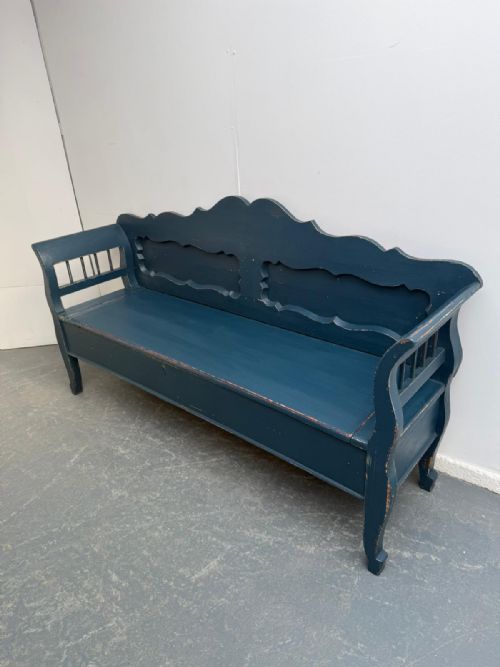
A painted timber settle provides substantial seating with a high protective back and often incorporates enclosed storage beneath the seat. These practical benches served households, taverns, and railway stations across Britain and continental Europe.
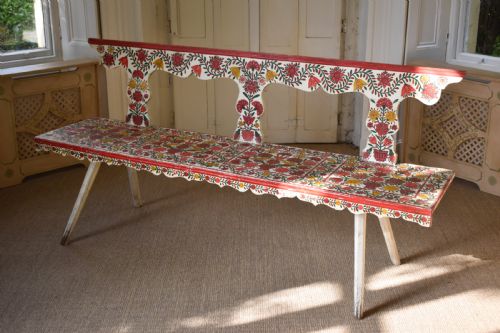
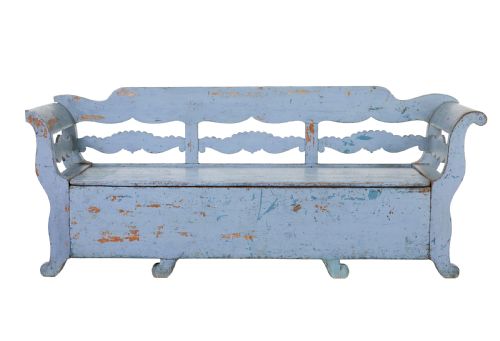
The selection here encompasses various regional traditions including English country vernacular pieces, Austrian examples, and Swedish designs. Most items date from the nineteenth century or the Georgian period.
Forms range from high-backed tavern settles and barrel back designs to long dining benches and box seats. Many feature original surface treatments that reflect European folk art and rustic farmhouse aesthetics.
How they were made
Joiners and country carpenters constructed these benches using solid structural woods such as pine and softwood. Component parts were joined using traditional carpentry methods suited to robust daily use in domestic and public interiors.
Surfaces were frequently finished with layers of paint, ranging from simple protective coatings to polychrome decoration. Some industrial and public seating combined wooden elements with cast iron frameworks for added durability.
Painted Timber Settle Retail Price Guide 2026
Typical asking prices for painted timber settle among the pieces listed under this phrase on Sellingantiques today, from the lower quarter to the upper quarter. They describe what is for sale here now, not the wider market.
The listings show pine and softwood construction predominantly, finished with painted surfaces ranging from simple tavern coats to European folk art polychrome.
What varies in quality
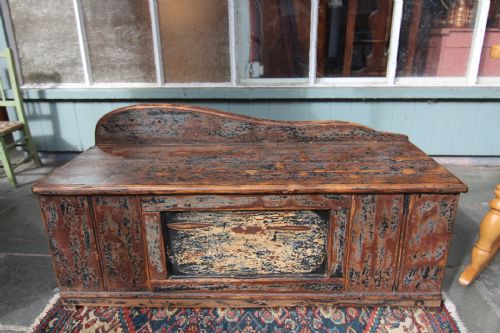
The distinction between ordinary utility items and superior examples lies in the integrity of the original construction and the survival of early painted surfaces. Untouched paintwork with genuine patination elevates a piece significantly above later repainted versions.
Proportion and architectural presence also define the better examples, particularly in barrel back and high-backed forms where the curve of the timber creates a successful enclosed space.
The Painted Timber Settle Glossary
- Settle
- A wooden bench with a high back, solid arms, and often a closed base to block cold air. This form was central to the communal hearth before central heating.
- Barrel back
- A settle featuring a rounded, curved wooden back designed to envelop the sitter and exclude draughts. These pieces show sophisticated carpentry.
- Vernacular
- Objects made by local craftsmen following regional traditions rather than high-style academic designs. These pieces use readily available local timber.
- Polychrome
- Decorated in multiple colours, often found on folk art furniture from Britain and continental Europe. This surface treatment brings narrative visual interest to utility furniture.
- Box seat
- A bench design where the space beneath the seat functions as an enclosed chest accessed by lifting the lid. This provided valuable storage in small rooms.
Painted Timber Settle: Frequently Asked Questions
What is a painted timber settle?
A painted timber settle is a sturdy wooden bench featuring a high back and solid arms, traditionally placed near hearths to block cold draughts. These pieces often include integrated box storage beneath the seat.
Surfaces are frequently finished in historical paint colours or folk art decoration, making them both functional seating and decorative focal points in country interiors.
Where were settles used historically?
These benches were common in domestic farmhouses, rural cottages, and public establishments like taverns and railway stations. Their high backs provided necessary shelter in large, cold rooms before modern heating.
Different regions developed distinct forms, from English tavern settles to Austrian and Swedish painted examples designed for specific domestic spaces.
How do I style a settle today?
A settle works well in hallways, large kitchens, or dining rooms where its high back can anchor a space. Adding simple cushions softens the wooden seat while preserving the historical silhouette.
Because many examples feature vibrant or distressed painted finishes, they pair naturally with neutral walls and rustic or industrial interiors.
How do I identify a Georgian settle?
Georgian settles typically display classical proportions and construction methods characteristic of the eighteenth century, such as panelled backs and substantial timber framing. Barrel back forms from this period wrap closely around the sitter.
Examining the construction joints and the wear patterns on the painted surface helps distinguish these earlier pieces from nineteenth-century revivals.