
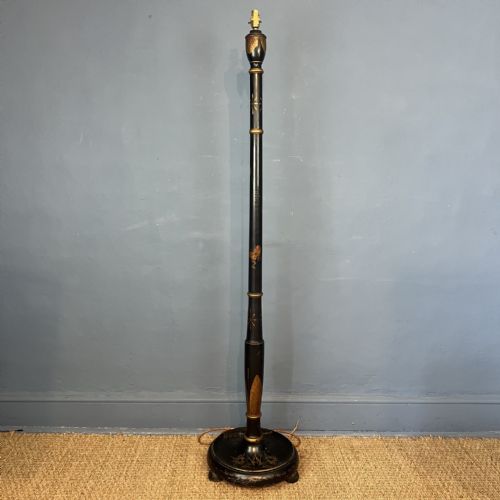
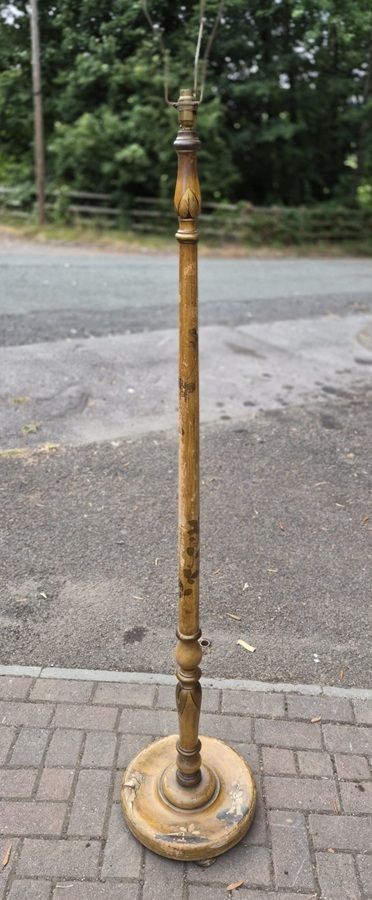
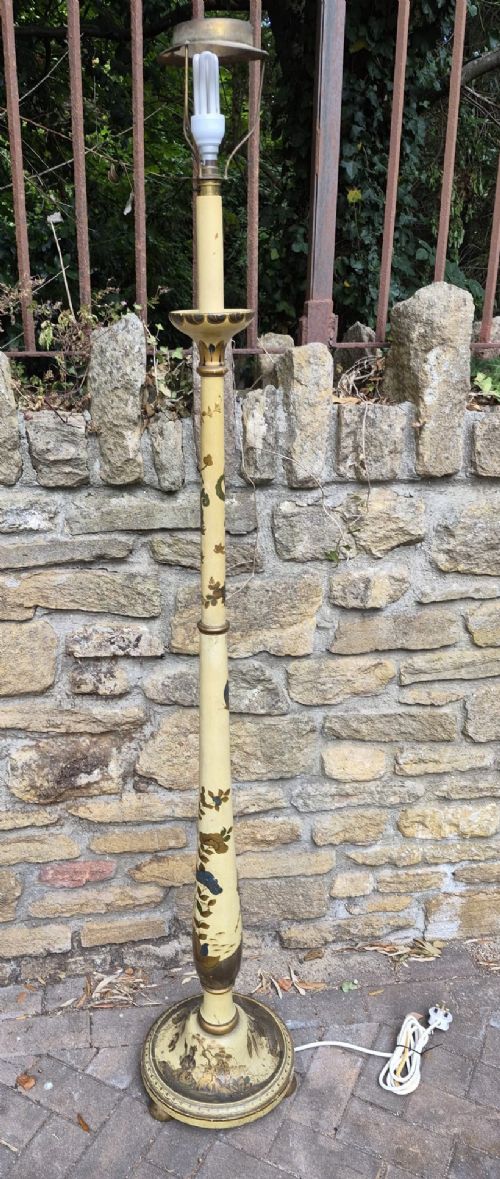
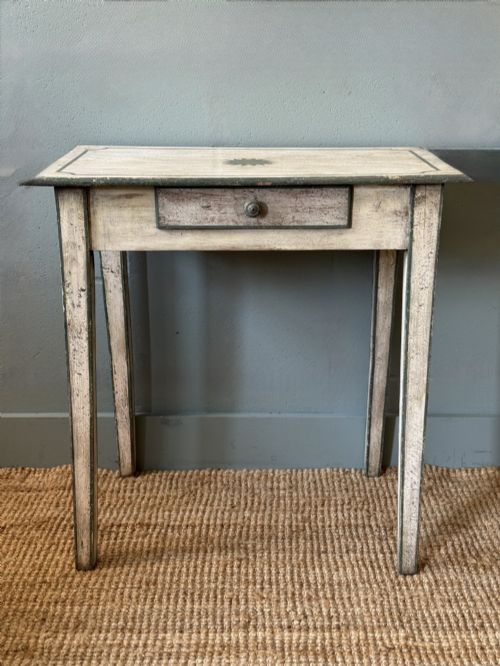

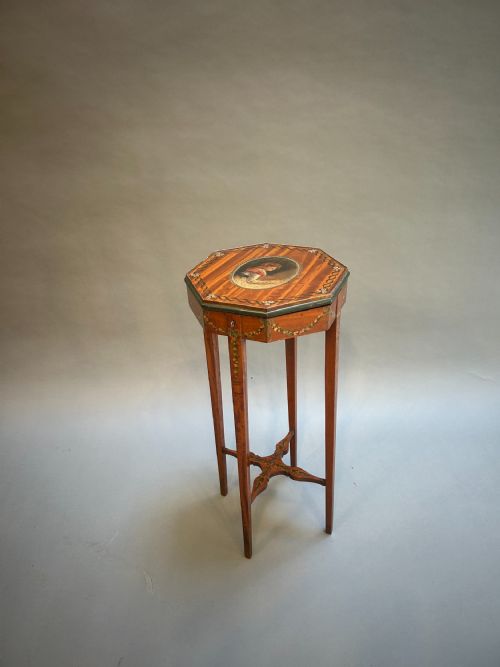
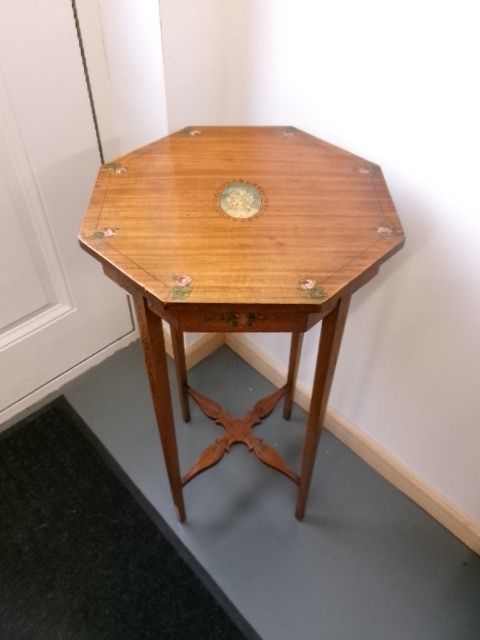

Painted Standing Lamp
A painted standing lamp brings height and colour to a room, offering both illumination and decorative presence through its finished wooden or metal shaft.
Painted Standing Lamp
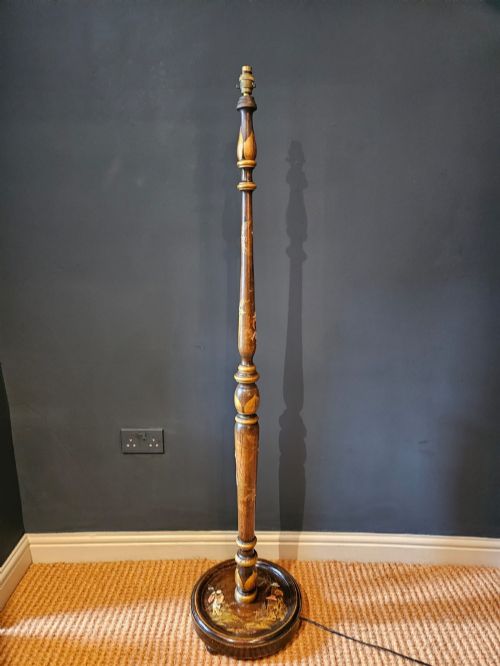
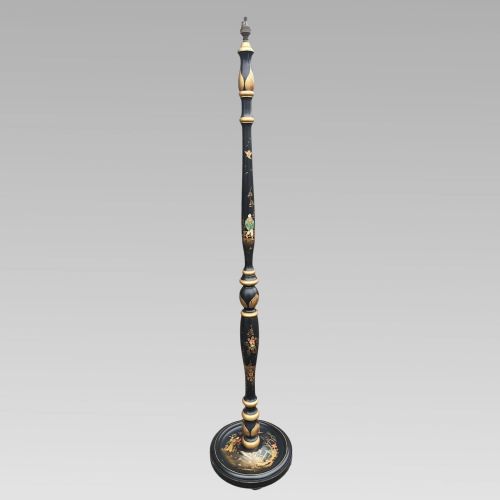
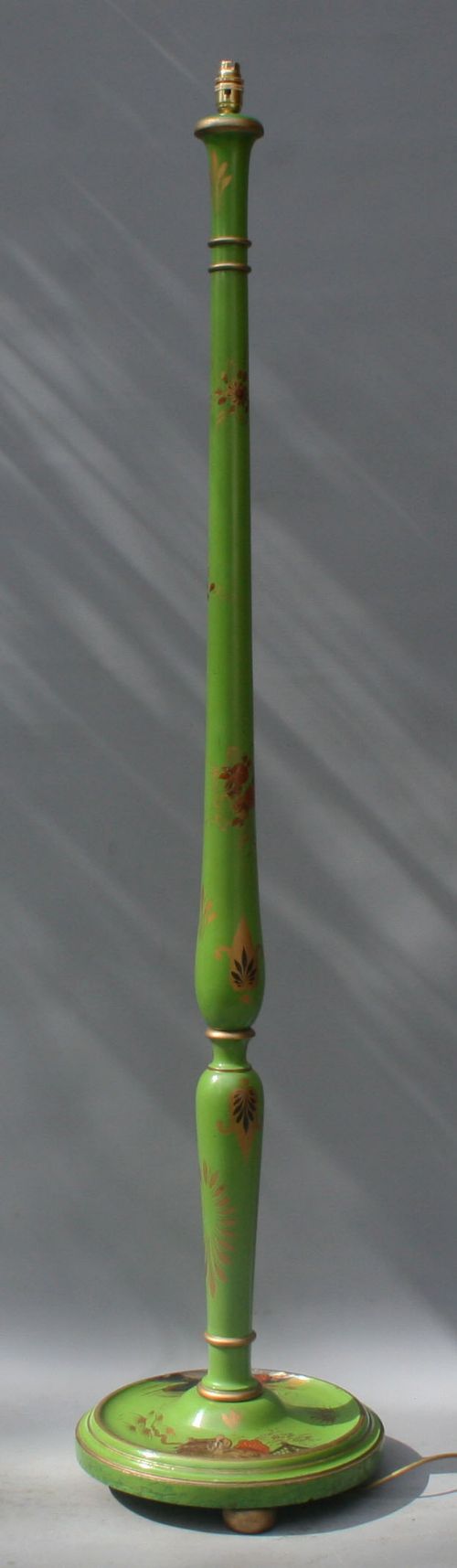
When searching for a painted standing lamp, buyers encounter tall floor lamps and standard lamps designed to support a shade while introducing decorative character to an interior. The selection spans distinct historical periods, featuring Victorian, Edwardian, and twentieth-century examples alongside earlier foundations.
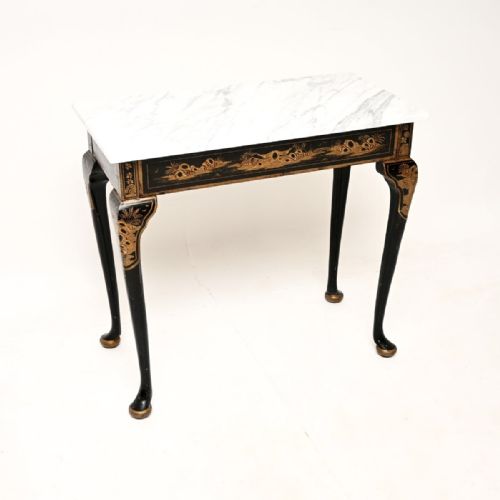
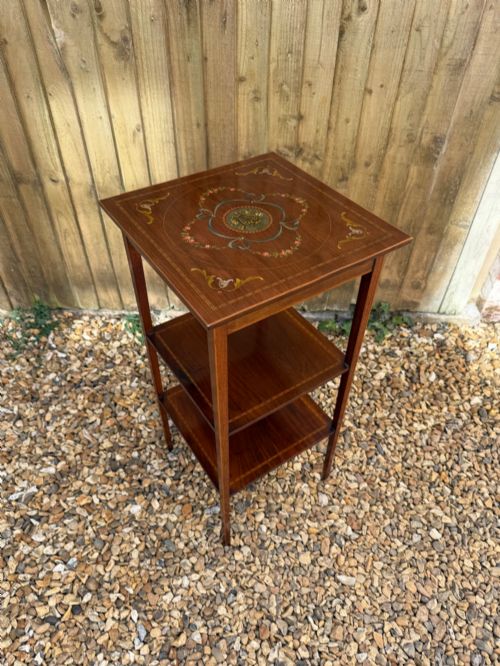
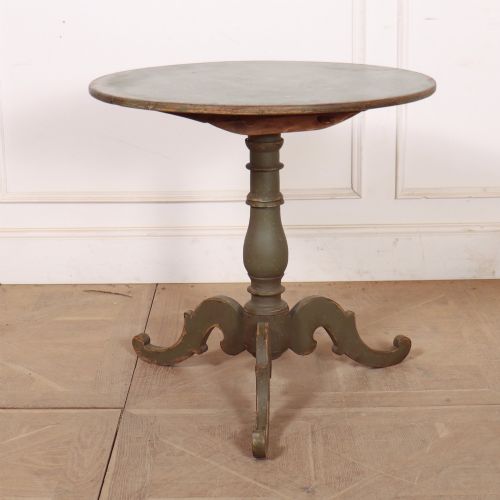
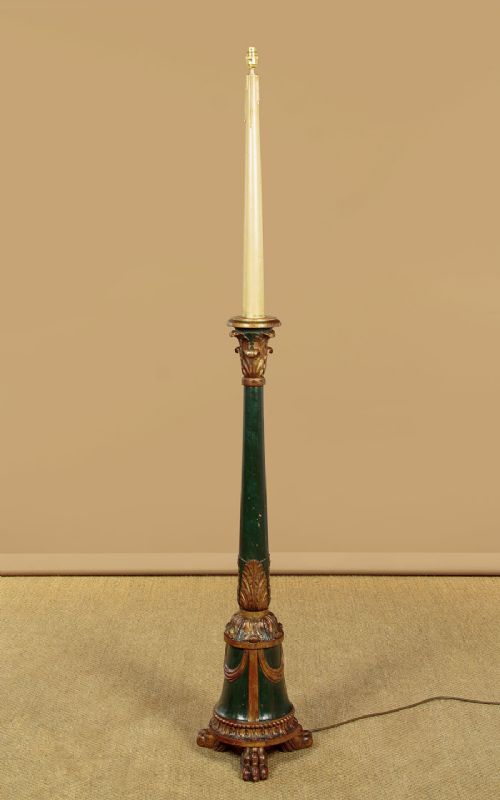
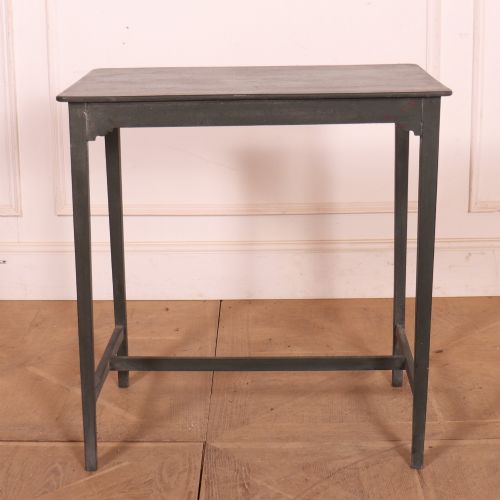
The aesthetic expressions vary considerably across the pieces, ranging from Chinoiserie black lacquer and Sheraton Revival satinwood to Swedish country finishes and French decorative styles. Alongside floor-standing uprights, the category frequently encompasses related forms such as lamp tables and torcheres that share the same painted vocabulary.
How they were made
Craftsmen built the uprights and tables using timbers such as mahogany, oak, fruitwood, satinwood, and general painted wood, often applying gesso to prepare surfaces for decoration. Metal and brass elements occasionally appear in the construction, particularly in supporting fittings and specific standard lamp frames.
Decoration relied heavily on surface paint, lacquer, giltwood, and trompe l'oeil techniques to create motifs in styles like Chinoiserie and Neoclassical. Finishes ranged from smooth hand-painted satinwood to crackle-glazed applications and decorated black lacquer.
Listings for painted standing lamps span the nineteenth and twentieth centuries, heavily featuring Edwardian and Victorian Chinoiserie alongside Swedish country forms.
What varies in quality
The distinction between standard examples and the finest pieces rests upon the execution of the painted or lacquered decoration and the refinement of the underlying woodwork. Superior items display meticulous hand-painted details, sophisticated colour integration, and balanced proportions.
Material selection and period integrity further separate the tiers, with high-quality pieces maintaining original decorative surfaces rather than later overpainting. The cohesion between the vertical standard or table base and its decorative scheme dictates the overall merit of the piece.
The Painted Standing Lamp Glossary
- Chinoiserie
- European decorative style inspired by Chinese artistic traditions, frequently featuring hand-painted figures, landscapes, and motifs on lacquered backgrounds. This aesthetic appears prominently on Edwardian and Victorian standard lamps.
- Standard lamp
- A tall floor-standing lamp designed to hold a light fitting and shade at eye level or above. These vertical pieces often incorporate decorative painted wooden columns or carved elements.
- Satinwood
- A durable, light-coloured tropical hardwood prized for its fine grain and lustrous finish, often used for decorative painted tables and lamp stands. It provides a smooth surface well suited to delicate artwork.
- Gesso
- A plaster-like mixture applied to wood to create a smooth surface for painting or gilding. It forms the base for intricate decorative details on period stands.
- Torchere
- A tall ornamental stand originally designed to hold a candle or torch, later adapted to carry a lamp. These slender supports feature prominently in historical lighting inventories.
Painted Standing Lamp: Frequently Asked Questions
What is a painted standing lamp?
A painted standing lamp is a tall vertical lighting fixture designed to rest on the floor, providing illumination while serving as a decorative focal point in a room.
These pieces typically feature a wooden or metal shaft decorated with paint, lacquer, or giltwork, often paired with a fabric shade.
How do I date a standard lamp?
Dating a standard lamp involves examining the construction methods, the type of timber used, and the style of the painted decoration. Details such as Chinoiserie motifs or Sheraton Revival influences point toward specific late nineteenth or early twentieth-century periods.
Hardware, wiring channels, and the patina of the paint surface also provide reliable clues to the age of the piece.
Where should I place a standard lamp?
A standard lamp works effectively in room corners, beside seating areas, or adjacent to side tables to provide ambient or reading light without taking up surface space. Their decorative shafts add vertical interest to empty wall spaces.
Pairing them with matching lamp tables creates a coordinated arrangement in sitting rooms or studies.
What is the difference between a standard lamp and a torchiere?
A standard lamp is built specifically to support a downward or outward-facing shade for general room illumination, whereas a torchiere traditionally holds an upward-facing light source designed to bounce illumination off the ceiling.
Both offer tall, floor-standing profiles, but their historical origins and top configurations differ.