

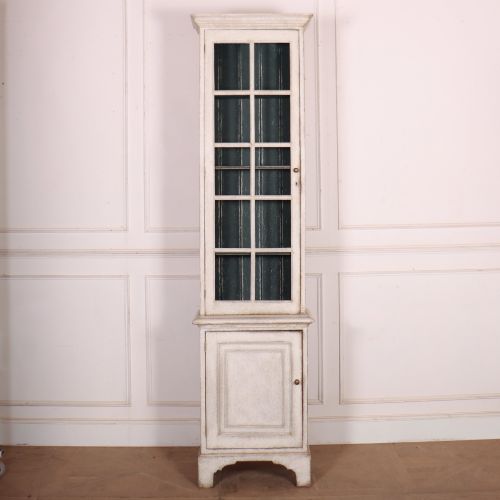

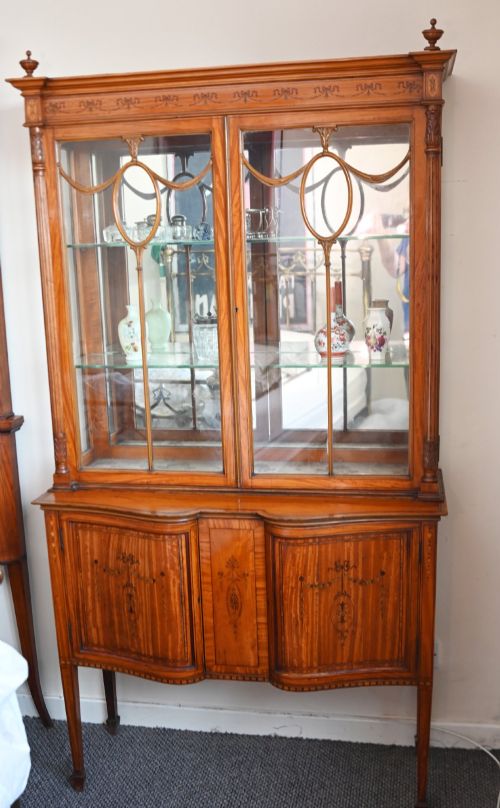
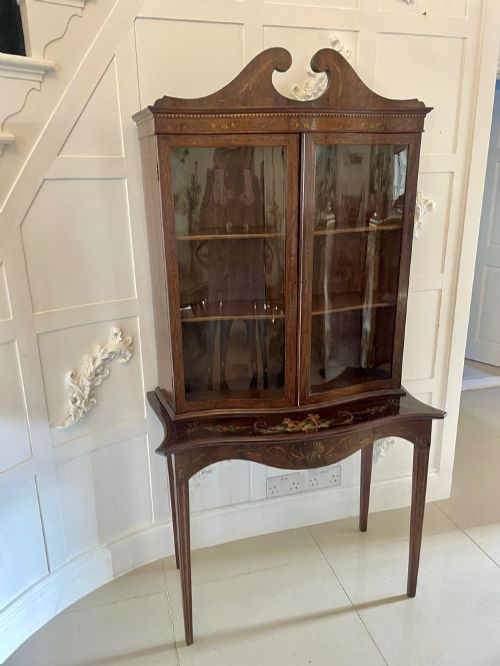
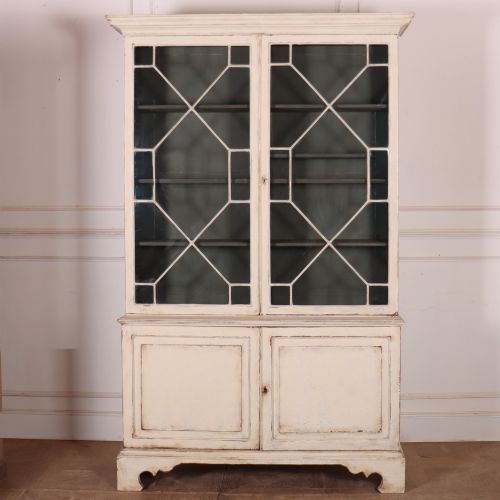
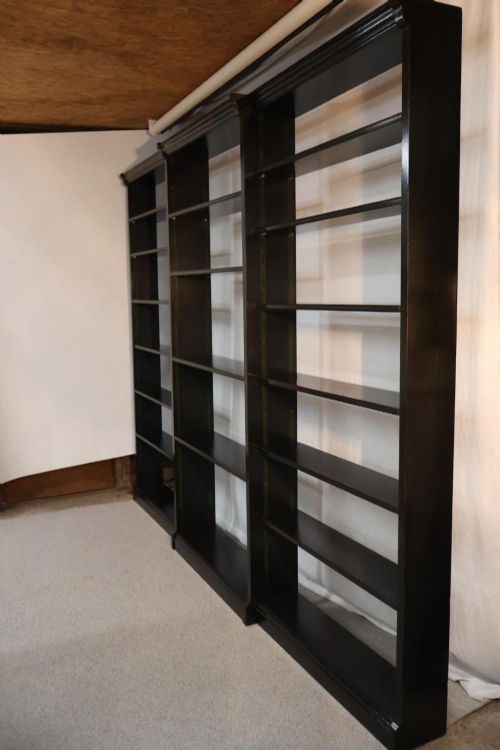
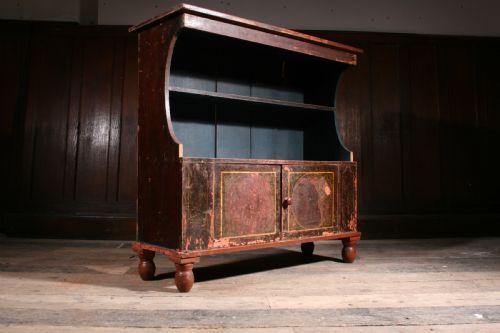


Painted Standing Bookcase
A painted standing bookcase brings architectural presence and surface charm to a room, offering upright display alongside substantial shelving.
Painted Standing Bookcase
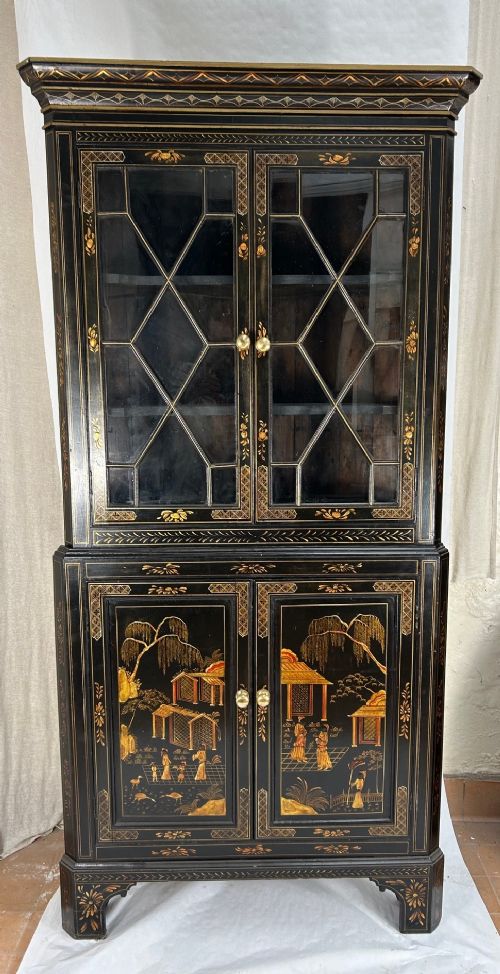
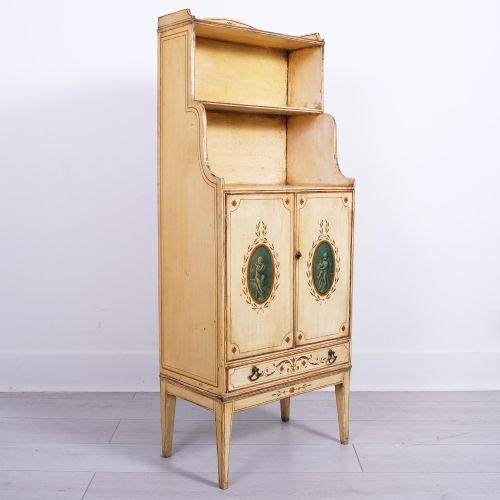
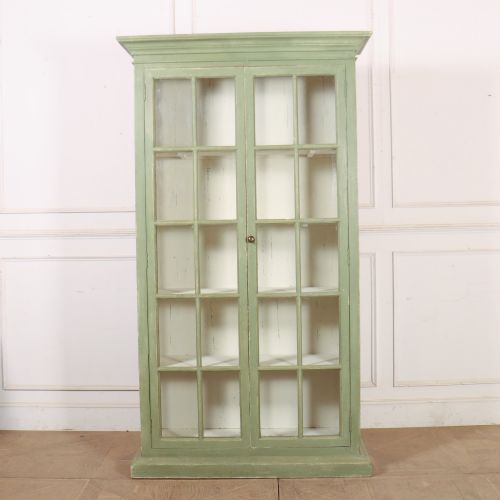
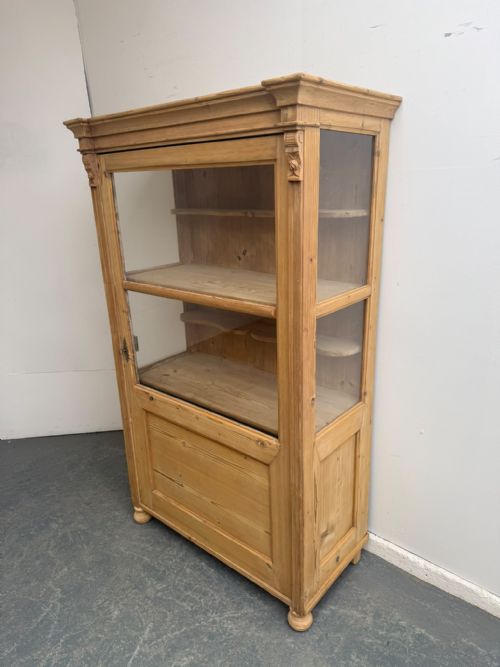
A painted standing bookcase is a tall, floor-standing piece designed to hold books and display objects while carrying a decorative painted or finished surface. You encounter forms ranging from open shelves and waterfall tiers to glazed display cabinets and corner cupboards.
The pieces on this page span the eighteenth, nineteenth, and early twentieth centuries, drawing on Georgian, Victorian, Edwardian, and Arts and Crafts traditions. English country pieces sit alongside Sheraton Revival satinwood and continental examples showing Chinoiserie or French aesthetic influences.
Most examples function as upright furniture that anchors a study, library, or drawing room. They combine vertical storage with decorative motifs such as hand-painted floral panels, parcel gilt details, and inlaid woodwork.
Judging quality in painted standing bookcases
Quality rests primarily on the integrity and survival of the original painted surface or decorative scheme rather than later overpainting. Finely executed brushwork, such as delicate Sheraton Revival motifs or crisp Chinoiserie details, distinguishes superior examples from standard commercial work.
Construction standards appear in the choice of cabinet timbers, the stability of upright frames, and the inclusion of period brass hardware and glass panels. Pieces retaining their authentic period finish and unaltered shelving configurations command greater interest from collectors.
Painted Standing Bookcase Retail Price Guide 2026
Typical asking prices for painted standing bookcase among the pieces listed under this phrase on Sellingantiques today, from the lower quarter to the upper quarter. They describe what is for sale here now, not the wider market.
Listings feature woods including satinwood, mahogany, and pine, alongside painted timber, glass, and brass fittings.
Edwards & Roberts
The Painted Standing Bookcase Glossary
- Waterfall bookcase
- A set of open shelves stepped back in progressive widths from bottom to top. This form appeared frequently in the nineteenth century for display and easy access to volumes.
- Breakfront
- A cabinet design where the central section projects forward from the flanking wings. This architectural arrangement adds depth and presence to larger library furniture.
- Satinwood
- A durable tropical hardwood with a lustrous, golden-yellow sheen used extensively in fine cabinet-making. It provided a pale canvas for painted neoclassical decoration during the Georgian and revival periods.
- Ebonised
- Wood treated with a chemical stain or finish to imitate ebony. This dark, formal treatment became popular in nineteenth-century decorative furniture.
- Glazed bookcase
- A standing cabinet fitted with glass panelling in the doors to protect books from dust while keeping them visible. Early examples often feature individual glass panes held by wooden glazing bars.
Painted Standing Bookcase: Frequently Asked Questions
Where should I place a painted bookcase?
These tall standing pieces suit studies, libraries, and drawing rooms where vertical wall space allows the furniture to anchor the room. Keep them away from direct sunlight and extreme temperature changes to protect the painted surfaces and wood.
Ensure the floor is level so the upright frame and doors hang true. Standing bookcases benefit from being secured to the wall if storing heavy volumes.
How can I tell original paint from later decoration?
Original paint typically shows consistent craquelure, wear patterns, and an integration with the underlying timber that matches the age of the piece. Brushwork and pigments should align with the stated period, such as Georgian satinwood or Edwardian revival.
Later repainting often looks flat, lacks natural ageing around handles and edges, or conceals structural repairs beneath thick pigment.
What is the difference between open shelves and a display cabinet?
Open bookcases provide direct, unhindered access to books and are designed for everyday reading materials. Display cabinets incorporate glazed or solid doors to protect delicate volumes and decorative objects from dust.
Cabinets often feature enclosed lower cupboards alongside upper display shelves, whereas open stands focus purely on vertical tiering.