




Painted Room Divider Screen
A painted room divider screen splits a large space with colour and historic artistry, offering portable privacy that transforms a room instantly.
Painted Room Divider Screen
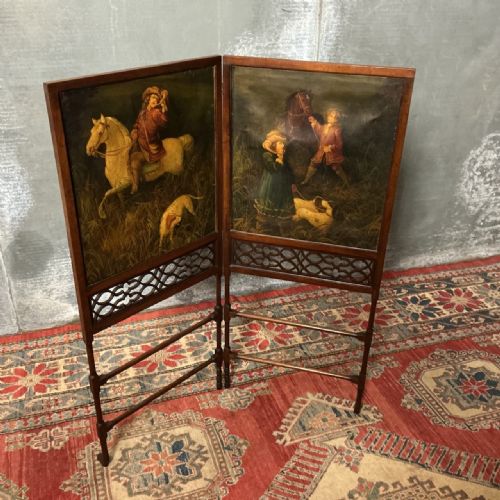
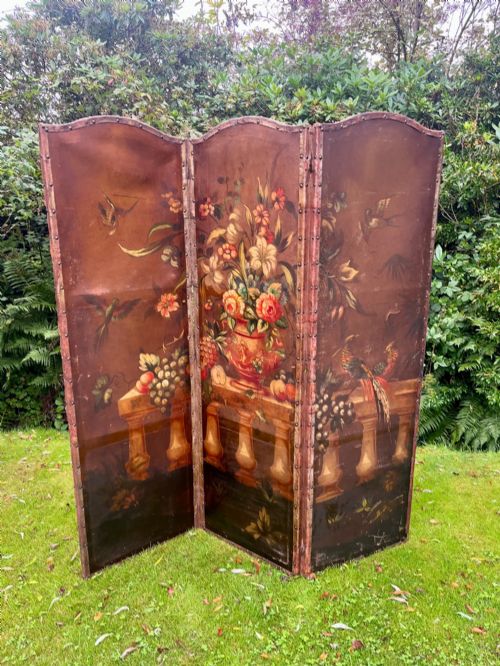
A painted room divider screen organises interior spaces with hinged multi-fold panels that display figurative artwork, pastoral landscapes, or decorative motifs. These folding pieces function as architectural partitions, dressing screens, or modesty barriers within domestic interiors.
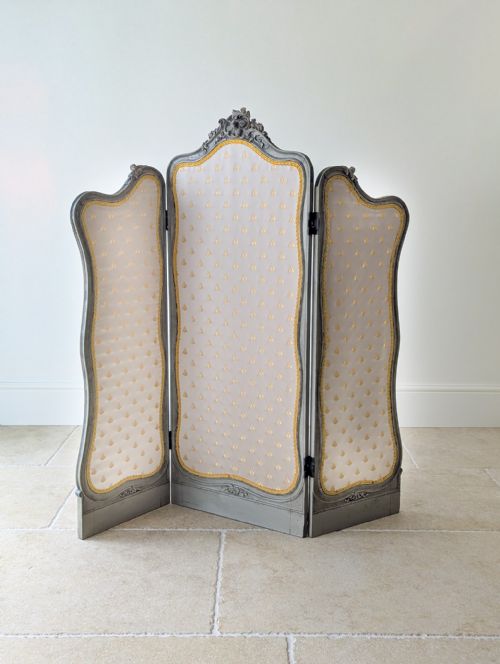
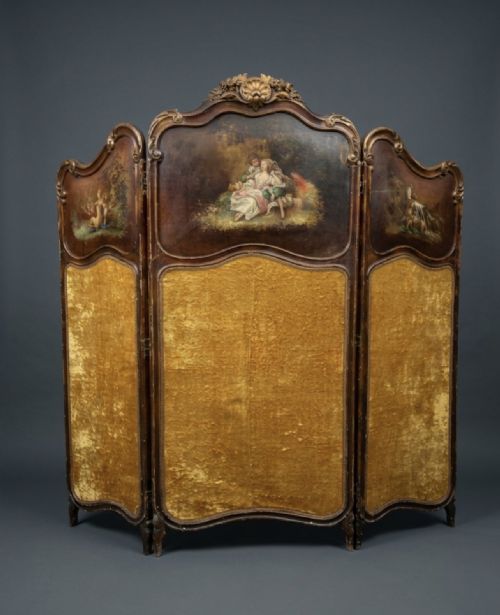
The selections available range from 18th-century Cordoban leather and Dutch chinoiserie to 19th-century French walnut and Victorian canvas examples. Chinese black lacquered works and early 20th-century Swedish or Indian frames also appear frequently across the inventory.
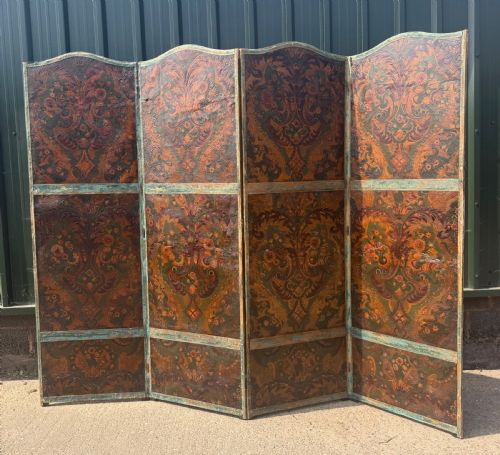
Most examples deploy three or four folds linked by brass or metal hinges, allowing the structure to stand in a zig-zag configuration across a floor. Smaller fire screens and modesty screens serve similar decorative purposes on a more intimate scale.
Materials and construction
Wood frames of mahogany, walnut, or carved fretwork support panels constructed from canvas, heavy leather, or solid timber boards. Artisans applied oil paint, lacquer, and gold leaf directly onto these surfaces to build intricate pictorial scenes.
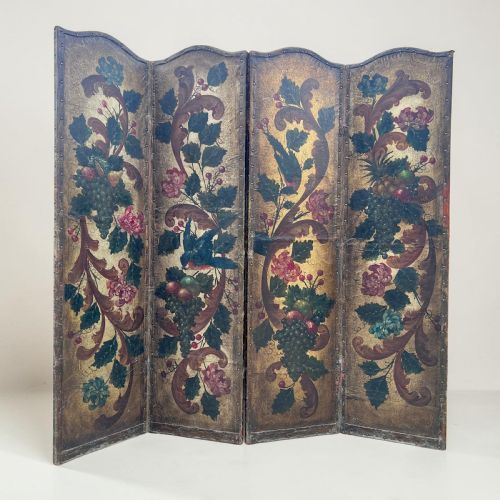
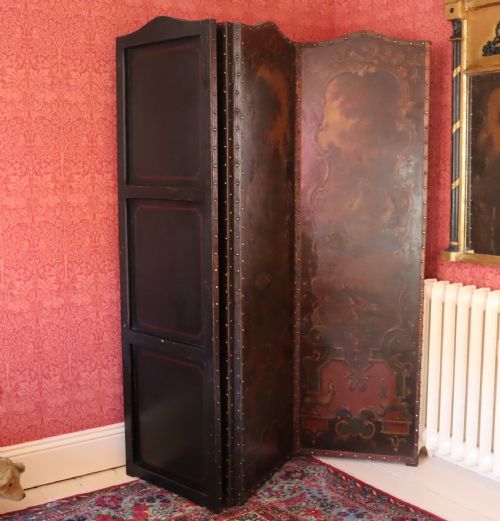
Leather panels frequently underwent embossing, tooling, and gilt stamping before receiving hand-painted pigments, drawing on traditions from Cordoba and Dutch workshops. Lacquered versions involved multiple layers of dark resin built up on wooden substrates and decorated with oriental motifs.
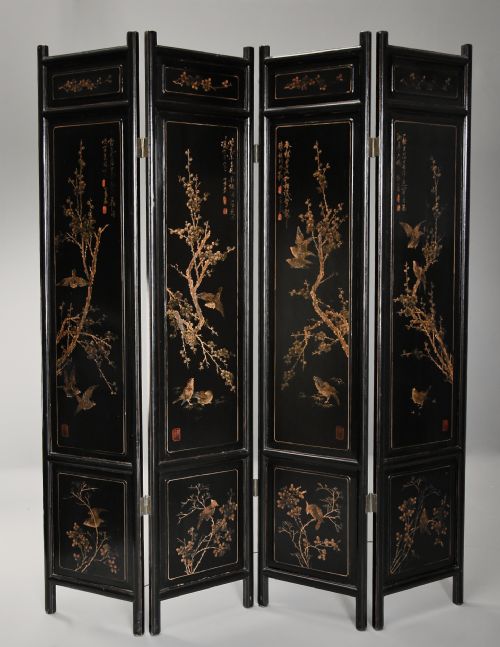
The listings combine nineteenth-century European painted leather and canvas works with twentieth-century Chinese black lacquered folding screens.
Judging quality
Quality rests upon the execution of the hand-painted artwork and the depth of the materials used, such as genuine tooled leather or heavy carved wood rather than thin modern substitutes. Finer examples display confident brushwork in pastoral or chinoiserie scenes that retain their original pigment vibrancy without heavy later repainting.
The structural integrity of the hinges and the stability of the individual folds determine everyday usability, as heavy canvas or leather panels exert considerable weight on the joints. Maker attribution, such as signed French cabinetmaker pieces, elevates the standing of an individual screen.
Paul Sormani
The Painted Room Divider Screen Glossary
- Chinoiserie
- European artistic interpretation of Chinese and East Asian decorative styles, popular in furniture and screen decoration during the eighteenth and nineteenth centuries.
- Cordoban leather
- Heavy leather originating from Spain that is embossed, gilt-embossed, and painted for use in wall hangings and luxury folding screens.
- Modesty screen
- A low freestanding panel historically utilised in domestic settings to shield occupants from draughts or to provide visual privacy.
- Fire screen
- A small ornamental screen placed before an unlit fireplace during warmer months to hide the grate and decorate the hearth.
- Napoleon III style
- Eclectic nineteenth-century French design movement known for rich ornamentation, gilt accents, and references to earlier historical periods.
Painted Room Divider Screen: Frequently Asked Questions
How do I use a room divider screen at home?
Position the hinged panels in a gentle zig-zag stance on a level floor so the structure supports its own weight securely. They work effectively to zone open-plan areas, conceal storage corners, or create a private dressing zone in a bedroom.
Ensure the screen stands clear of high-traffic walkways where the folds might be caught or knocked by passing movement. Folding and moving them requires two people to support the weight evenly across the hinges.
How do I care for painted leather panels?
Keep painted leather screens away from direct sunlight and strong heat sources to prevent the leather from drying, warping, or cracking over time. Dust the surfaces gently with a dry, soft cloth without applying liquid cleaning products or household polishes.
Leather and canvas painted surfaces remain sensitive to high humidity and fluctuating room temperatures. Professional conservation advice should be sought if the gilt or oil paint shows signs of flaking.
How can I tell an 18th-century screen from a 19th-century copy?
Eighteenth-century examples often feature genuine hand-tooled Cordoban or Dutch leather with dense gilt embossing and aged patination inherent to centuries of handling. Nineteenth-century revival pieces frequently employ softer pine frames behind canvas or thinner leather treated with simulated ageing techniques. Nail construction, hinge types, and the composition of the wood behind the painted panels offer reliable clues to the true manufacturing period. Earlier frames display hand-cut joinery and forged iron or early brass hardware rather than uniform machine screws.
What is the difference between a Chinese lacquered screen and a European painted screen?
Chinese lacquered screens utilise built-up layers of tree sap resin to create a hard, glossy black background that is often incised or decorated with gold and hardstone mounts. European versions rely primarily on stretched canvas, wood, or leather coated with oil paint or gouache.
The artistic motifs on Chinese screens typically reflect traditional landscapes, flora, and courtly figures executed in lacquer techniques. European makers adopted these oriental themes under the influence of chinoiserie while retaining Western painting methods and framing styles.