






Painted Pine Coffer Chest
A painted pine coffer chest brings rustic character and historic utility into a room, offering robust storage disguised by folk artistry.

Painted Pine Coffer Chest
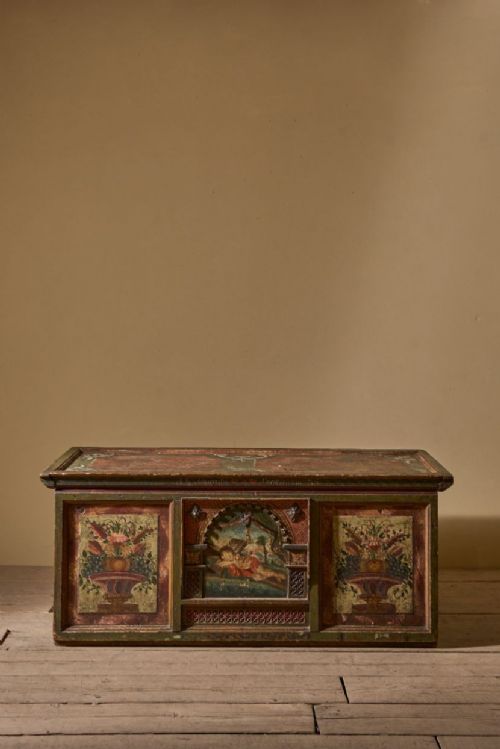
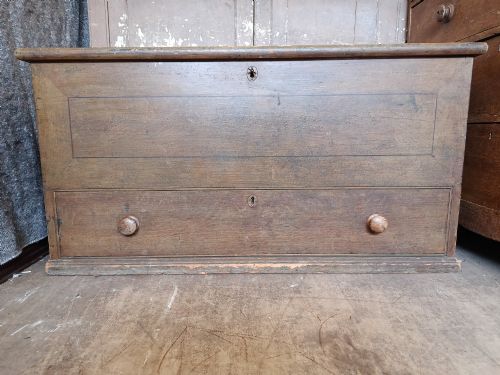
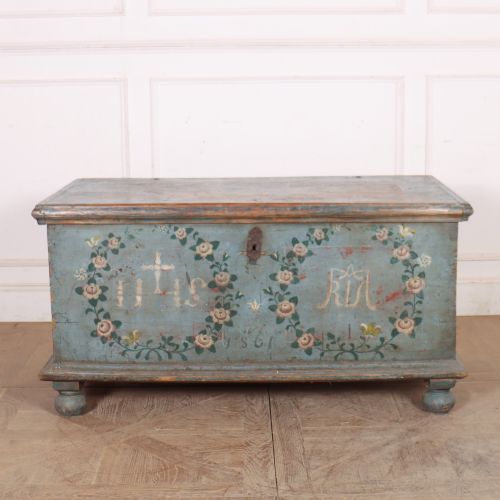
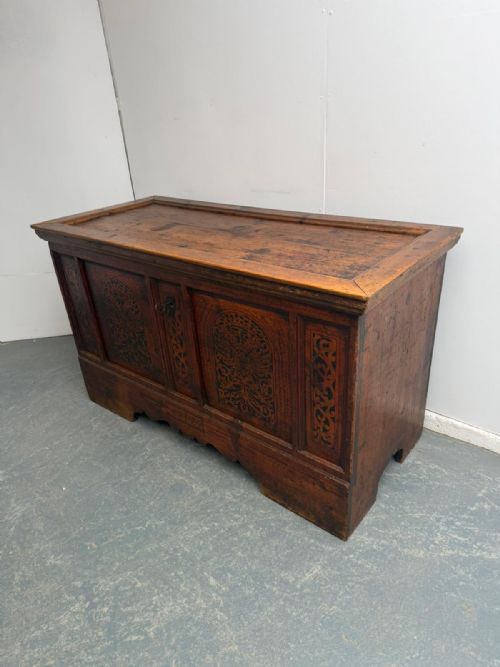
The version most frequently met on this page is the 19th-century Scandinavian or Hungarian marriage chest, often featuring hinged lids and hand-painted floral or geometric motifs. English and Spanish blanket boxes also appear, alongside dome-top trunks and mule chests equipped with lower drawers.
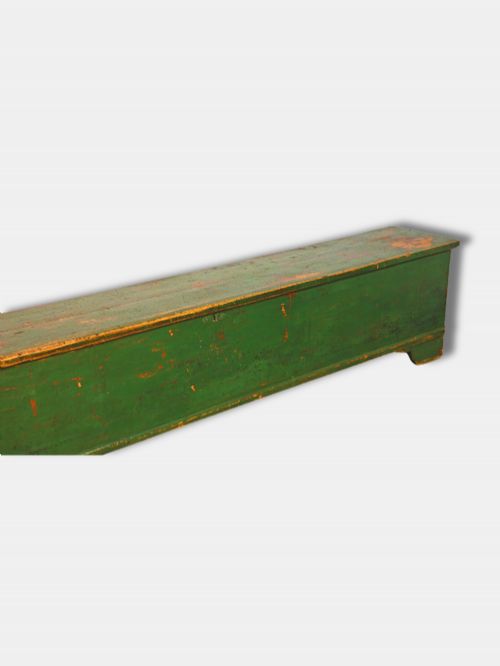
Makers ranged from rural estate carpenters to traditional folk artists who decorated the softwood surfaces with green, teal, or neutral pigments. These utilitarian boxes held linens, dowries, or travel goods before transitioning into decorative interior furnishings.
Materials and Construction
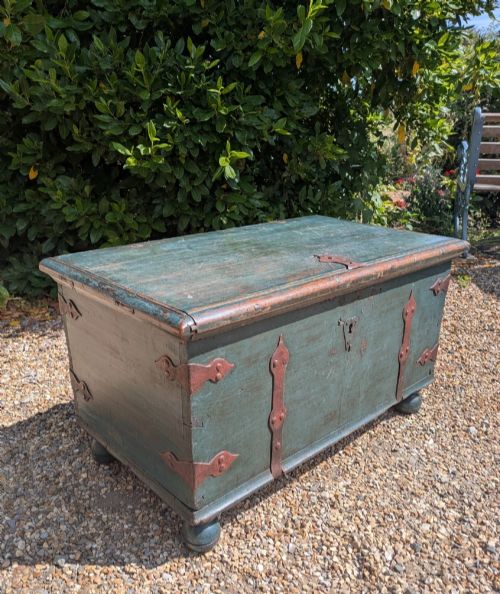
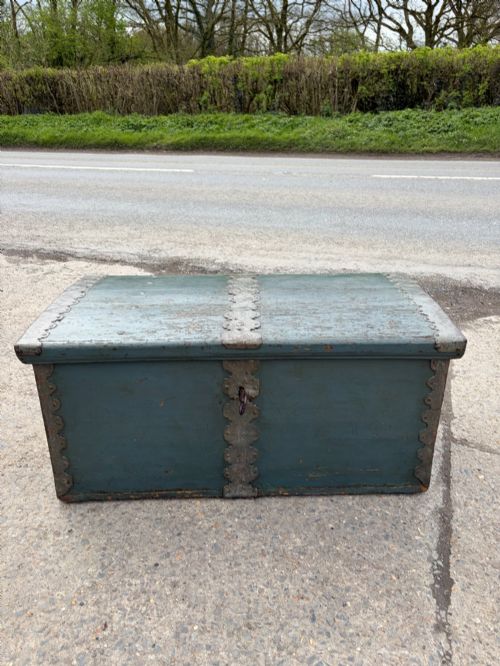
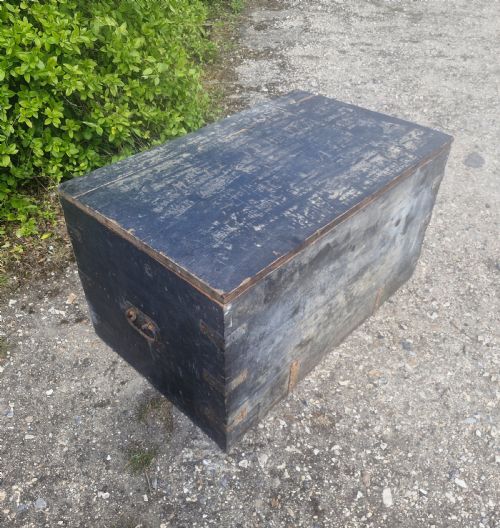
Constructed predominantly from solid pine boards joined by dovetail or nailed corners, these chests rely on lightweight softwood for everyday utility. Blacksmiths supplied hand-forged iron strapwork, hinges, and carrying handles designed to secure the heavy lids.
Surface decoration relies on oil or water-based pigment applied directly to the wood, sometimes over a scumble glaze to simulate richer timbers. Iron or brass hardware reinforces the corners and edges against the strains of travel and domestic storage.
Several marriage chests wear centuries of travel dust like a badge of honour, secretly guarding forgotten wedding secrets beneath their heavy pine lids.
Gradations of Quality
Quality rests in the survival of original painted surfaces and the integrity of the structural timber. Pieces retaining their initial pigment, uncompromised by later overpainting, command greater interest from collectors of folk art.
The sophistication of the hand-painted decoration distinguishes standard utility boxes from exceptional regional pieces. Fine hand-forged iron strapwork and untouched structural joinery separate straightforward storage trunks from masterworks of country craftsmanship.
The Painted Pine Coffer Chest Glossary
- Coffer
- A large wooden box used for holding valuables, linen, or documents, usually fitted with a hinged lid. They often double as benches in modest historical interiors.
- Mule chest
- A traditional storage chest featuring one or more drawers beneath the main compartment. This hybrid form bridges the gap between the simple box and the chest of drawers.
- Scumble
- A translucent layer of dark glaze painted over a lighter base colour and manipulated with combs or rags to simulate grain. It protects the softwood while offering a decorative finish.
- Strapwork
- Ornamental bands of metal, typically hand-forged iron, applied across the exterior of a chest to reinforce the joints and protect the corners.
- Marriage chest
- A specially decorated box commissioned or given to celebrate a wedding, frequently inscribed with dates and initials alongside floral folk motifs.
Painted Pine Coffer Chest: Frequently Asked Questions
What were painted pine coffer chests used for?
These chests originally served as secure storage for household linens, valuable garments, and personal documents. In rural communities, they functioned as marriage trunks meant to transport a bride's dowry to her new home.
Over time, their robust construction made them practical for travel as campaign trunks or general domestic storage. Today, they serve primarily as decorative furniture pieces that double as coffee tables or blanket boxes.
How do I care for original paint on pine?
Maintain original pigment by keeping the chest away from direct sunlight and excessive moisture fluctuations, which can cause flaking. Dust gently with a dry, soft cloth rather than utilising liquid cleaners or modern polishes.
Wax should be applied only if the painted surface is stable and sealed, as untreated historic pigment can absorb modern chemicals. Consulting a conservator helps preserve fragile folk art decorations.
How can I tell a Georgian chest from a Victorian one?
Georgian and Regency pieces, dating from the late 18th to early 19th centuries, often display heavier hand-forged ironwork and deeper patination on the pine. Hungarian and Scandinavian examples from this era frequently feature distinct regional folk motifs.
Victorian chests tend to exhibit more standardised machine-sawn components and brighter, sometimes later-applied, decorative schemes. Construction methods like dovetailing also shift from hand-cut precision to more regular industrial output as the 19th century progresses.
Can these chests be used as everyday coffee tables?
Their flat, sturdy lids make them practical for use as low tables in living spaces while providing concealed storage within. Placing protective pads beneath objects placed on the surface prevents scratching the historic finish.
One should ensure the antique hinges and lid supports remain secure if the top will experience regular weight or frequent opening.