





Painted Pine Coffer Box
A painted pine coffer box brings folk art surface and robust storage into a room, spanning 18th-century country workshops to Victorian domestic interiors.
Painted Pine Coffer Box
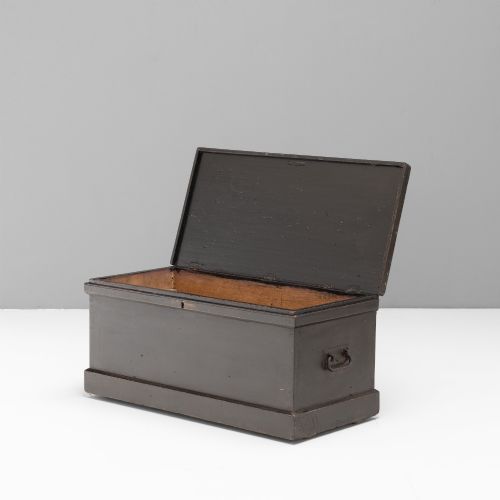
A painted pine coffer box serves as a robust storage chest constructed primarily from softwood and finished with decorative pigment or scumble layers. Buyers typically encounter nineteenth-century examples originating from Scandinavian, Alpine, and Hungarian rural traditions.
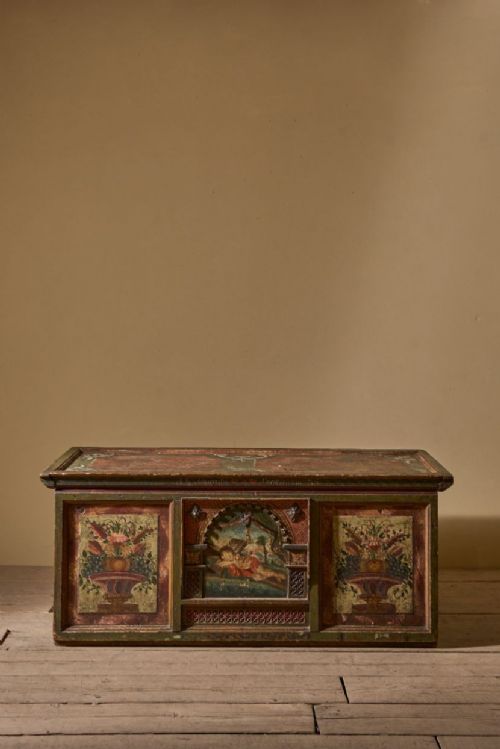
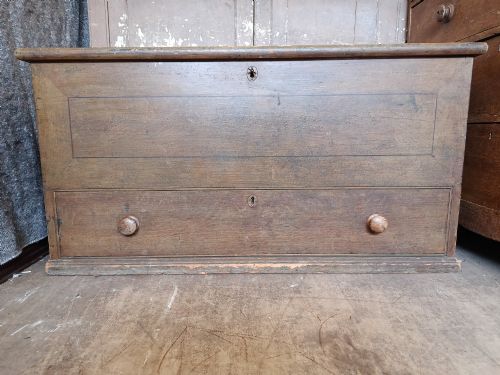
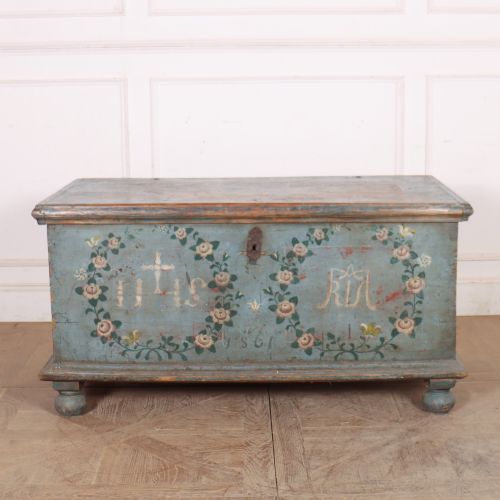
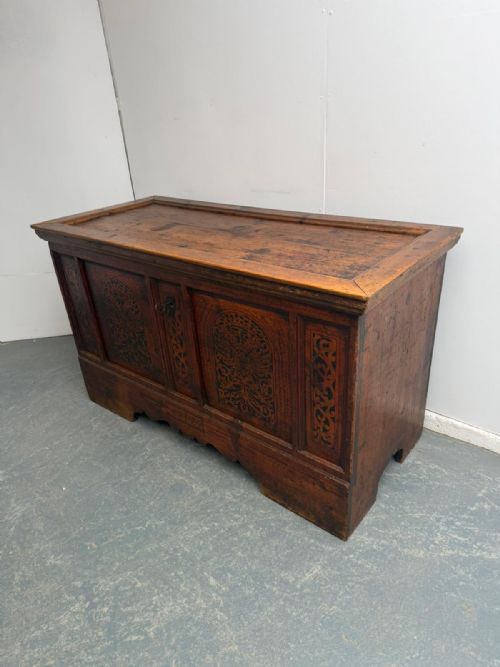
The form ranges from simple dome-top storage boxes to large marriage chests and mule chests equipped with lower drawers. Regional folk art aesthetics dictate the exterior appearance, which often includes floral motifs or simulated graining.
These pieces function as blanket boxes, travel trunks, and strong boxes while retaining their original structural integrity. The combination of utilitarian pine construction and hand-applied paint defines this enduring category of antique storage.
Materials and Construction Techniques
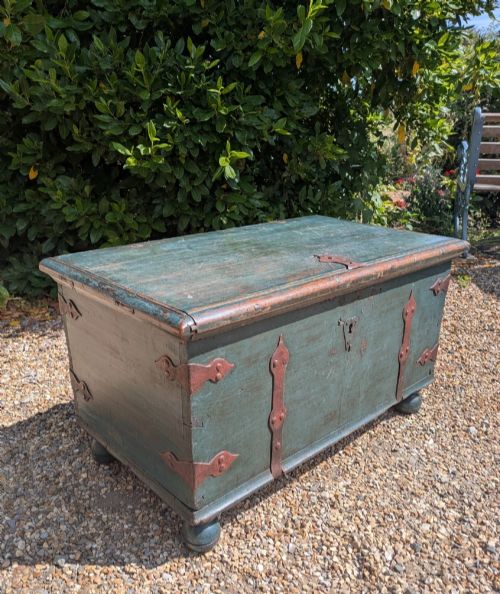
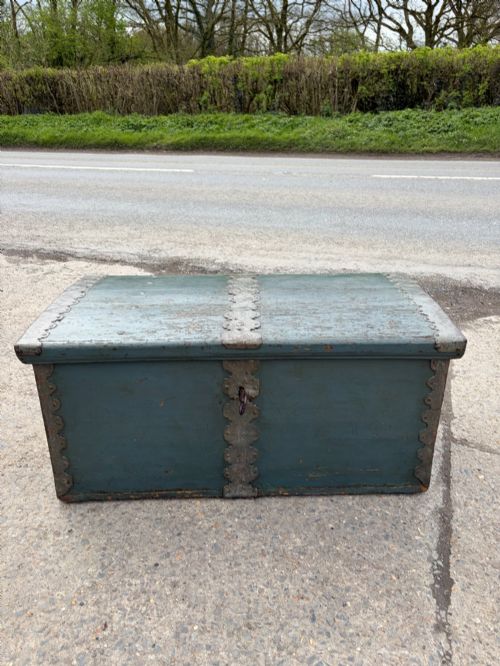
Carpenters built these boxes using native pine panels joined by dovetails or robust corner bracing, frequently supplemented by hand-forged iron strapwork and hinges. Wrought iron handles and brass key escutcheons provided functional reinforcement for heavy travel or daily household use.
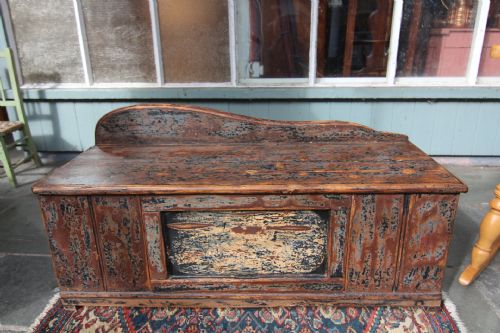
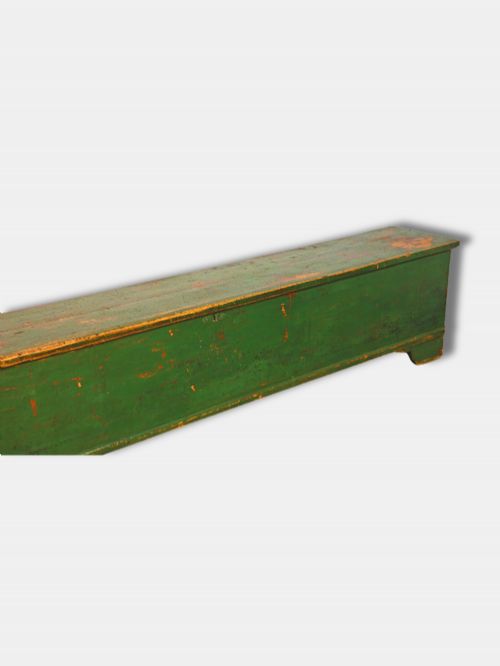
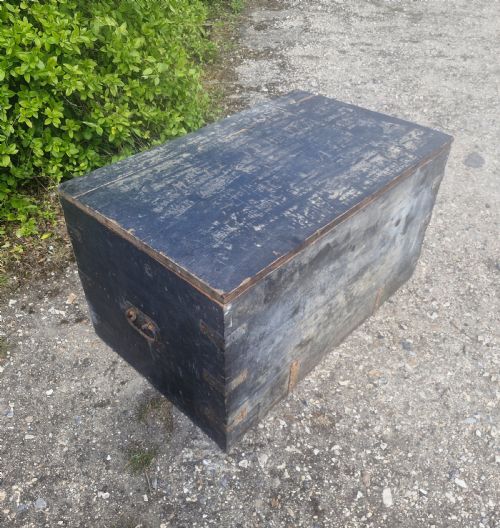
Surfaces received layers of lead-based or oil paints, sometimes manipulated with scumble techniques to imitate costlier timbers or finished with freehand floral brushwork. Pigments aged organically over decades, resulting in the characteristic dry patination found on surviving examples.
Listings feature pieces spanning the Georgian, Regency, Victorian, and early twentieth-century periods, showcasing pine, wrought iron, and original pigment.
Distinctions in Quality
The survival of original surface paint separates ordinary utility boxes from superior folk art examples. Pieces retaining untouched historical pigment display a depth of colour and authentic wear that over-restored surfaces lack.
Construction detail distinguishes regional workshops, from simple butt-jointed boxes to finely dovetailed marriage chests with integral plinths and forged iron strapwork. The complexity of the decorative scheme, such as detailed Alpine or Scandinavian floral work, elevates the standing of the piece.
The Painted Pine Coffer Box Glossary
- Coffer
- A heavy wooden chest traditionally used for storing valuables or documents. These lidded boxes often feature iron reinforcement for security.
- Mule chest
- A traditional storage chest distinguished by one or more drawers built into the base beneath the primary compartment. This form emerged in the Georgian period and remained popular through the Victorian era.
- Scumble
- A translucent layer of dark oil paint dragged or stippled over a lighter base colour to simulate wood grain or create textured depth. Cabinet makers used this technique on pine to mimic more expensive hardwoods.
- Strapwork
- Ornamental bands of wrought iron fastened across the exterior of a chest to reinforce the wooden joints and hinges. This metalwork is commonly hand-forged on country pieces.
- Marriage chest
- A decorative box commissioned or gifted to celebrate a wedding, frequently inscribed with dates or initials alongside regional folk art painting. Scandinavian and Alpine examples often display elaborate floral motifs.
Painted Pine Coffer Box: Frequently Asked Questions
What is a painted pine coffer box?
A painted pine coffer box is a sturdy wooden storage chest made from softwood and decorated with historical pigments, folk art motifs, or scumble glazes. These pieces were built in various regions including Scandinavia, Hungary, and the Alpine countries.
They served practical domestic roles for holding textiles, valuables, and personal belongings. Today, they function as decorative furniture that provides concealed storage in living spaces.
How do I date a painted pine chest?
Dating relies on assessing the construction methods, such as hand-cut dovetails, forged iron hardware, and the composition of the wood panels. Georgian and Regency examples often show different proportions compared to later Victorian or early twentieth-century versions.
The pigment analysis and wear patterns on the painted surface also offer chronological clues. Original paint layers exhibit natural craquelure and fading consistent with age.
Were these chests used for travel?
Many sturdy pine boxes functioned as travel trunks, campaign chests, or strong boxes for moving personal property across regions. Heavy iron handles and strapwork were added to withstand the rigours of transit.
Other forms, such as marriage chests, remained stationary in farmhouses or manors as permanent household fixtures. The presence of lock plates and internal till boxes indicates secure storage for documents or valuables.
How should I care for original paint?
Preserving original paint requires keeping the piece away from direct sunlight and maintaining stable indoor humidity to prevent the wood from warping. Cleaning should be limited to gentle dusting with a dry cloth.
Avoid chemical solvents or abrasive polishes that can strip fragile historical pigments. Wax is rarely necessary or recommended for dry, unvarnished folk art surfaces.
What distinguishes folk art boxes?
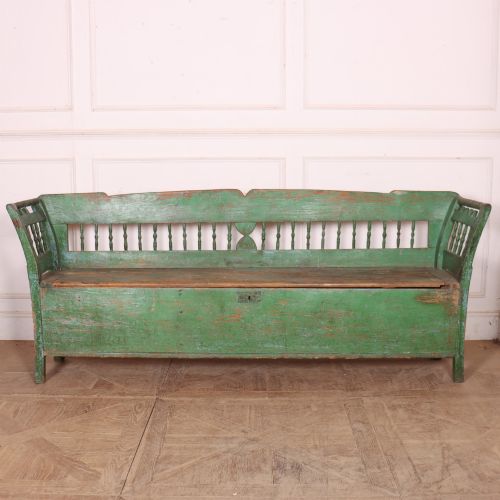
Folk art boxes feature hand-painted decorations executed by local artisans rather than commercial factory methods. These designs often incorporate regional floral patterns, symbolic motifs, and vibrant green or teal pigment backgrounds.
Such pieces reflect the cultural traditions of specific European farming communities. The individual character of the brushwork makes each box unique.