
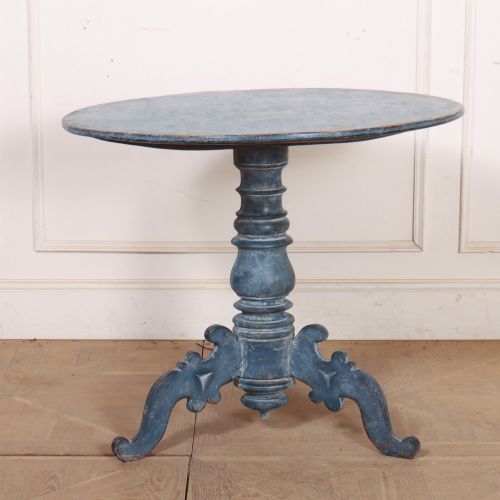
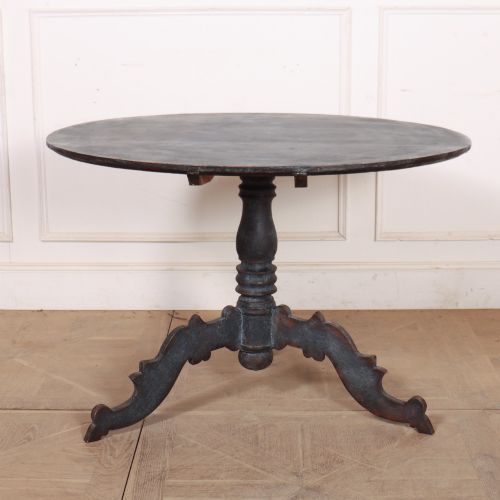
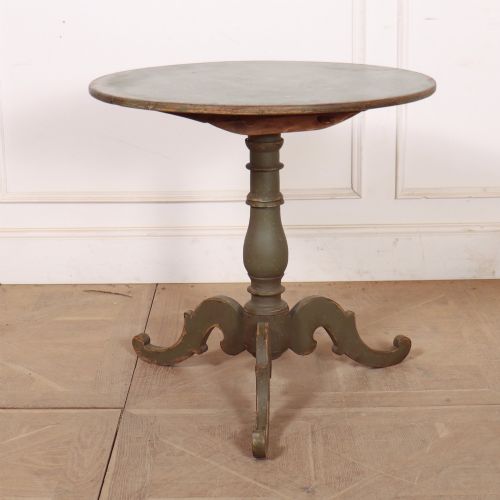
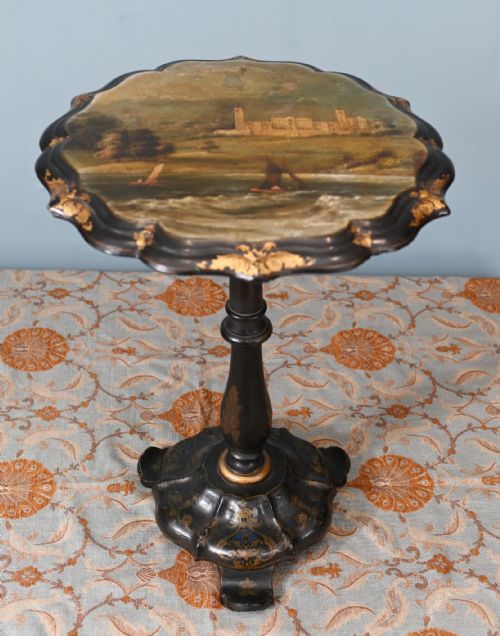



Painted Pedestal Wine Table
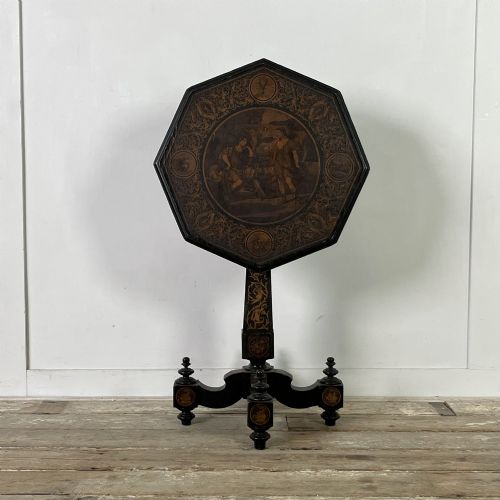
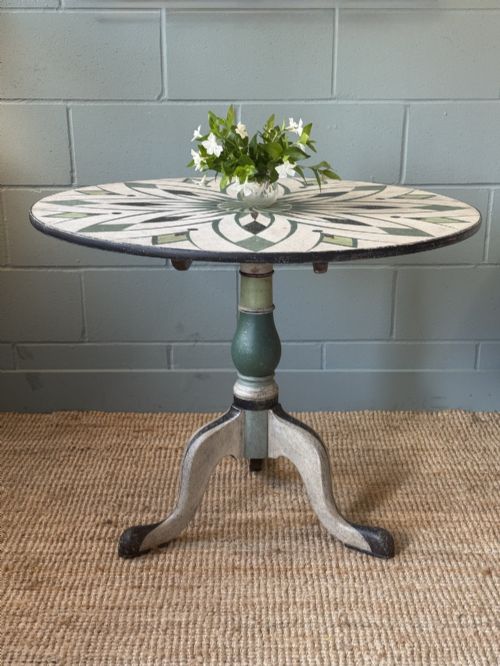
A painted pedestal wine table brings small-scale colour and surface pattern to a room, functioning as a handy perch for a glass.
Painted Pedestal Wine Table
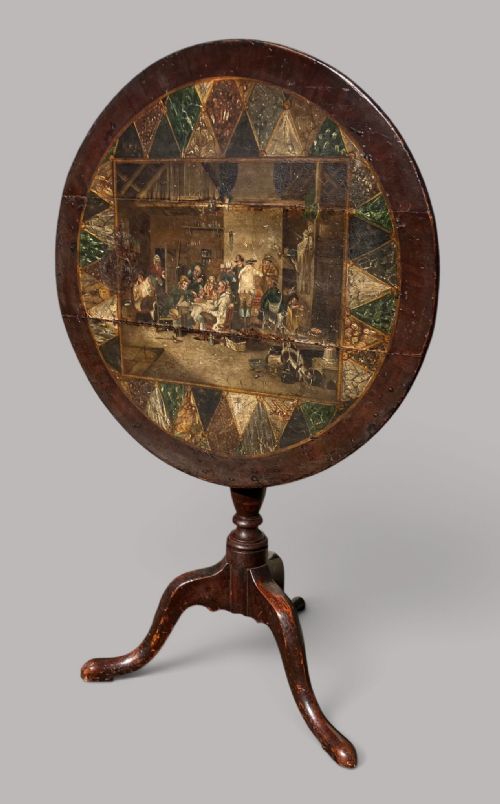
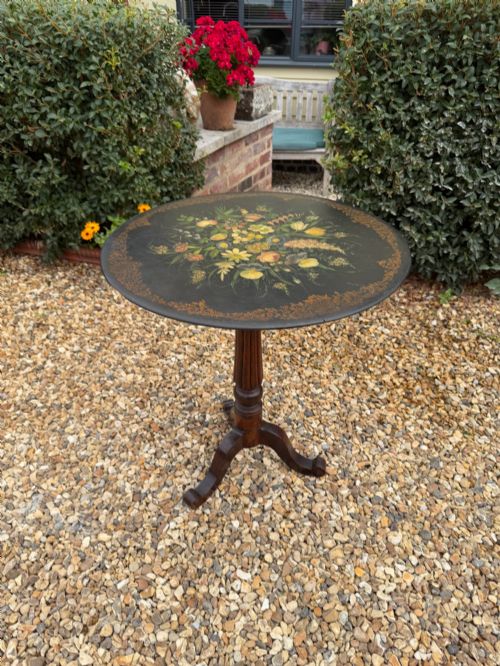
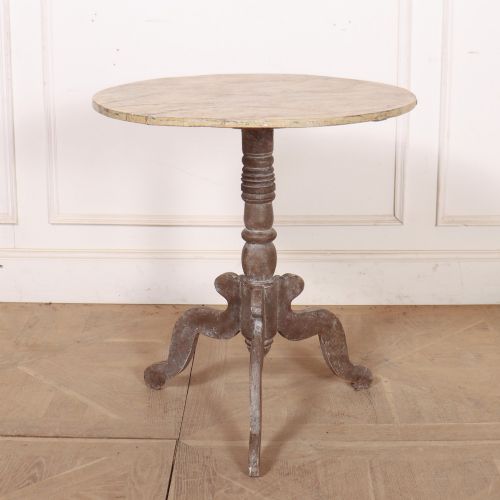
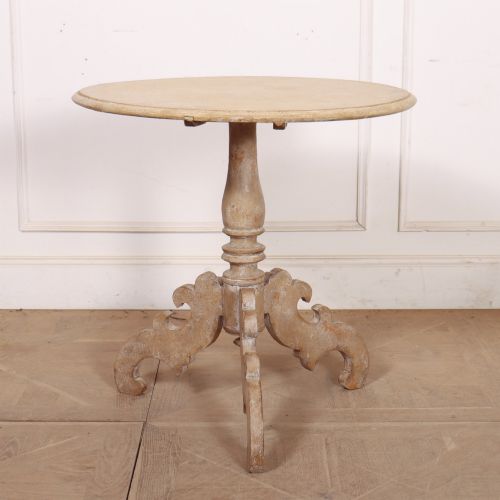
A painted pedestal wine table stands on a single central pillar supported by tripod or pedestal feet, carrying a small circular or oval top finished in pigment, lacquer, or gesso. These pieces emerge chiefly from nineteenth-century workshops, spanning Georgian origins through to later Victorian and Edwardian revivals.
Regional variants shape the selection on this page, most notably Swedish and Scandinavian country pieces alongside French gueridons and English occasional tables. The surfaces range from simple folk art floral motifs to elaborate neoclassical decoration and lacquered finishes.
Forms overlap with lamp tables and tilt-top designs, where the top hinges vertically or remains fixed upon the shaft. Buyers select these compact stands to occupy tight corners or sit beside armchairs where larger furniture proves too clumsy.
Materials and construction methods
Carpenters built the carcasses using pine, oak, mahogany, satinwood, and satin birch, shaping turned pedestals and jointing them to stable foot bases. Tilt-top mechanisms utilised brass catches or wooden pegs to allow the surface to drop flat when not in use.
Decorators applied oil or water-based paint directly to wood, gesso, or papier-mâché, sometimes sealing the surface with clear varnish or black lacquer. Specialised techniques such as ink work and hand-painted floral ornamentation transformed plain timber into decorative showpieces.
Current listings span the eighteenth to the twentieth centuries, featuring pine, mahogany, marble, and lacquer across Swedish, French, and English workshops.
Judging quality and craftsmanship
The sophistication of the surface decoration dictates the standing of the piece, separating simple decorative items from those bearing refined hand-painted botanical or neoclassical detailing. Original painted surfaces carry greater integrity than later nineteenth or twentieth-century decorative overhauls.
Structural stability in the pillar and base assembly determines daily utility, as poorly jointed pedestals wobble under weight. Superior examples combine balanced proportions in the turned shaft with crisp joinery that maintains level balance on uneven floors.
The Painted Pedestal Wine Table Glossary
- Gueridon
- A small French occasional table supported by a central column, frequently topped with inset marble.
- Gesso
- A plaster-like mixture applied to wood surfaces to provide a smooth base for painting or gilding.
- Tilt top
- A hinged table mechanism allowing the surface to swivel vertically for compact storage against a wall.
- Japanned
- European furniture finished with black or coloured lacquer in imitation of Asian decorative wares.
- Pedestal
- A single central upright pillar supporting the weight of the tabletop above tripod feet.
Painted Pedestal Wine Table: Frequently Asked Questions
What is a pedestal wine table used for?
These compact stands provide a convenient surface for holding drinks, small lamps, or decorative objects within a seating area.
Their small footprint allows them to fit easily into narrow spaces between armchairs or beside beds.
How do I identify a nineteenth-century piece?
Examine the timber underneath the paint layers for signs of age, tool marks, and traditional joinery methods appropriate to the period.
French and Swedish examples from this era often feature distinct regional colour palettes and specific pedestal turning styles.
Are painted surfaces original?
Many items retain their original decorative schemes, though some nineteenth-century tables received later painted floral or pictorial upgrades.
Close inspection of the pigment layers helps distinguish factory or workshop finishes from subsequent decorative painting.
Where did these tables originate?
The listings on this page span English, French, Italian, Kashmiri, and Scandinavian workshops reflecting local nineteenth-century tastes.
Swedish country and French neoclassical traditions account for a large proportion of the painted pedestal designs available.