
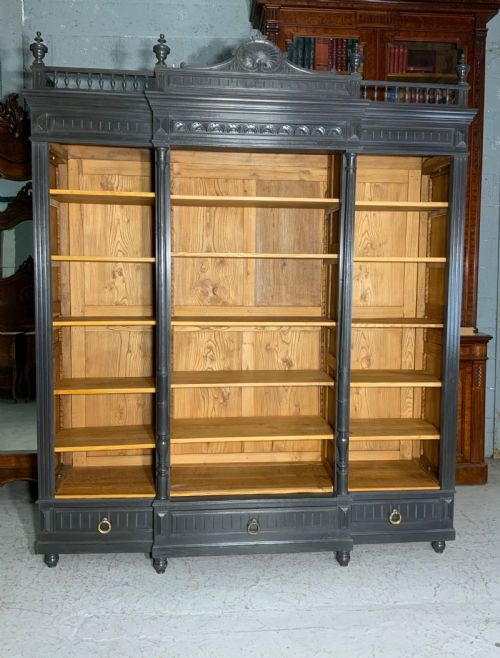
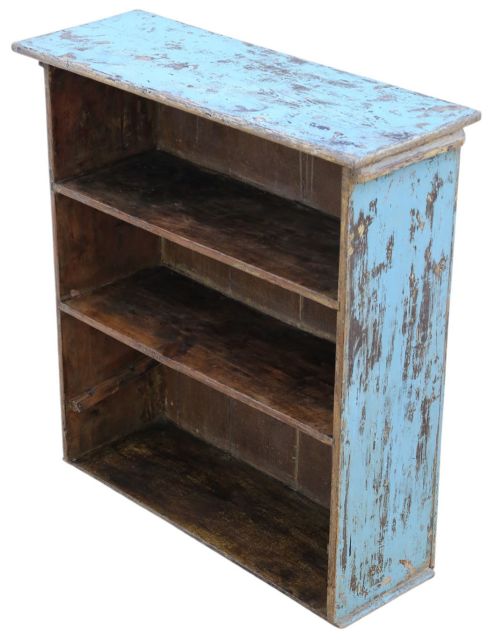
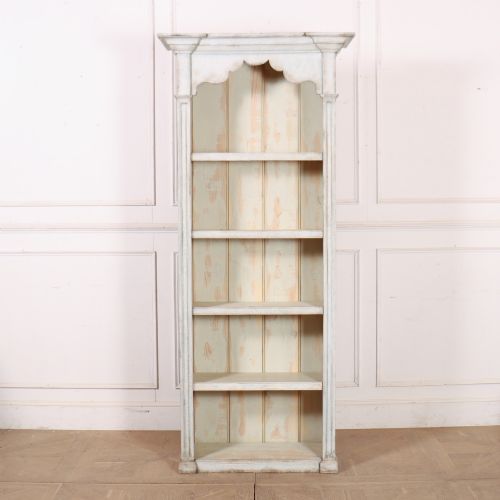

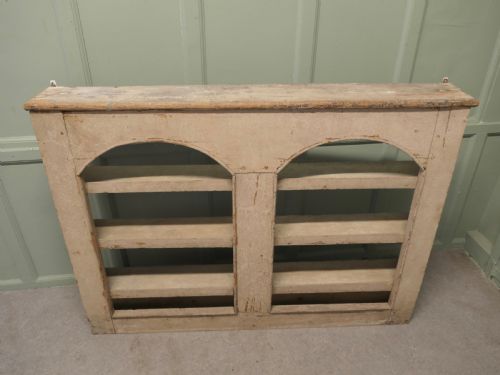


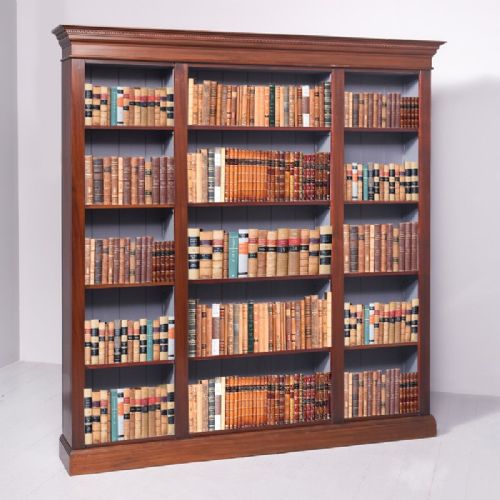


Painted Open Shelving
Painted open shelving brings character to a room, offering practical display space through pieces finished in historic colours and patinated coats.
Painted Open Shelving
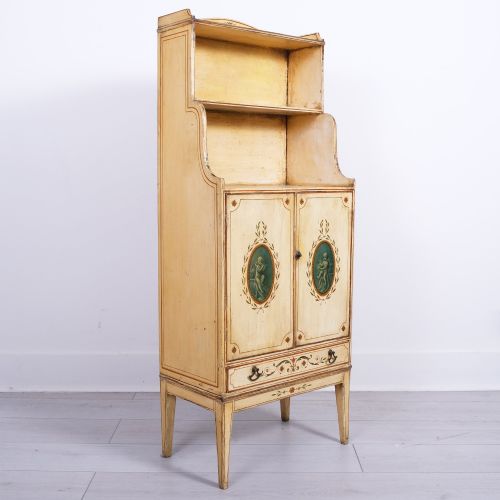
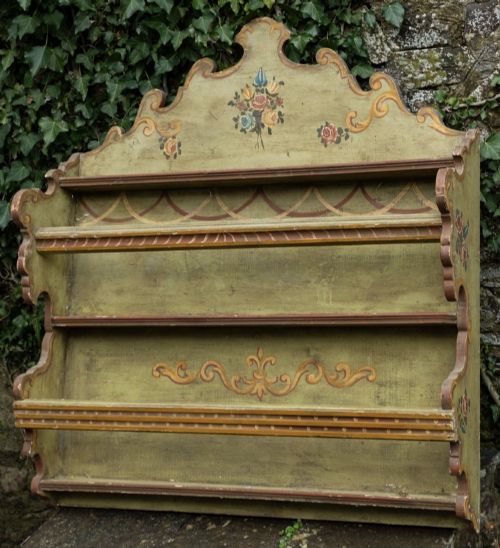
Painted open shelving encompasses everything from tall library bookcases and dwarf bookcases to wall shelves, corner cabinets, and whatnots designed for accessible storage and display.
Buyers browsing painted open shelving encounter pieces spanning the Georgian, Regency, and Victorian periods, alongside Edwardian examples and rustic farmhouse forms.
Floor-standing bookcases and alcove units dominate the selection, often originating from English workshops or French provincial settings.
Materials and construction methods
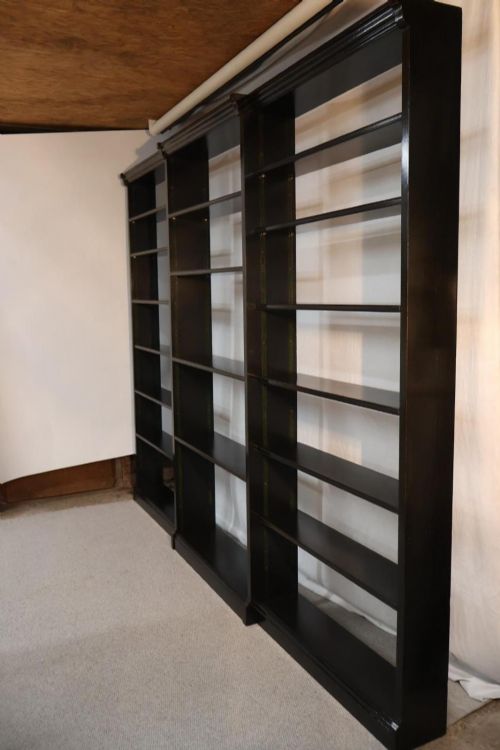
Makers relied primarily on pine, softwood, and general timber for carcass construction, applying surface finishes that ranged from simple painted coats and simulated paint to hand-painted decoration and ebonised treatments.
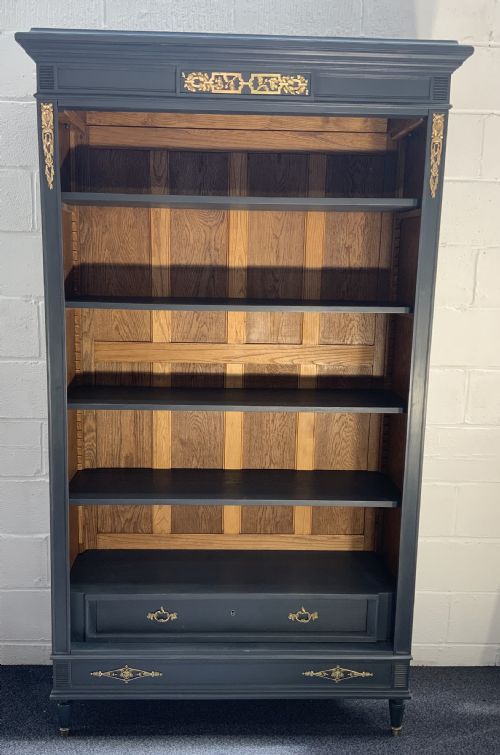
Detailing on finer examples incorporates brass embellishments, brass mounts, parcel gilt accents, and marble tops to elevate the simple wooden framework.
Periods represented span from the 18th century through the Georgian, Regency, and Victorian eras to the early 20th century.
Distinguishing quality in painted pieces
Quality rests in the integrity of the surface finish, distinguishing original historic paint, grained surfaces, and simulated paint from later overpainting or modern decorator finishes.
Proportion and structural joinery separate standard utility cupboards from sophisticated pieces like George III waterfall bookcases or breakfront library cabinets.
The Painted Open Shelving Glossary
- Waterfall bookcase
- A set of open shelves diminishing in depth from bottom to top, often associated with the 18th and 19th centuries.
- Breakfront
- A piece of furniture where the central section projects forward from the flanking sides, creating architectural depth.
- Ebonised
- Wood treated with a chemical stain or finish to imitate the dark, dense appearance of ebony.
- Whatnot
- A small multi-tiered set of open shelves used for displaying ornaments and small objects, popular in the 19th century.
- Simulated paint
- A decorative graining or paint technique applied to plain timber to mimic expensive exotic woods or stone.
Painted Open Shelving: Frequently Asked Questions
What periods do these pieces come from?
The selection spans several centuries, including late 18th-century Georgian and George III examples, Regency pieces, and Victorian designs through to the early 20th century.
Craftsmen across these eras produced varying forms, from country house pine bookcases to refined French provincial cabinets.
How do I care for painted surfaces?
Historic painted surfaces require gentle treatment, avoiding modern chemical cleaners that might lift or soften aged layers of pigment.
Dust regularly with a dry, soft cloth and keep wooden furniture away from direct heat sources and strong sunlight.
Are these shelves suitable for heavy books?
Floor-standing bookcases and breakfront library pieces in pine or hardwood offer sturdy construction capable of supporting substantial volumes.
Wall-mounted shelves and delicate whatnots suit lighter displays, decorative objects, and smaller collections rather than heavy folio books.
What is simulated paint?
Simulated paint is a decorative technique where tradesmen painted ordinary timber to resemble costly materials like burl walnut, marble, or exotic hardwoods.
This method allowed makers to achieve a high-end aesthetic on accessible softwood carcases.