

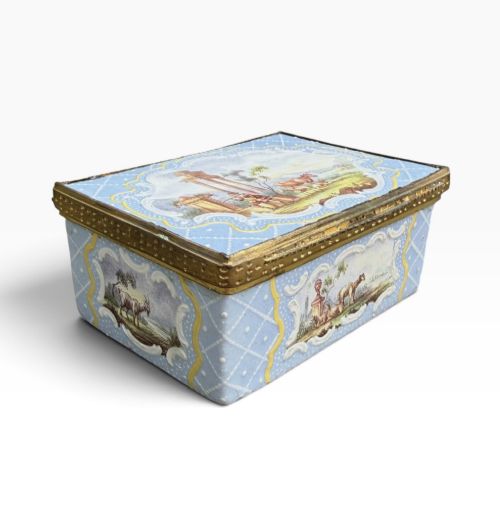


Painted Metal Trinket Box
These painted metal trinket box examples offer small-scale storage decorated with colour, spanning the eighteenth and nineteenth centuries.
Painted Metal Trinket Box
A painted metal trinket box combines utilitarian storage with detailed surface decoration, spanning snuff boxes, patch boxes, tobacco boxes, and small caskets. The pieces available range from eighteenth-century Staffordshire and Bilston enamels to nineteenth-century tole ware and domed art nouveau caskets.
Makers utilised copper, gilt metal, gilded bronze, and tin as bases for enamel and paint, alongside related porcelain and wood forms from European and international workshops. The Georgian and Rococo styles appear alongside Victorian folk art, Anglo-Indian craftsmanship, and the curved lines of the 1890 period.
Buyers encounter pocket-sized snuff and patch boxes alongside larger decorative table boxes and caskets. The forms vary from simple rectangular containers to shaped lids depicting musicians in parkland and floral subjects.
Materials and Construction
Enamel on copper formed the basis for many eighteenth-century pieces, where powdered glass was fused to a metal substrate through firing before receiving hand-painted scenes. Staffordshire and Bilston workshops mastered this technique to create smooth, glossy surfaces for small containers.
Tole ware utilised sheet metal, usually tin or iron, coated with dark lacquer or paint and finished with hand-painted ornamentation. Gilt metal and gilt bronze provided durable frames and hinges for hinged lids on tobacco and snuff boxes.
Painted Metal Trinket Box Retail Price Guide 2026
Typical asking prices for painted metal trinket box among the pieces listed under this phrase on Sellingantiques today, from the lower quarter to the upper quarter. They describe what is for sale here now, not the wider market.
Listings feature pieces spanning the eighteenth century, the nineteenth century, and the year 1890, using enamel, copper, porcelain, and wood.
Markers of Quality
The refinement of the hand-painted decoration separates standard containers from superior examples, particularly in the detail of figural scenes such as musicians in parkland. Crispness in the moulding of the metal base and the precise fit of the hinged lid indicate higher workshop standards.
The preservation of the original enamel or paint surface dictates the standing of a piece. Subtle patination on gilt metal and intact polychrome pigments show how well an object survived centuries of handling.
The Painted Metal Trinket Box Glossary
- Bilston enamel
- Enamel painted on copper produced in the Staffordshire town of Bilston during the eighteenth century. These small boxes often served for snuff or patches.
- Tole ware
- Painted or lacquered metalware produced in Europe, typically using tin or iron as a base. Artisans applied dark grounds decorated with floral or gilt motifs.
- Patch box
- A small container used in the eighteenth century to hold small fabric shapes worn on the face to conceal blemishes. They frequently featured mirrors fitted inside the lid.
- Rococo
- An ornate artistic style prominent in the eighteenth century, characterised by asymmetry, scrollwork, and naturalistic motifs. This style heavily influenced the shape of Georgian metal boxes.
Painted Metal Trinket Box: Frequently Asked Questions
What were painted metal trinket boxes used for?
These small containers held items like tobacco, snuff, small patches, and personal trinkets. People carried them in pockets or kept them on dressing tables.
The hinged lids kept contents secure while offering a canvas for miniature paintings and decorative enamel work.
How do I date an antique painted metal box?
Dating relies on examining the metal substrate, the style of the hand-painted decoration, and the construction of the hinges and catch. Eighteenth-century pieces often feature copper enamel construction with specific regional characteristics from Staffordshire.
Later nineteenth-century examples introduce different metal alloys, tin plate, and aesthetic movements such as art nouveau.
How should I care for a painted metal box?
Keep these boxes away from direct sunlight and high humidity to protect the delicate enamel and painted surfaces. Dust them gently with a soft, dry cloth without applying polishes or chemical cleaners.
Handle the pieces carefully around the hinges to prevent stress on the antique metal and enamel joints.
What is the difference between tole ware and enamel boxes?
Tole ware consists of painted or lacquered sheet metal, such as tin or iron, finished with durable surface coatings. Enamel boxes involve powdered glass fused to a copper base through high-temperature firing.
Enamel surfaces provide a glossy, ceramic-like finish suited to miniature paintings, whereas tole ware offers a robust painted metal exterior.