



Hand Painted Metal Tin
These hand painted metal tin pieces are decorative and functional metalwares from the nineteenth and early twentieth centuries, prized for their colourful hand-applied ornamentation.
Hand Painted Metal Tin
When you search for hand painted metal tin, you encounter a diverse selection of containers and functional objects spanning the nineteenth century, Regency period, and early decades of the twentieth century. The inventory on this page ranges from small personal items like snuff boxes and tobacco boxes to larger household furnishings such as coal boxes, log stores, waste paper bins, and wine coolers.
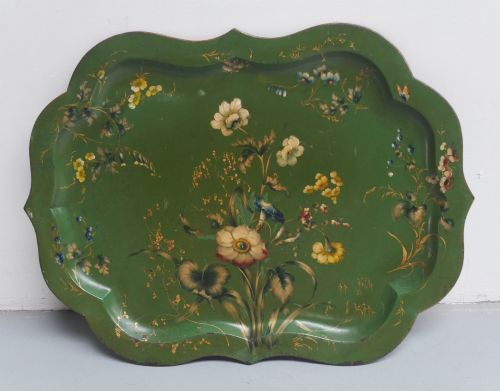
You are most likely to meet toleware and tole pieces, alongside specific regional types like Pontypool tin-ware and barge wear. Forms also include serving trays, shaped bowls, grape carriers, and table lamps converted from tea canisters, demonstrating the wide domestic utility of painted sheet metal.
The aesthetic influences vary across the selection, drawing on Victorian, Regency, Georgian, and French Country traditions, alongside distinct folk art interpretations and Chinoiserie motifs. This variety means each piece reflects the specific decorative tastes of its original period.
How they were made
Makers shaped tin, sheet iron, and brass into durable domestic forms before applying decorative finishes. Base metals were often prepared with japanning, a European imitation of Asian lacquer, creating a dark, glossy surface that protected the metal beneath.
Artisans applied paint by hand directly onto the prepared metal surfaces, frequently incorporating lacquer to seal and enhance the pigmented designs. Some items also integrated wood components alongside the primary metal structure.
Hand Painted Metal Tin Retail Price Guide 2026
Typical asking prices for hand painted metal tin among the pieces listed under this phrase on Sellingantiques today, from the lower quarter to the upper quarter. They describe what is for sale here now, not the wider market.
Listings feature 19th Century, Regency, 1900, and 1920 periods, utilising paint, brass, tin, sheet iron, tole, toleware, wood, and lacquer.
What varies in quality
Quality in these hand painted metal tin items lies in the execution and preservation of the hand-applied decoration. Finer pieces display sophisticated brushwork, balanced composition, and detailed pictorial or floral motifs that remain clear and well-defined across the surface.
The structural integrity of the sheet iron, tin, or brass body, alongside the stability of the original japanned or lacquered finish, also distinguishes superior examples. Pieces that retain their original painted surfaces without excessive overpainting offer a more authentic representation of period craftsmanship.
H. Meeson
The Hand Painted Metal Tin Glossary
- Toleware
- Painted and japanned tin-ware objects produced in Britain and Europe, particularly during the eighteenth and nineteenth centuries. The term derives from the French phrase tole peinte, meaning painted sheet metal.
- Japanning
- A type of European finish that emulates East Asian lacquerware by applying layers of dark heat-cured varnish to metal or wood bases. It provides a durable, glossy surface often decorated with painted or gilt designs.
- Pontypool type
- Metal-ware originating from or associated with the historic Pontypool works in Wales, known for early methods of tin-plate production and high-quality japanned finishes. These pieces often feature distinctive tortoiseshell or brightly coloured decorative effects.
- Barge wear
- Folk art painted decoration traditionally found on narrowboats, characterised by bright colours, stylised floral patterns, and intricate overlapping brush strokes. It frequently appears on tin and metal household items from the nineteenth century.
Hand Painted Metal Tin: Frequently Asked Questions
What is toleware?
Toleware refers to household objects made from tin-plated sheet iron or steel that have been painted and japanned. The technique allowed makers to create decorative containers and furnishings that mimicked more expensive lacquerware.
Items ranged from small personal boxes to large trays and coal bins, all finished with colourful hand-painted designs.
How are these pieces dated?
Dating relies on stylistic clues, manufacturing techniques, and the types of materials used across different eras. Nineteenth-century examples often feature specific folk art motifs or regional japanning styles associated with workshops like Pontypool.
Later pieces from the early nineteen-hundreds and nineteen-twenties display distinct decorative palettes and construction methods that set them apart from Regency or Georgian items.
Were these items used daily?
Yes, most of these metal items served very practical purposes in period homes. They stored tea, tobacco, and snuff, held coal and logs by the fireside, or managed waste paper in studies and drawing rooms.
Larger vessels functioned as wine coolers and serving trays, combining everyday utility with ornamental painted appeal.
How do I care for painted tin?
Care involves keeping the metal surfaces away from excessive moisture and direct sunlight to protect the fragile painted layers. Dusting gently with a dry cloth helps preserve the original japanned or lacquered finish without disturbing the pigments.
Avoid using liquid cleaners or chemical polishes, as these can strip the historic paintwork.