


Painted Landscape Porcelain Plates
These painted landscape porcelain plates bring distant views and rural scenes directly to the table, offering a glimpse of 19th-century artistry.
Painted Landscape Porcelain Plates
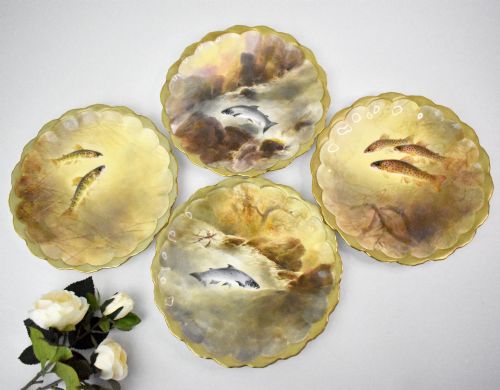
Painted landscape porcelain plates appear primarily as cabinet plates, dinner plates, and dessert plates from the 19th century and Victorian periods. Buyers encounter English and French works featuring hand-painted vistas, alongside occasional Chinese export and Japanese pieces.
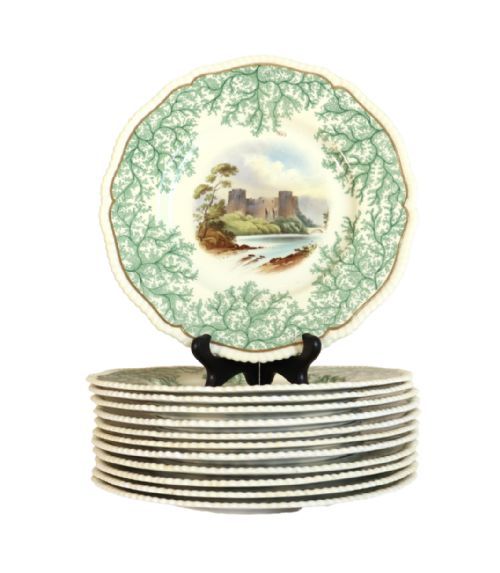
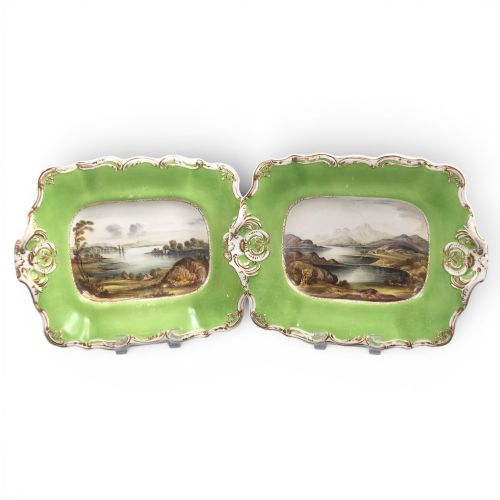
The selection ranges from single cabinet plates to large sets, such as twelve Spode dinner plates with seaweed borders or matched pairs by Copeland & Garrett and Royal Worcester. Forms extend beyond flat plates to include oval dessert dishes and sandwich sets.
Makers recorded in the evidence include Aynsley, Royal Doulton, Minton, and Worcester factories alongside individual artists like Joseph Birbeck Senior and William Yale. These items served both decorative display and formal dining functions.
How they were made
Potters shaped porcelain, bone china, or earthenware bodies before applying white and coloured glazes as a smooth foundation for the landscape scenes. Enamel paints provided the pigments for detailed topographical views, cottages, and natural scenery.
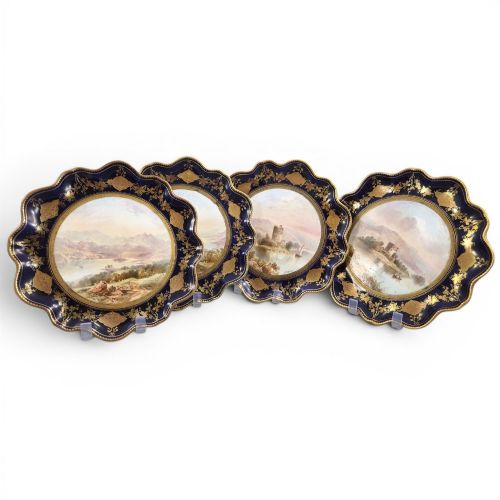
Kiln firing fixed the painted landscape details and enamels permanently onto the ceramic surface. Artisans often added gold leaf and gilding to the borders, while specific factories utilised pearl jewelling for tactile decoration.
Listings feature porcelain, bone china, and earthenware forms ranging from 18th-century Chinese export wares to 19th-century Victorian cabinet pieces.
What varies in quality
The precision and detail of the hand-painted landscape scene separate standard factory output from exceptional studio work. Named views and signed artist pieces carry distinct artistic merit compared to generic decorative patterns.
Factory pedigree influences value, with established makers like Worcester, Minton, and Spode demonstrating superior paste preparation and glazing technique. The presence of supplementary embellishments like heavy gilding and raised jewelling elevates the piece.
Spode·Copeland and Garrett·Aynsley·Royal Doulton·Darte Brothers·Pucher Deroche·Coalport·Derby·Minton·Barr Flight Barr Worcester·Royal Worcester·Copeland
The Painted Landscape Porcelain Plates Glossary
- Cabinet plate
- A decorative plate intended for display in a cabinet rather than for practical dining use. These often feature elaborate hand-painted scenes and gilt borders.
- Enamel
- A glassy substance fused to the porcelain surface through firing to create durable, coloured painted decoration. It allows for bright hues in landscape depictions.
- Gilding
- The application of gold leaf or gold paint to ceramic edges and rims. This technique highlights the borders of dessert and dinner plates.
- Bone china
- A type of soft-paste porcelain incorporating bone ash. It provides a bright white body favoured by English potteries.
- Named view
- A landscape painting on ceramics that depicts a specific, identified geographical location or landmark. These often include titles written on the reverse of the plate.
Painted Landscape Porcelain Plates: Frequently Asked Questions
Are these plates safe for daily dining use?
Most of these historic painted landscape porcelain plates function best as decorative cabinet pieces or light dessert service rather than rough daily dinnerware. The delicate hand-painted enamels and gold leaf borders can wear down with frequent washing.
Gentle hand washing preserves the pictorial scenes and gilt edges for future generations. Collectors generally reserve them for special occasions or wall display.
How do I identify a named view plate?
Makers often inscribed the specific geographical location, such as a Scottish view or a Welsh valley, directly onto the reverse of the ceramic body. Factory pattern numbers or artist signatures near the landscape painting also point towards a specific topographical subject.
Examining the backstamp helps confirm the pottery and production era. Comparing the written titles against historical place names verifies the scene depicted.
What is the difference between a dessert plate and a dinner plate?
Dinner plates generally feature robust borders and heavier construction suited to savoury courses, exemplified by the Spode seaweed bordered sets. Dessert plates often showcase more intricate landscape painting and delicate ground colours like pink.
Serving dishes and sandwich sets provide wider surfaces for extensive painted vistas. Collectors look at the diameter and rim shape to determine the original table function.
How can I tell a French porcelain plate from an English one?
French makers such as the Darte Brothers or Parisian studios utilised distinct paste compositions and vibrant gilding styles characteristic of the French Empire and Rococo Revival periods. English potteries like Minton, Aynsley, and Worcester relied on domestic bone china or porcelain formulas with regional landscape traditions.
Backstamps and factory marks, when present, provide definitive proof of origin. The stylistic rendering of trees and architecture also reflects national painting traditions of the 19th century.