



Painted Kitchen Server
A painted kitchen server brings functional utility and surface space, coming in pine or oak from English, French, and Scottish workshops.
Painted Kitchen Server
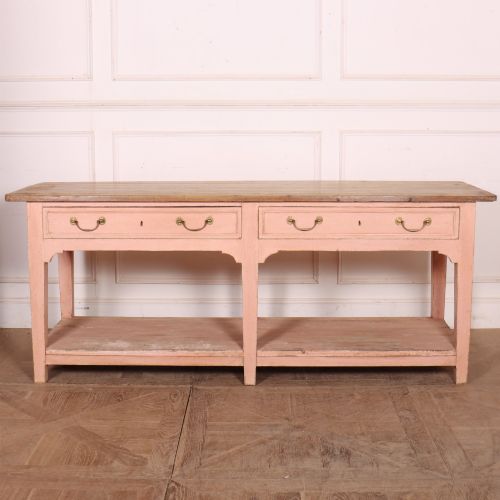
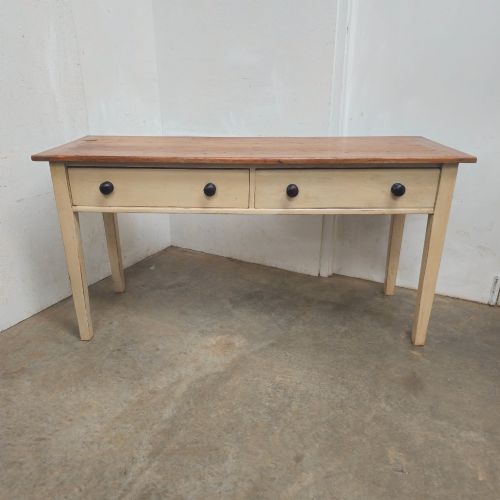
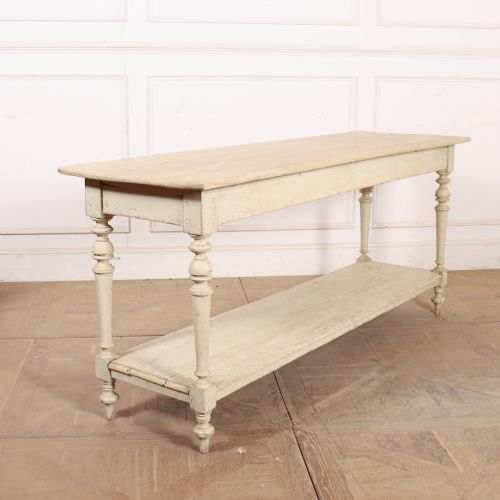
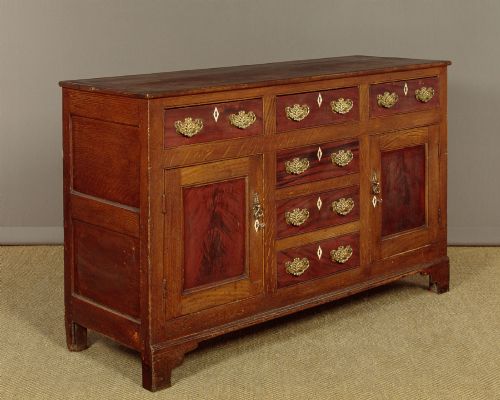
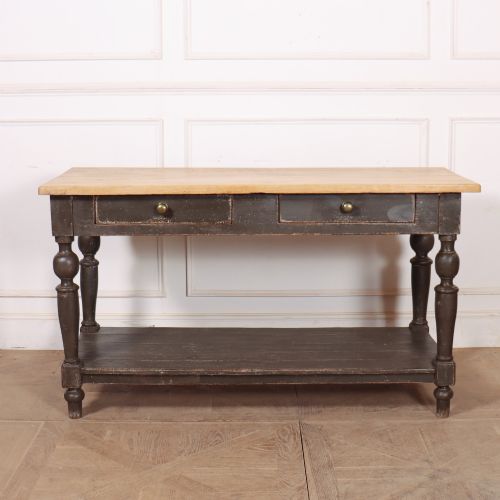
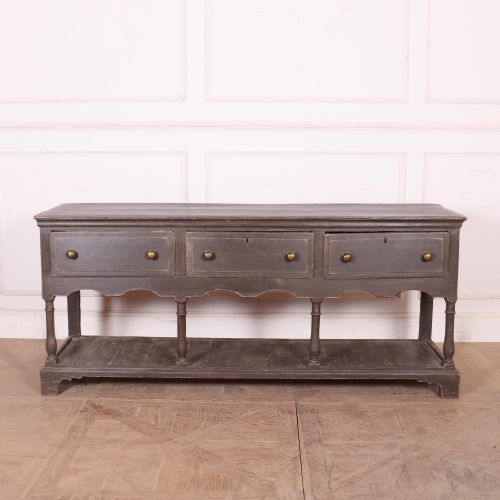
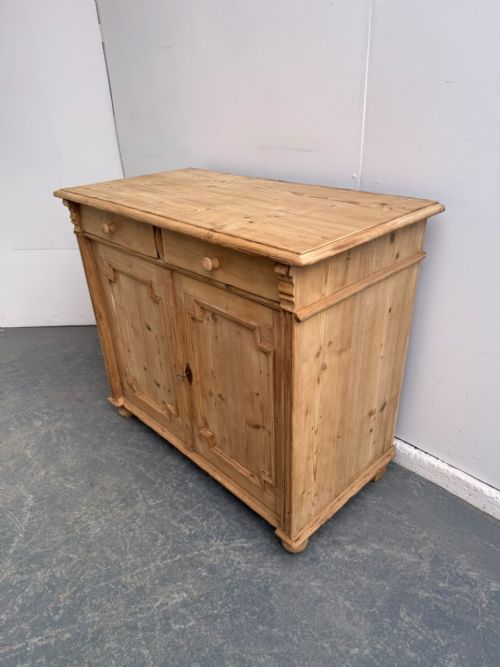
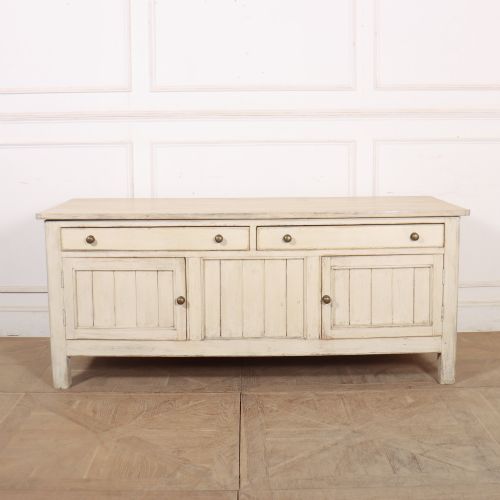
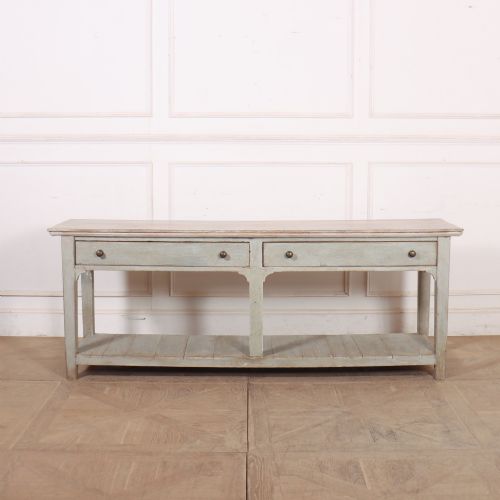
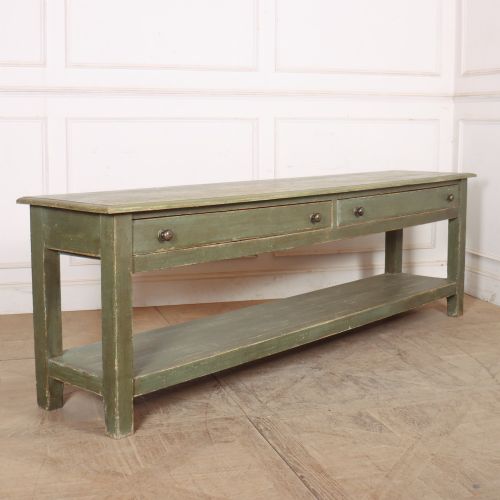
A painted kitchen server typically takes the form of a dresser base, potboard dresser, drapers table, or serving table designed for food preparation and storage in domestic spaces. When buyers search for a painted kitchen server, they encounter utilitarian furniture built for heavy daily use rather than formal display.
The pieces appearing here span the eighteenth century, nineteenth century, Victorian era, and Georgian periods, originating from English, French, Scottish, Welsh, and Swedish workshops. Pine serves as the predominant timber, alongside oak and mixed woods finished with painted surfaces or original paint.
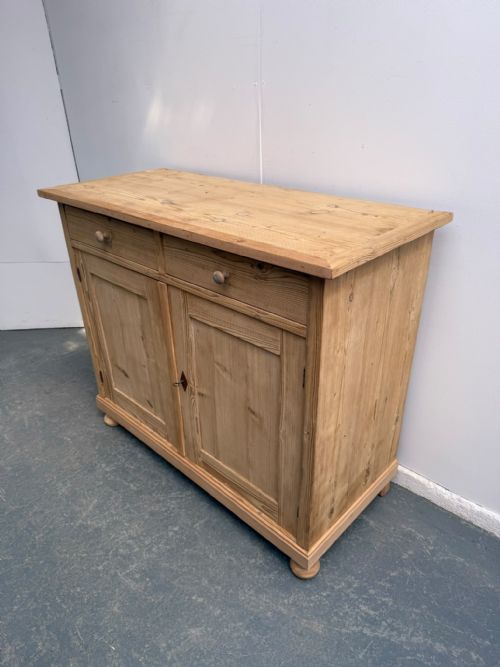
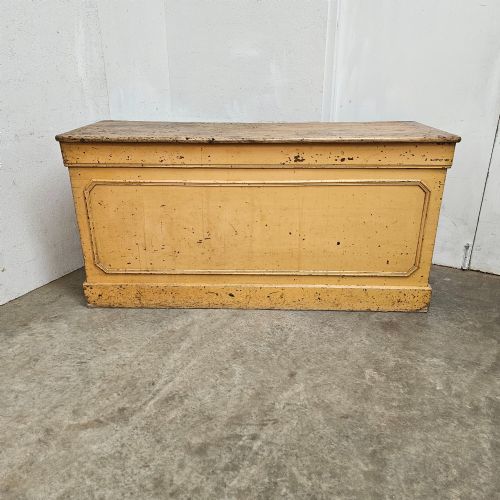
Most examples function as low storage units featuring drawers, cupboards, and potboards or lower shelves for kitchenware and provisions. Forms range from compact sideboards and preparation tables to large country house dresser bases and shop counters.
Materials and construction methods
Carpenters constructed these utility pieces primarily from solid pine and oak, selecting durable native timbers capable of withstanding constant kitchen work and food preparation. Boards were joined using traditional methods to build sturdy tabletops, drawers, and lower shelves or potboards.
Surfaces received layers of paint, scumble glazes, or wax finishes over timber, often showing wear and original pigment from decades of domestic service. Brass hardware occasionally appears on drawers and doors, though many utilitarian servers rely simply on wooden pulls and simple latches.
Several servers retain flour dust wedged deep within nineteenth-century drawer joints from centuries of kitchen baking.
Assessing quality in utility furniture
Quality in a painted kitchen server rests upon the integrity of the timber frame, the survival of original paint surfaces, and the balance of proportions. Pieces retaining their early or original paint schemes without heavy later intervention command greater interest among collectors of country furniture.
Construction details such as dovetailed drawer construction, sturdy potboard stretchers, and substantial top boards indicate careful cabinetmaking even within utilitarian furniture. Heavier proportions, well-defined cornices, and untouched patination elevate certain dresser bases and serving tables above standard workshop output.
The Painted Kitchen Server Glossary
- Dresser base
- The lower section of a kitchen dresser, featuring drawers and cupboards beneath a flat working surface, often built without the upper plate rack.
- Potboard
- A lower open shelf built between the legs of a dresser base or serving table, traditionally used for storing pots and pans.
- Scumble
- A translucent layer of dark paint dragged or brushed over a lighter base coat to simulate the grain of more expensive hardwoods.
- Bread slide
- A pull-out wooden shelf integrated into a dresser base or server, originally used for cooling bread or food preparation.
- Drapers table
- A long utilitarian table with drawers or lower shelving, originally utilised in retail shops for folding and displaying textiles.
Painted Kitchen Server: Frequently Asked Questions
What is a painted kitchen server?
A painted kitchen server is a utilitarian table or low storage unit used historically for food preparation, storage, and serving in domestic or rural kitchens. These pieces include dresser bases, drapers tables, and serving tables made from pine or oak.
Most examples feature flat wooden tops for workspace, accompanied by drawers and lower potboards or shelves. They provide practical storage while displaying the character of working furniture.
How do I date an antique server?
Dating a server involves examining the construction methods, timber choices, and hardware styles used by the maker. Eighteenth-century and Georgian pieces often display hand-cut joinery and heavy oak or pine construction, while Victorian examples reflect later nineteenth-century production.
Paint layers and surface wear also offer clues to age, with original paint finishes and scumble effects pointing to specific regional traditions and periods.
Where were these servers made?
These servers originated in domestic workshops across England, Scotland, Wales, France, and Sweden. Regional cabinetmakers built them to suit local rural and domestic kitchen requirements.
English and Scottish country houses, French provincial settings, and Swedish farmhouses all produced distinctive variations of preparation tables and dresser bases.
How do I care for original paint?
Caring for original paint on an antique server requires gentle dusting with a soft dry cloth and avoiding harsh chemical cleaners or abrasive polishes. Maintaining stable room humidity prevents the timber beneath from expanding and causing paint to flake.
Wax finishes can be lightly maintained with appropriate furniture waxes where bare wood is exposed, but painted areas are best left undisturbed to preserve their historic surface.